
Tendon Rupture: Causes, Risks, and Medications That Can Increase Your Chance
When a tendon rupture, a complete tear of the tough tissue connecting muscle to bone. Also known as tendon tear, it often happens during simple movements like stepping off a curb or lifting a grocery bag—no major trauma needed. It’s not just an athlete’s problem. Older adults, especially those over 60, are at higher risk, and certain common medications can make it much more likely.
Some of the most dangerous culprits are fluoroquinolones, a class of antibiotics including ciprofloxacin and levofloxacin. These drugs, often prescribed for urinary or respiratory infections, can weaken tendons within days. The Achilles tendon is most commonly affected, but shoulders, hands, and other tendons can tear too. The FDA has warned about this since 2008, yet many patients still get these prescriptions without knowing the risk.
NSAIDs, like ibuprofen and naproxen, used for pain and inflammation don’t directly cause ruptures, but they can mask early warning signs. If your tendon is already stressed or inflamed, taking painkillers lets you keep moving—until it snaps. And then there are corticosteroids, oral or injected steroids used for arthritis, asthma, or autoimmune conditions. Long-term use thins tendons over time, making them brittle. People on daily prednisone or repeated joint shots are often unaware their tendons are slowly deteriorating.
Age, diabetes, kidney disease, and being overweight all raise your risk. But the biggest silent factor? Medication use. If you’re taking one of these drugs and notice sudden stiffness, mild pain, or swelling near a joint—especially in your heel or shoulder—don’t ignore it. Rest. Stop the activity. Talk to your doctor. You don’t need to stop your meds, but you do need to know the signs.
What you’ll find in the posts below isn’t just theory. These are real cases, real warnings, and real choices. From how Bactrim can affect your muscles to why certain painkillers hide the warning signs before a rupture, the articles here connect the dots between everyday drugs and unexpected injuries. You’ll learn who’s most at risk, what to watch for, and how to talk to your doctor before it’s too late.
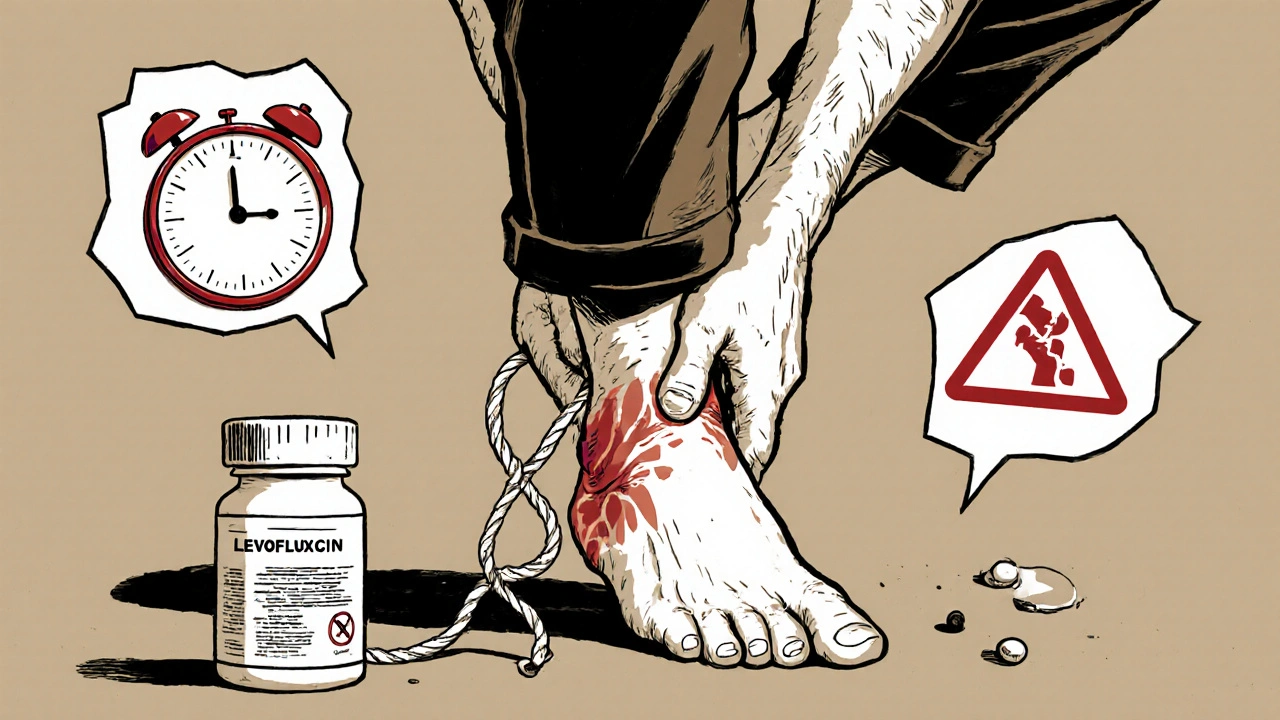
Fluoroquinolone Side Effects: Tendinopathy and Nerve Damage Risks
- Robin Tudge
- November 22, 2025
- 11 Comments
Fluoroquinolone antibiotics like ciprofloxacin and levofloxacin can cause permanent tendon rupture and nerve damage. Learn who’s at risk, how to recognize early signs, and safer alternatives for common infections.
read more