
Rhabdomyolysis: Causes, Risks, and How Medications Can Trigger It
When muscle tissue breaks down too fast, it releases dangerous proteins into your blood—this is rhabdomyolysis, a medical emergency where damaged skeletal muscle releases myoglobin and other toxins into the bloodstream. Also known as muscle breakdown syndrome, it can lead to kidney failure, heart rhythm problems, and even death if not treated quickly. Many people don’t realize how easily it can be triggered—not just by extreme workouts or trauma, but by common medications.
Drugs like fluoroquinolones, antibiotics such as ciprofloxacin and levofloxacin that can cause tendon rupture and nerve damage are linked to rhabdomyolysis, especially when combined with statins or other muscle-affecting drugs. Trimethoprim, the antibiotic in Bactrim that can raise potassium levels and stress kidney function also adds risk, particularly in older adults or those with existing kidney issues. Even over-the-counter painkillers like NSAIDs, when taken long-term or in high doses, can contribute to muscle damage under the wrong conditions.
Rhabdomyolysis doesn’t always come with obvious symptoms at first. You might feel unusually sore after light activity, notice dark urine (like cola), or feel weak for no clear reason. These aren’t just signs of a bad workout—they’re red flags. People with diabetes, kidney disease, or those on multiple medications are at higher risk, especially if they’re dehydrated or have an infection. The problem is often missed because doctors focus on the main reason you’re taking the drug, not the hidden side effects.
What you’ll find below are real, practical insights from doctors and patients who’ve dealt with this. You’ll learn which drugs are most likely to cause muscle breakdown, how to tell the difference between normal soreness and something dangerous, and what steps to take before it’s too late. These aren’t theoretical warnings—they’re based on cases where people ended up in the ER because they didn’t know the signs. If you’re on any long-term medication, especially for cholesterol, pain, or infection, this collection could help you avoid a life-threatening mistake.
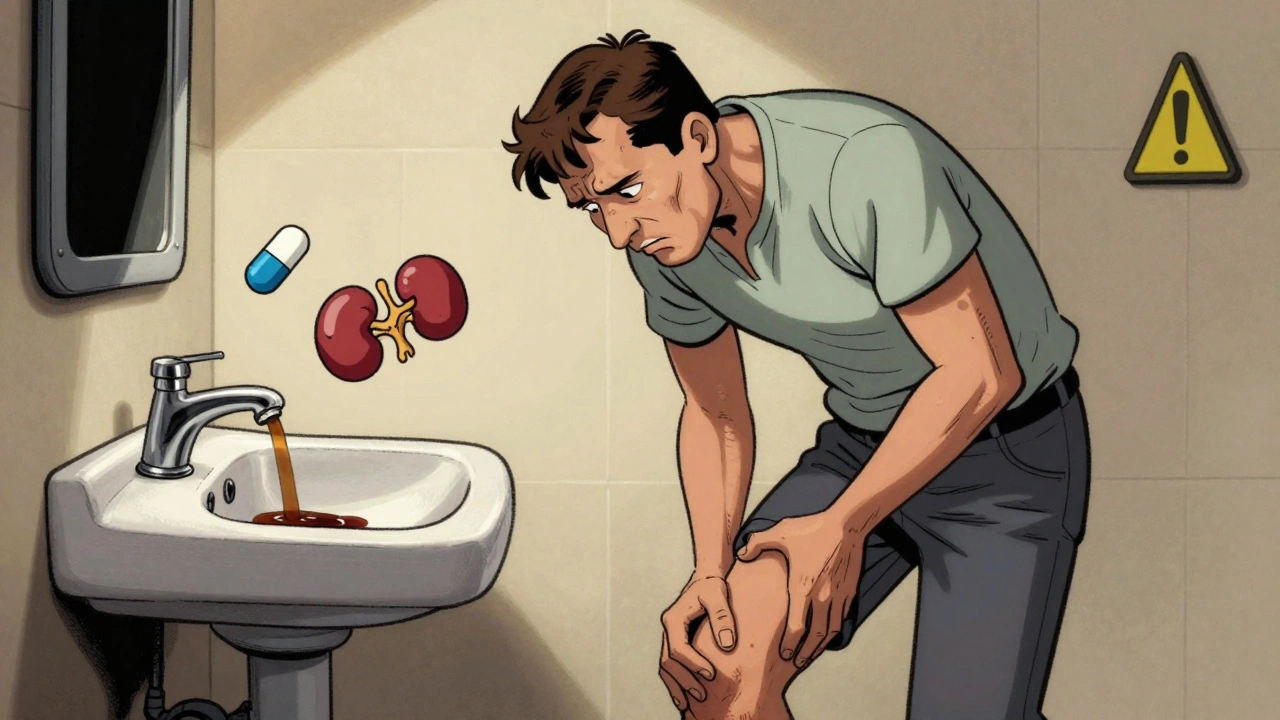
Rhabdomyolysis from Statins: What You Need to Know About This Rare but Dangerous Side Effect
- Robin Tudge
- December 8, 2025
- 12 Comments
Rhabdomyolysis from statins is rare but serious. Learn the signs, risk factors, and what to do if you experience muscle pain while taking cholesterol-lowering meds.
read more