
Bioequivalence Studies: What Makes Generic Drugs Work Like Brand Names
When you pick up a generic pill, you’re counting on it to do the same job as the brand-name version. That’s not guesswork—it’s science. bioequivalence studies, controlled tests that compare how the body absorbs and uses a generic drug versus its brand-name counterpart. These studies are the legal and scientific gatekeepers that let generic drugs hit the market without repeating every expensive clinical trial. Without them, there’d be no way to know if that cheaper tablet actually works the same way. And yes, the FDA requires this proof before approving any generic.
generic drugs, chemically identical copies of brand-name medications approved by the FDA after proving bioequivalence aren’t just cheaper—they’re held to the same exacting standards. The FDA requirements, the strict rules governing how bioequivalence must be demonstrated for generic drug approval demand that the generic releases the active ingredient into the bloodstream at the same rate and to the same extent as the original. This isn’t about matching ingredients—it’s about matching how your body interacts with them. The bioequivalence criteria, the specific metrics like AUC and Cmax used to measure absorption and effectiveness in bioequivalence studies are tightly defined. If a generic doesn’t fall within 80–125% of the brand’s performance in these tests, it gets rejected.
Behind every generic you buy is a stack of data from volunteers who took both versions under controlled conditions—fasted, then fed, with blood drawn at intervals for days. The goal? Prove no meaningful difference in how the drug behaves in your body. This process keeps you safe and saves billions. But it’s not perfect. Some older generics, especially those approved before modern standards, have raised questions. That’s why the FDA keeps reviewing them. And why you should know: when a drug passes bioequivalence testing, it’s not a compromise—it’s a certified equal.
What you’ll find in the posts below are real-world examples of how bioequivalence plays out—how it affects your prescriptions, why some generics cost more than others, how the FDA spots quality issues, and what happens when a drug doesn’t quite measure up. These aren’t abstract rules. They’re the invisible checks that keep your meds working, whether they come with a brand name or not.
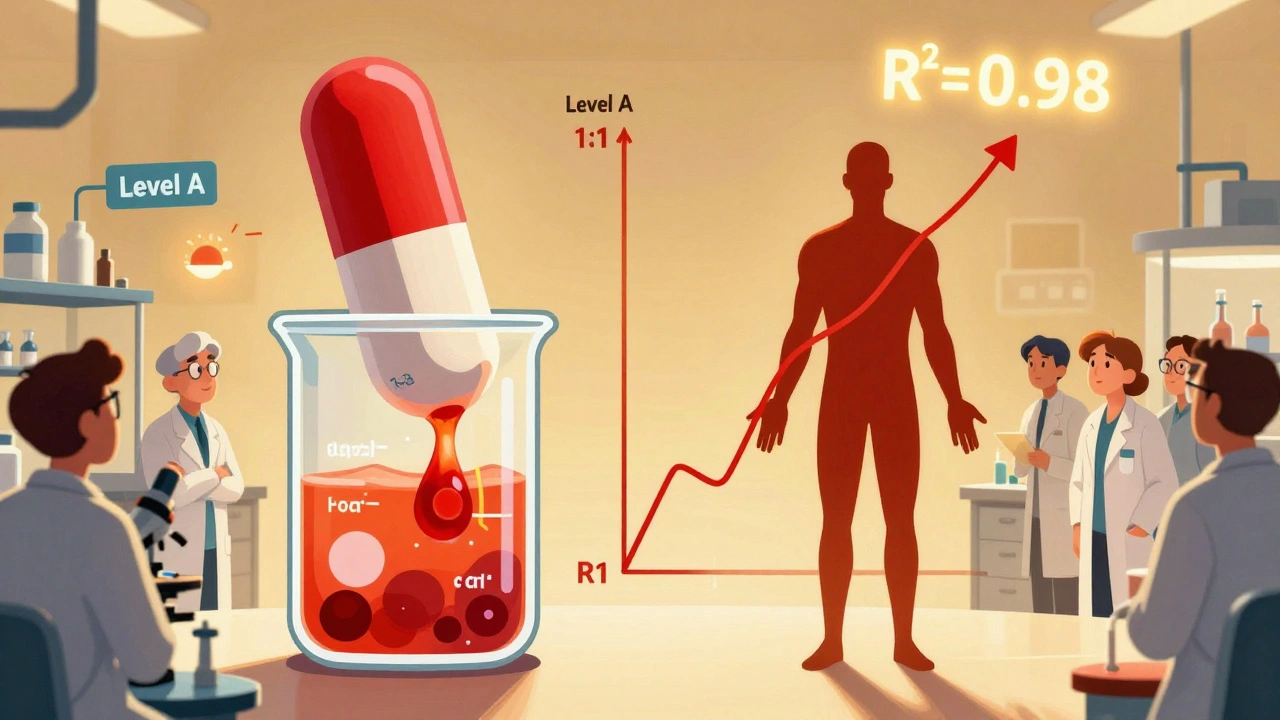
IVIVC and Waivers: How In Vitro Methods Are Replacing In Vivo Bioequivalence Testing
- Robin Tudge
- December 6, 2025
- 15 Comments
IVIVC lets generic drug makers replace costly human bioequivalence tests with lab-based dissolution data. Learn how Level A correlations work, why most submissions fail, and how biorelevant methods are changing the game.
read more