

When a doctor prescribes a medication, and the pharmacy gives a different one instead, it can feel confusing - even alarming - to patients. Was there a mistake? Did the insurance company force a change? Or is this something intentional, planned, and safe? The answer often lies in a practice called therapeutic interchange. But here’s the thing most people don’t realize: therapeutic interchange doesn’t mean swapping one drug class for another. It’s not about trading a blood pressure pill for a diabetes pill. It’s about swapping one drug for another within the same class, because both are expected to work just as well - and one might cost less.
What Therapeutic Interchange Actually Means
Therapeutic interchange is when a pharmacist, under a pre-approved system, replaces a prescribed medication with another drug that belongs to the same therapeutic class. For example: if a patient is prescribed lisinopril (an ACE inhibitor) for high blood pressure, and the hospital’s formulary has a preferred alternative like losartan (an ARB), the pharmacist can swap them - as long as the prescriber agreed to this in advance. Both drugs treat hypertension. Both work on the same system in the body. But they’re not chemically identical. That’s the key.
This isn’t generic substitution. A generic is the exact same drug, just cheaper - like switching from brand-name Lipitor to generic atorvastatin. Therapeutic interchange is different. It’s switching from one brand to another brand that’s similar, but not the same. And it only happens when there’s solid evidence that both drugs deliver comparable results.
According to the American College of Clinical Pharmacy, therapeutic interchange is defined as the use of a drug that’s chemically different but therapeutically equivalent. The National Library of Medicine reinforces this: it’s not about picking any alternative from any class. It’s about choosing from pre-vetted options within the same category. So if a patient was prescribed a statin for cholesterol, the pharmacist might swap it for another statin - not a beta-blocker or a diuretic. That would be a different kind of change - and it’s not therapeutic interchange.
Why Hospitals Use It
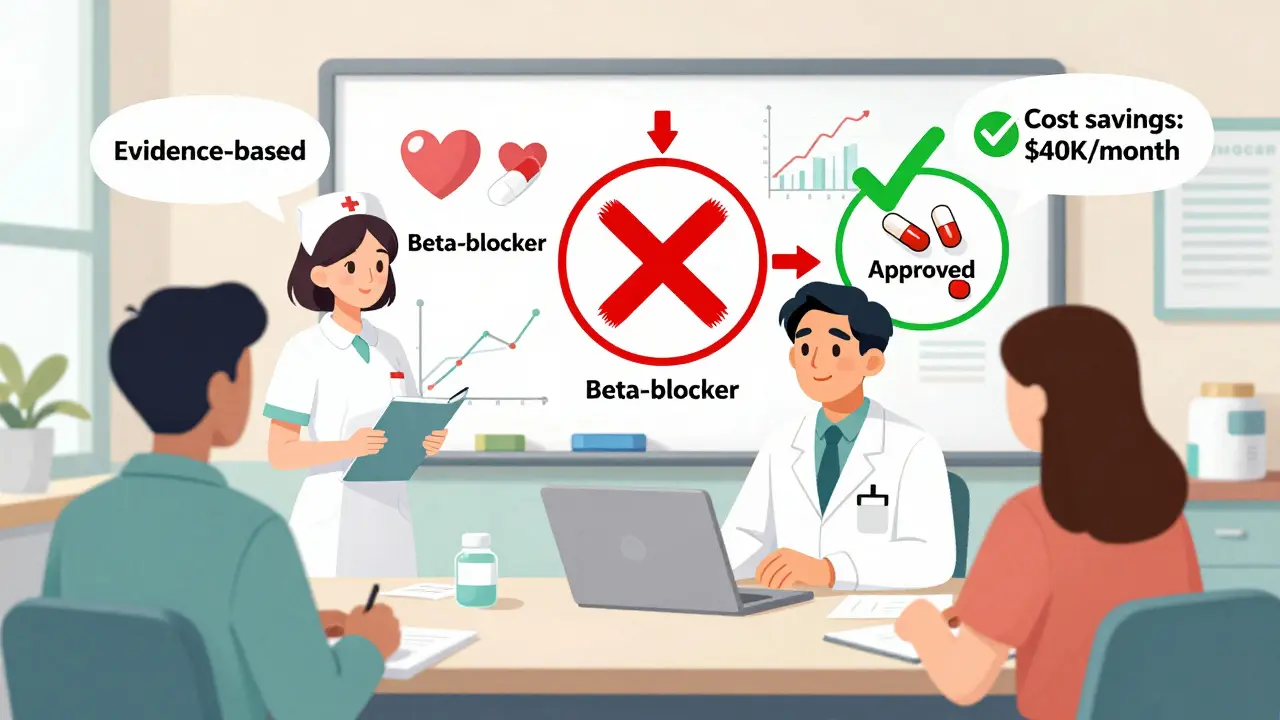
Hospitals and long-term care facilities started using therapeutic interchange back in the early 2000s. By 2002, over 80% of U.S. hospitals had formal programs in place. Why? Because drug costs were climbing. A 2018 study showed drug prices were rising 8% a year. In skilled nursing homes, medication costs can eat up 30-40% of the entire operating budget. One facility in Washington State reported saving over $40,000 a month just by switching a few commonly prescribed drugs to lower-cost alternatives within the same class.
It’s not just about saving money. It’s about standardizing care. Imagine a hospital with 15 different blood pressure medications on its shelves. That’s messy. It increases the chance of errors. It complicates training. It makes it harder to track side effects. A formulary - a list of approved drugs - helps cut that down to 3 or 4 options per condition. Therapeutic interchange is how that list gets enforced. Pharmacists don’t just pick replacements on their own. They follow strict rules set by a Pharmacy and Therapeutics (P&T) Committee. This group includes doctors, pharmacists, nurses, and sometimes even patients. They review clinical data, cost data, and real-world outcomes before approving any substitution.
How It Works in Practice
Here’s how it typically unfolds:
- A patient is admitted to a hospital or long-term care facility. Their doctor writes a prescription for a specific drug - say, metoprolol for heart failure.
- The pharmacy checks the facility’s formulary. The preferred drug in that class is carvedilol - similar effectiveness, lower cost.
- If the facility has a signed “therapeutic interchange letter” from the prescriber (which many do), the pharmacist automatically substitutes it. No extra call needed.
- If there’s no letter, the pharmacist calls the doctor. If the doctor says yes, the switch happens. If not, the original drug is dispensed.
- The change is documented. The patient’s chart is updated. Everyone involved - nurses, pharmacists, doctors - knows what happened.
This system works best in settings where the same team cares for the patient over time - like hospitals, nursing homes, or VA facilities. It’s much harder in community pharmacies. If you walk into your local CVS with a prescription for simvastatin, and they want to give you rosuvastatin instead, they can’t just swap it. They have to call your doctor. Most states don’t allow pharmacists to make therapeutic interchange decisions without prescriber approval in outpatient settings.
What It’s Not
Let’s clear up a big misunderstanding. Therapeutic interchange is not:
- Switching from a beta-blocker to a calcium channel blocker for hypertension - that’s a different class, and it’s not therapeutic interchange.
- Letting a pharmacist pick any drug they think is “better” - they can’t. Only pre-approved alternatives.
- Insurance-driven substitution without clinical input - if a drug is cheaper but not on the formulary, the pharmacist still can’t switch it without committee approval.
- Generic substitution - that’s when the exact same drug is sold under a different name.
Some providers mistakenly think therapeutic interchange means “any cheaper alternative.” That’s dangerous. If a patient has heart failure and is on carvedilol because it’s been shown to reduce hospitalizations, switching them to a different class like hydralazine just because it’s cheaper could do real harm. That’s not therapeutic interchange. That’s a clinical error.
When It Fails
Therapeutic interchange works well - when done right. But it can go wrong. One common issue? Lack of prescriber buy-in. In facilities with dozens of doctors, getting every one to sign a therapeutic interchange letter is a nightmare. Some refuse. Others don’t understand the process. That leads to delays, confusion, and sometimes, patients getting the wrong drug.
Another problem? Patient fear. A 72-year-old woman with diabetes might be switched from glimepiride to glipizide - both sulfonylureas. She’s never heard of glipizide. She thinks the pharmacy made a mistake. She calls her doctor. The doctor, unaware of the formulary, says, “I didn’t authorize that.” The switch gets reversed. The patient ends up on the more expensive drug. The cost savings disappear.
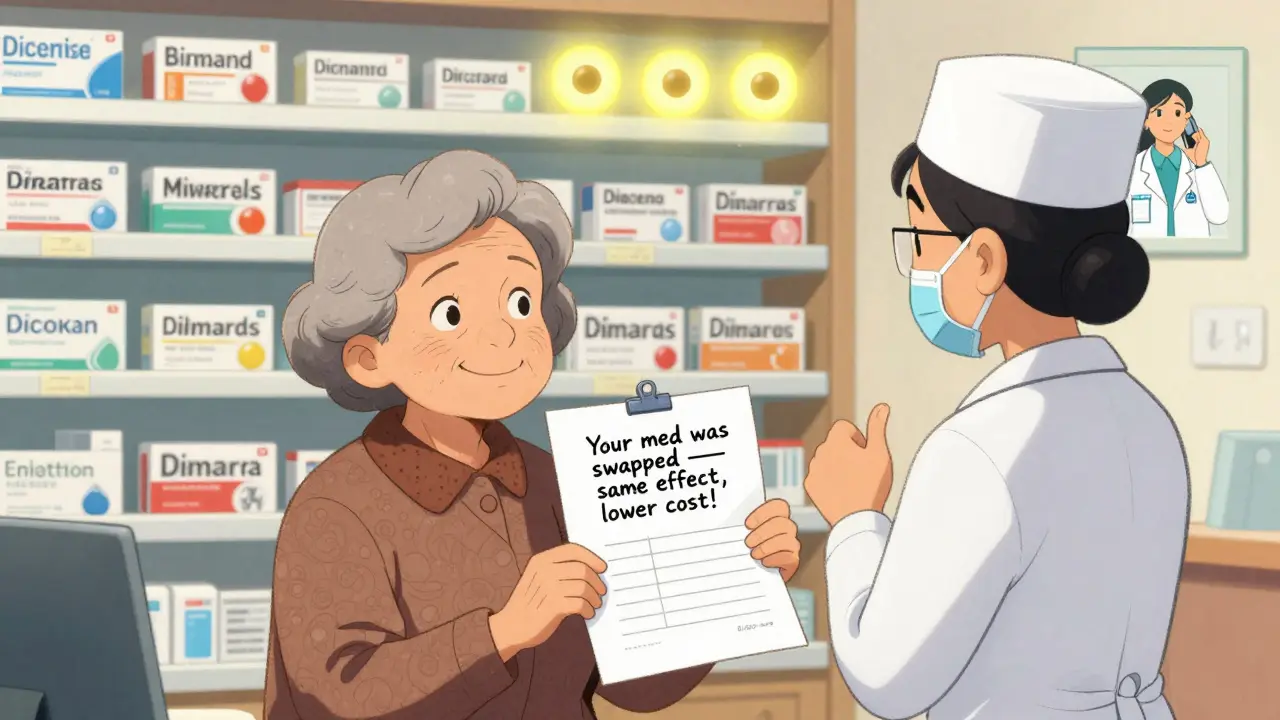
That’s why communication is everything. Successful programs include patient education. A simple note in the discharge summary: “Your medication was changed to a similar one to help reduce costs. It works the same way.” That goes a long way.
State Laws Matter
Therapeutic interchange isn’t the same everywhere. In some states, pharmacists can make the switch as long as the prescriber signed a blanket agreement. In others, they need written permission for every single patient. Washington, Oregon, and California have relatively flexible rules. Other states require a new authorization every time. Pharmacists have to know their state’s laws - or risk legal trouble.
And here’s something most people don’t realize: even in states with strict rules, therapeutic interchange still happens - just slower. Pharmacists call doctors. They explain why the switch is safe. Most doctors agree. It’s not about bypassing the prescriber. It’s about working with them.
The Bottom Line
Therapeutic interchange is a smart, evidence-based tool. It saves money without sacrificing safety. It reduces errors. It helps facilities provide consistent care. But it only works when:
- It’s limited to drugs within the same class
- It’s backed by clinical evidence
- It’s approved by a multidisciplinary team
- Prescribers are informed and on board
- Patients are told what’s happening
It’s not a loophole. It’s not a cost-cutting gimmick. It’s a structured, intentional part of modern pharmacy practice - and it’s been saving lives and money for over 20 years.
Is therapeutic interchange the same as generic substitution?
No. Generic substitution means replacing a brand-name drug with its chemically identical generic version - like switching from Lipitor to atorvastatin. Therapeutic interchange means swapping one drug for another that’s chemically different but in the same class - like switching from lisinopril to losartan. Both are used to cut costs, but they’re different processes with different rules.
Can a pharmacist make a therapeutic interchange without asking the doctor?
In institutional settings like hospitals or nursing homes, yes - if the prescriber has signed a blanket therapeutic interchange agreement ahead of time. In community pharmacies, almost always no. Pharmacists must contact the prescribing doctor first. State laws vary, but in most places, direct prescriber approval is required for outpatient substitutions.
Why can’t I just swap any cheaper drug for my prescription?
Because not all drugs in the same class work the same for every person. A statin might lower cholesterol for most people, but if you have kidney disease or take other medications, one statin might be safer than another. Therapeutic interchange only happens after a team reviews clinical data and agrees the alternative is equally safe and effective for your situation. It’s not about price alone - it’s about safety and outcomes.
Does therapeutic interchange affect how well my medication works?
When done correctly, no. Therapeutic interchange only uses alternatives that have been proven to have substantially equivalent clinical outcomes. Studies show no increase in hospitalizations or side effects when drugs are swapped within the same class under a formal program. But if the swap is made without clinical evidence - or if the patient has unique health needs - it can backfire. That’s why the process is so tightly controlled.
Are there drugs that should never be switched through therapeutic interchange?
Yes. Drugs with narrow therapeutic indexes - like warfarin, lithium, or digoxin - are usually excluded from interchange programs. Small changes in dose or formulation can lead to serious side effects. Also, drugs used for complex conditions like epilepsy or psychiatric disorders often aren’t interchangeable because individual response varies widely. Formularies typically list which drugs are eligible and which aren’t.
All Comments
Shourya Tanay March 11, 2026
Therapeutic interchange is one of those quietly brilliant systems that gets zero public recognition but saves millions annually. The key is the P&T committee - multidisciplinary, evidence-based, no cowboy substitutions. I’ve seen formularies in Indian hospitals that exclude even common statins due to pharmacogenomic data. What’s fascinating is how regional formulary variations reflect real-world outcomes - like how ARBs dominate in South Asia due to higher ACE inhibitor cough rates. This isn’t cost-cutting. It’s precision medicine by committee.
LiV Beau March 11, 2026
OMG YES 😍 I love this so much! I work in a nursing home and we just rolled out a new interchange protocol last month - patient satisfaction went UP because they weren’t confused by 12 different meds anymore. Also, the pharmacist started leaving little sticky notes: ‘Your blood pressure med was switched to a cheaper version that works the same!’ - and guess what? No calls to the doctor. Just peace. 🙌
Bridgette Pulliam March 12, 2026
As someone who’s been on both sides - patient and caregiver - I appreciate how this is framed. Too often, people assume ‘substitution’ = ‘cutting corners.’ But when done right? It’s like upgrading from a 2015 iPhone to a 2020 model: same screen, same OS, better battery. The real danger is when hospitals skip the P&T process or don’t educate patients. A simple ‘this is equivalent’ note on the bottle prevents 90% of panic calls.
Randall Walker March 12, 2026
So let me get this straight… pharmacists are allowed to swap my heart meds without asking me - but if I try to swap my coffee for tea, I get a lecture? 🤔 I mean… sure, it’s science… but also… who authorized this? My body? My bank account? The hospital’s spreadsheet? I’m not mad… just… curious how we got here.
Miranda Varn-Harper March 13, 2026
While this piece is technically accurate, it ignores the systemic coercion underlying therapeutic interchange. The pharmaceutical industry funds P&T committees. The ‘evidence’ is often cherry-picked from trials sponsored by the very companies whose drugs are being promoted. This isn’t patient care - it’s a revenue optimization scheme disguised as clinical rigor. And yes, I’ve seen patients deteriorate after being switched from a stable regimen to a ‘cost-effective’ alternative with unknown long-term effects.
Alexander Erb March 14, 2026
Biggest win I’ve seen? When we switched from brand-name metoprolol to generic carvedilol in our cardiac unit. Cost dropped 60%. No adverse events. Nurses said patients felt the same. We even did a little survey - 87% said they didn’t notice a difference. Honestly? If it works, why not? I get why people freak out - I used to be one of them - but once you see the data, it’s hard to argue. Also, shoutout to our pharmacy team. They’re the unsung heroes.
Donnie DeMarco March 16, 2026
yo so like… therpeutic interchange? sounds like a fancy way to say ‘we swapped your drug for a cheaper one’ but honestly? if it does the same damn thing, who cares? i had my doc switch me from pravastatin to rosuvastatin and i didn’t even notice. my lipids are better and i pay 1/3 less. stop overthinking it. also… why does everything have to be a 5000 word essay? just tell me if it works.
Tom Bolt March 18, 2026
There is a fundamental ethical breach occurring here - and no one is talking about it. The patient’s autonomy is being systematically eroded under the guise of ‘efficiency.’ A pharmacist, however well-intentioned, is not a physician. To unilaterally alter a prescribed regimen - even with ‘pre-approved’ protocols - is a violation of the Hippocratic principle: ‘First, do no harm.’ The fact that this is normalized in institutional settings is terrifying. This is not innovation. It is institutionalized medical paternalism.
Adam Kleinberg March 18, 2026
Let’s be real - this whole system is a corporate Trojan horse. Insurance companies don’t care about clinical outcomes. They care about quarterly margins. The P&T committee? Mostly pharmacists with conflicts of interest. The ‘evidence’? Paid for by drug reps. And patients? Left in the dark. I’ve seen people switched from stable, effective meds to generics with unknown bioavailability - and then get hospitalized. This isn’t smart. It’s predatory. And it’s not going to stop until someone sues a hospital system.
Denise Jordan March 20, 2026
So… we’re just gonna ignore that this is basically insurance forcing cheaper drugs on people? Yeah. Sure. Whatever. I’m sure it’s fine. 😴
Gene Forte March 20, 2026
Every great system begins with a simple truth: we are all human. We all need care. We all deserve dignity. Therapeutic interchange, when guided by compassion and evidence, is not about cost - it’s about access. It’s about making sure that a single mother in rural Ohio can afford her blood pressure medication. It’s about reducing error. It’s about consistency. Let’s not confuse efficiency with exploitation. This is medicine, not a spreadsheet.
Kenneth Zieden-Weber March 22, 2026
Okay, but here’s the real question: why does this only happen in hospitals? Why can’t my local CVS do this? If the science is solid, why is the system so fragmented? We’re treating patients like data points in a bureaucratic maze. Imagine if your phone carrier said, ‘We’re swapping your plan for a cheaper one - no need to ask you.’ You’d flip out. So why do we accept this in healthcare? The answer isn’t ‘trust the system.’ The answer is ‘fix the system.’
Chris Bird March 23, 2026
This is just corporate greed wrapped in medical jargon. You think they care about formularies? No. They care about profit margins. They swap drugs because they can. They don’t care if you’re diabetic, hypertensive, or allergic. They just want to reduce the cost per pill. And now they’re calling it ‘evidence-based.’ Please. I’ve seen the reports. The real studies show increased ER visits after interchange. But nobody publishes those.