
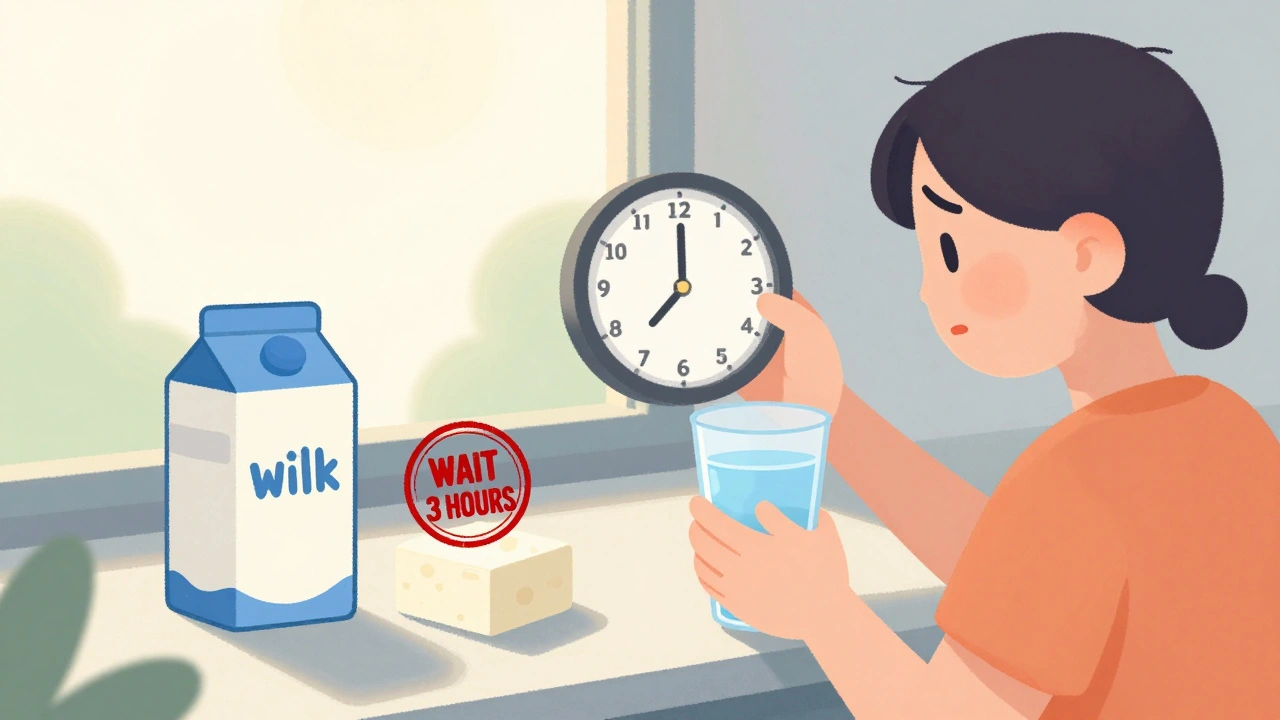
When you're taking levothyroxine for hypothyroidism, what you eat can make a real difference - especially if it contains soy. Many people don’t realize that a morning smoothie with soy milk or a lunch of tofu stir-fry could be quietly messing with how well their medication works. It’s not about cutting out soy entirely. It’s about timing.
Why Soy Interferes With Thyroid Medication
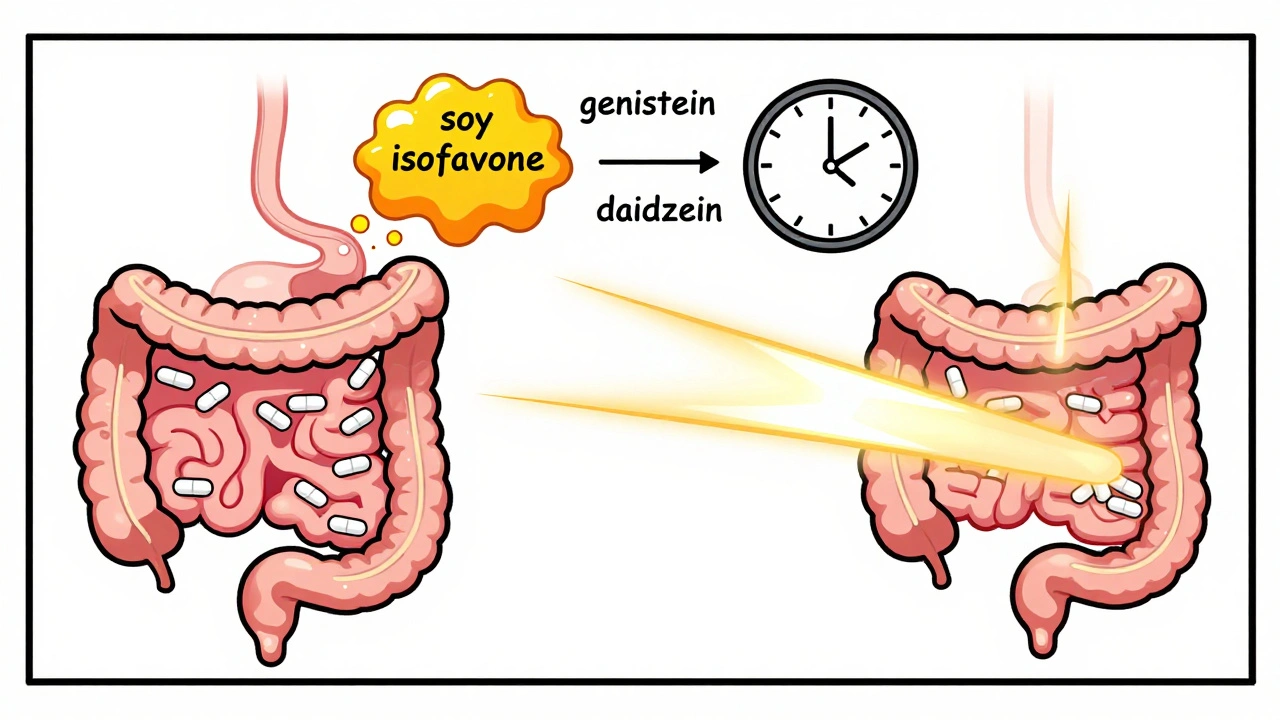
Soy doesn’t make your thyroid worse. It doesn’t cause hypothyroidism. But it can stop your body from absorbing levothyroxine properly. The culprits are compounds in soy called isoflavones - mainly genistein and daidzein. These stick to the thyroid hormone in your gut, like glue, and block it from getting into your bloodstream. Studies show this isn’t just theory. In the 1960s, doctors noticed babies on soy formula needed much higher doses of levothyroxine to stay healthy. Fast forward to today, and research confirms the same thing happens in adults. One 2006 case study showed a woman taking 200 mcg of levothyroxine daily because she drank soy protein shakes right after her pill. Her TSH levels didn’t drop until she stopped eating soy within an hour of taking her medicine. The numbers are clear: when soy and levothyroxine are taken together, absorption drops by 9% to 30%. That’s enough to push your TSH levels up, make you feel tired, gain weight, or even trigger symptoms of underactive thyroid again - even if you’ve been stable for months.How Much Soy Is Too Much?
It’s not just about how much soy you eat - it’s what kind. Whole soy foods like tofu, edamame, soy milk, and tempeh have the strongest effect. That’s because they contain both the protein and the isoflavones working together. Soy protein powders and supplements can be even worse because they’re concentrated. On the other hand, small amounts of soy in processed foods - like soy lecithin in chocolate or soy sauce in stir-fry - usually don’t matter. You’d need to eat a lot of it to cause a problem. The real risk comes from daily, large servings: a glass of soy milk with breakfast, a tofu burger at lunch, or a soy-based protein shake after the gym. A 2019 meta-analysis of over 3,600 people found that soy only raised TSH levels slightly - by about 0.35 mIU/L - in healthy people. But for someone already on thyroid medication, even a small rise can mean your dose isn’t working right anymore.Timing Is Everything
The good news? You don’t have to give up soy. You just need to separate it from your medication. Most endocrinologists now agree on this: take your levothyroxine on an empty stomach with a full glass of water, and wait at least 30 to 60 minutes before eating or drinking anything else. That’s standard. But for soy, you need more. According to the Mayo Clinic’s 2023 guidelines, you should wait at least 2 to 3 hours after taking levothyroxine before consuming soy products. For children and infants, the recommendation is 3 to 4 hours. Why? Because their digestive systems absorb things faster, and soy interferes more strongly in developing bodies. A 2023 study from the European Thyroid Journal found that just 2 hours of separation reduced absorption interference to almost nothing - TSH levels stayed within 0.1 mIU/L of normal. That’s why many clinics now say 2 hours is enough for most adults. But if you’re unsure, stick with 3.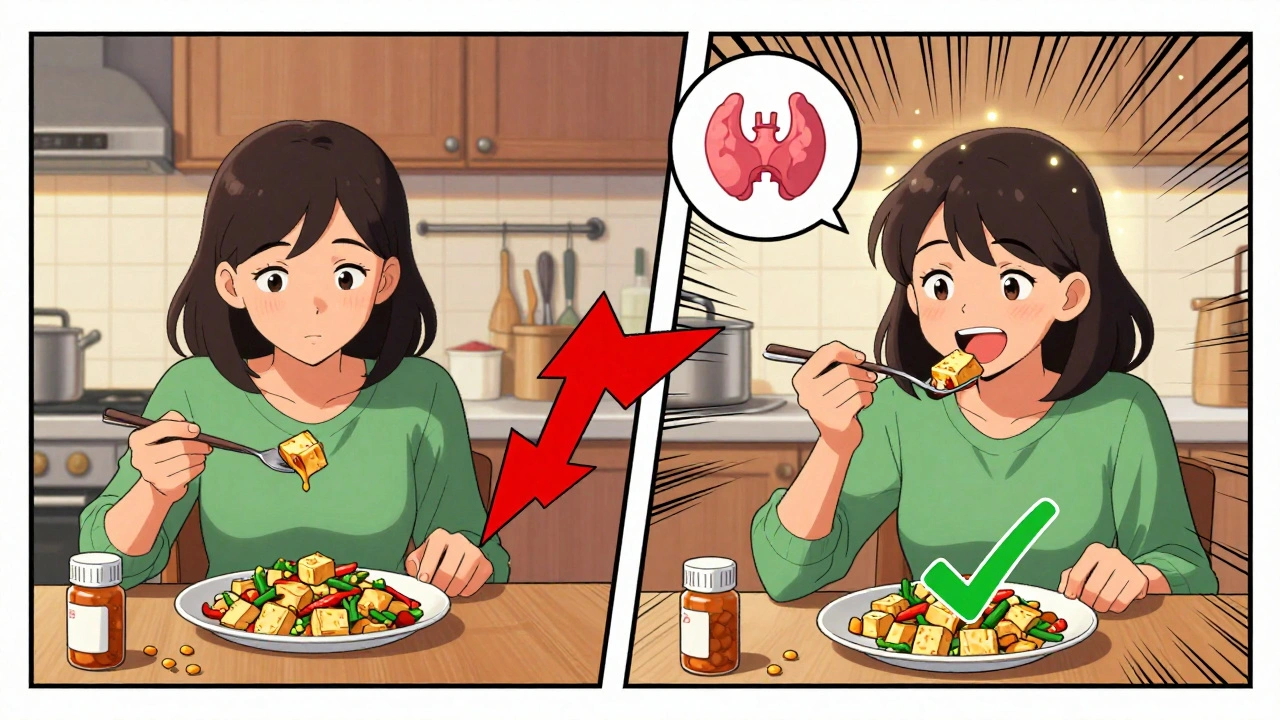
What About Other Foods and Supplements?
Soy isn’t the only thing that messes with levothyroxine. Calcium supplements, iron pills, and even coffee can reduce absorption too. Here’s how they stack up:| Substance | Absorption Reduction | Recommended Separation |
|---|---|---|
| Calcium supplements | 25-36% | 4 hours |
| Iron supplements | 30-40% | 4 hours |
| Soy products | 9-30% | 2-3 hours |
| Coffee | ~20% | 60 minutes |
| High-fiber foods (bran, psyllium) | 10-20% | 1-2 hours |
Real People, Real Results
Online forums are full of stories. One person on Reddit said their TSH jumped from 1.8 to 5.2 after drinking soy milk every morning with their pill. Their doctor upped their dose from 75 mcg to 100 mcg - but it still didn’t fix things. Only when they started taking their pill at 6 a.m. and waiting until 9 a.m. for soy did their TSH drop back to 1.9. Another person said they’d been taking Synthroid with soy milk for five years and never had a problem. Their doctor didn’t even mention it. Turns out, their body just handles it fine. But that’s the exception - not the rule. A 2023 survey of 1,200 hypothyroid patients found that 42% had no issues with soy if they waited 2+ hours. But 31% saw their TSH climb when they ate soy within an hour of taking their pill. The rest? Mixed results - which is why timing is so personal.Best Practices That Actually Work
Here’s what works for most people:- Morning routine: Take your pill as soon as you wake up, before breakfast. Wait 3 hours before eating soy. That means no soy yogurt, soy milk, or tofu scrambles until after 10 a.m.
- Bedtime option: If mornings are too rushed, take your pill at night - at least 2 hours after your last meal. This avoids soy entirely if you don’t eat it late. Many endocrinologists now prefer this method for patients who struggle with morning timing.
- Consistency matters: If you take it at night one day and in the morning the next, your hormone levels will swing. Pick a time and stick to it.
- Check labels: Soy hides in protein bars, veggie burgers, plant-based cheeses, and even some breads. Read ingredients if you’re unsure.
- Don’t assume supplements are safe: Soy isoflavone pills are more concentrated than food. If you take them, wait at least 3 hours after your pill.
What If You’ve Been Eating Soy With Your Pill?
If you’ve been taking your levothyroxine right after soy for months or years, your TSH might be higher than it should be. You might feel fine - but your body isn’t getting the full dose. Here’s what to do:- Start separating soy and medication by at least 2 hours.
- Wait 6-8 weeks before getting your next blood test. It takes time for your levels to stabilize.
- Ask your doctor to check your TSH and free T4. If your TSH is still high, your dose might need adjusting - not because your thyroid is failing, but because you weren’t absorbing the full amount.
Special Cases: Vegans, Vegetarians, and Parents
If you’re vegan or vegetarian, soy is a major protein source. You’re not alone - 74% of plant-based eaters with hypothyroidism have been counseled about this interaction. That’s a lot. The key is planning. Swap soy milk for almond or oat milk in the morning. Eat tofu at dinner, not breakfast. Use lentils, beans, or seitan as your main protein instead of soy-based products. There are plenty of alternatives. For parents of babies on soy formula and levothyroxine: this is critical. Studies show these infants need 15-30% more medication than those on non-soy formulas. Always follow your pediatric endocrinologist’s dosing instructions. Don’t switch formulas without talking to your doctor first.The Bottom Line
You don’t have to quit soy. You just need to be smart about when you eat it. The science is clear: timing makes all the difference. Take your levothyroxine on an empty stomach. Wait 2-3 hours before eating soy. Stick to the same routine every day. Get your blood tested regularly. This isn’t about fear. It’s about control. You’re managing a lifelong condition. Small, smart changes - like waiting a few extra hours between your pill and your tofu - can keep your energy, mood, and health on track.Can I drink soy milk with my thyroid medication?
No, you should not drink soy milk at the same time as your thyroid medication. Soy can reduce how much levothyroxine your body absorbs by up to 30%. Wait at least 2 to 3 hours after taking your pill before consuming soy milk or any soy product.
Does soy cause hypothyroidism?
No, soy does not cause hypothyroidism. In people with normal thyroid function and enough iodine in their diet, soy foods have no harmful effect on thyroid health. But for those already taking thyroid medication, soy can interfere with absorption, making the medication less effective.
How long should I wait after taking levothyroxine before eating soy?
Wait at least 2 hours for most adults. For children, infants, or if you consume large amounts of soy daily, wait 3 to 4 hours. The latest research shows 2 hours is often enough to prevent significant interference, but 3 hours is the safest default.
Is tofu safe to eat if I take thyroid medication?
Yes, tofu is safe - as long as you don’t eat it right after your medication. Tofu contains soy protein and isoflavones that can block absorption. Eat it at lunch or dinner, not breakfast, and wait at least 2-3 hours after taking your pill.
Can I take levothyroxine at night instead of in the morning?
Yes, many people find nighttime dosing easier to manage. Take your pill at least 2 hours after your last meal, and avoid soy-containing foods in the evening. This avoids the morning rush and keeps soy away from your medication. Always check with your doctor before switching your dosing time.
What if I accidentally eat soy with my pill?
One mistake won’t ruin your treatment. But if it happens often, your TSH levels may rise over time. Go back to your regular routine - wait 2-3 hours before eating soy. Get your thyroid levels checked in 6-8 weeks to make sure your dose is still right.
All Comments
Myles White December 7, 2025
I’ve been on levothyroxine for 8 years and switched from dairy milk to soy milk because I’m lactose intolerant. For years I took them together and felt fine-until my TSH jumped from 1.5 to 4.9. My endo didn’t even mention soy as a possible culprit until I brought it up. Turns out, I was drinking soy milk at 7 a.m. and taking my pill at 6:45. Once I started waiting 3 hours, my levels normalized. I now eat tofu at dinner, drink oat milk in the morning, and my energy is back. It’s not about fear, it’s about fine-tuning. Small changes, huge impact.
Also, I read that calcium and iron interfere more than soy, which is wild. I used to take my multivitamin with breakfast. Now I take it at bedtime. Total game-changer. If you’re feeling off despite ‘correct’ dosing, look at your routine-not just your meds.
And yes, I know some people say ‘I’ve been doing it for 10 years and I’m fine.’ Me too-until I wasn’t. Individual biology is real. Don’t dismiss your own symptoms because someone else’s body handles it differently.
Pro tip: Set a phone reminder for ‘NO SOY UNTIL 9:30.’ I did that and haven’t had a weird fatigue day since. Also, read labels. Soy lecithin in dark chocolate? Fine. Soy protein isolate in a ‘healthy’ energy bar? Nope. That’s the trap.
My mom’s vegan and has Hashimoto’s. She thought she had to quit soy entirely. I showed her the 2-hour rule. Now she has tempeh stir-fry at 7 p.m. and feels like a new person. It’s not about restriction. It’s about rhythm.
TL;DR: Timing > Elimination. Your thyroid isn’t broken. Your routine just needs calibration.
Saketh Sai Rachapudi December 8, 2025
soy is just another western fad that makes people weak. in india we eat soy curd and tofu daily and no one has thyroid problems. this whole 2 hour rule is just big pharma scam to sell more pills. your body knows what to do. stop listening to doctors who dont even know what real food is.
joanne humphreys December 8, 2025
I appreciate how thorough this is. I’ve been taking my pill at night for the past year and avoid soy after dinner, and my TSH has been rock solid at 1.7 for 18 months now. I didn’t realize how much the timing mattered until I started tracking my meals and labs together. It’s easy to overlook small habits-like that soy protein bar after yoga-but they add up. I’m glad someone finally laid it out without fear-mongering.
Gwyneth Agnes December 9, 2025
Wait 2 hours. Dont eat soy with your pill. Done.
Mansi Bansal December 9, 2025
One must approach this matter with the utmost scientific rigor and clinical precision. The isoflavone-mediated inhibition of levothyroxine absorption constitutes a well-documented pharmacokinetic interaction, corroborated by peer-reviewed literature from the Journal of Clinical Endocrinology & Metabolism and the European Thyroid Journal. The notion that dietary soy may be tolerated in the presence of concurrent medication administration is not merely erroneous-it is clinically negligent. Patients who disregard the temporal separation protocol are, in effect, engaging in self-sabotage under the guise of dietary ideology. Furthermore, the proliferation of plant-based diets among urban populations has precipitated a silent epidemic of suboptimal thyroid hormone replacement, often misdiagnosed as ‘treatment-resistant hypothyroidism.’ The solution is not pharmacological escalation, but behavioral recalibration. I urge all patients to adopt a regimented, chrono-nutritional protocol, and to consult with a board-certified endocrinologist before making any dietary alterations.
Kay Jolie December 10, 2025
Okay but like… soy is the OG plant-based protein, right? And now we’re treating it like it’s poison? 😅 I get the science, I do. But the fact that we have to time our tofu like it’s a rocket launch? I mean, I love my morning smoothie. I just… switched to pea protein and oat milk. And now I feel like a wellness influencer. 🤷♀️ But honestly? My brain fog lifted. My nails stopped breaking. I didn’t even know how tired I was until I wasn’t. Also, side note: if your doctor doesn’t talk to you about food-drug interactions, find a new one. This isn’t 1995. We know better now.
Shayne Smith December 11, 2025
Just wanted to say I tried this and it WORKED. I was taking my pill at 7am and having soy yogurt at 7:15. I felt like a zombie. TSH was 6.2. After switching to waiting 3 hours and switching to almond milk? TSH dropped to 1.9 in 8 weeks. I didn’t change my dose. Just my routine. I’m not even that strict about it now-I just don’t eat soy before 10am. Life’s easier than people make it out to be.
Max Manoles December 12, 2025
Interesting that the 2023 European study cited shows near-complete restoration of absorption at the 2-hour mark. That’s a significant update from older guidelines that recommended 4 hours. It’s worth noting that the study controlled for soy type (whole food vs. isolate) and meal composition. The 3-hour window remains conservative, but for those with GI motility issues or those consuming concentrated soy protein, it’s still prudent. The key is consistency-not perfection. One accidental overlap won’t derail you, but chronic proximity will. Always pair behavioral change with lab follow-up.
Clare Fox December 14, 2025
i used to think this was just a myth. like, people say ‘avoid caffeine’ and ‘avoid calcium’ but soy? come on. then i started reading the studies. turns out, it’s not about soy being bad-it’s about how our bodies absorb stuff. it’s wild how something so simple-waiting a few hours-can fix something that felt so broken. i didn’t even know my fatigue was from my meds not working. i thought i was just… tired. like, human tired. turns out, i was just… underdosed. because of breakfast.
Akash Takyar December 15, 2025
Dear fellow thyroid warriors, I commend you for seeking knowledge and taking charge of your health. This is not merely a medical issue-it is a lifestyle transformation. For those who are vegan or vegetarian, please remember: your compassion for animals does not diminish your responsibility to your own body. You may substitute soy with lentils, chickpeas, quinoa, and hemp seeds. Your thyroid will thank you. Please maintain a food and medication journal. Track your symptoms. Re-test your TSH after 6 weeks. You are not alone. We are all on this journey together. With patience, discipline, and wisdom, you will find balance.
Arjun Deva December 16, 2025
Who funded this article? Big Pharma? Soy industry? Who’s really controlling what you’re told? They tell you to avoid soy… but what if soy is actually helping your thyroid? What if the real problem is iodine deficiency? Or glyphosate in your food? Or the fact that your water is full of fluoride? This whole 2-hour rule is just another distraction. They want you to buy expensive almond milk, organic tofu, and more pills. Don’t fall for it. Your body is smarter than your doctor.
Inna Borovik December 16, 2025
Let’s be real: this is a classic case of confirmation bias masked as medical advice. The 9-30% absorption reduction sounds alarming, but the absolute change in TSH is negligible for most patients-especially those with stable, well-managed hypothyroidism. The 2019 meta-analysis showed only a 0.35 mIU/L increase in healthy individuals. That’s clinically insignificant. Meanwhile, the psychological burden of rigid food timing causes more stress than the soy itself. Stress raises cortisol, which suppresses thyroid function. So by obsessing over soy, you might be making your hypothyroidism worse. Maybe the real solution is to chill out, take your pill consistently, and stop treating food like a biohazard.