
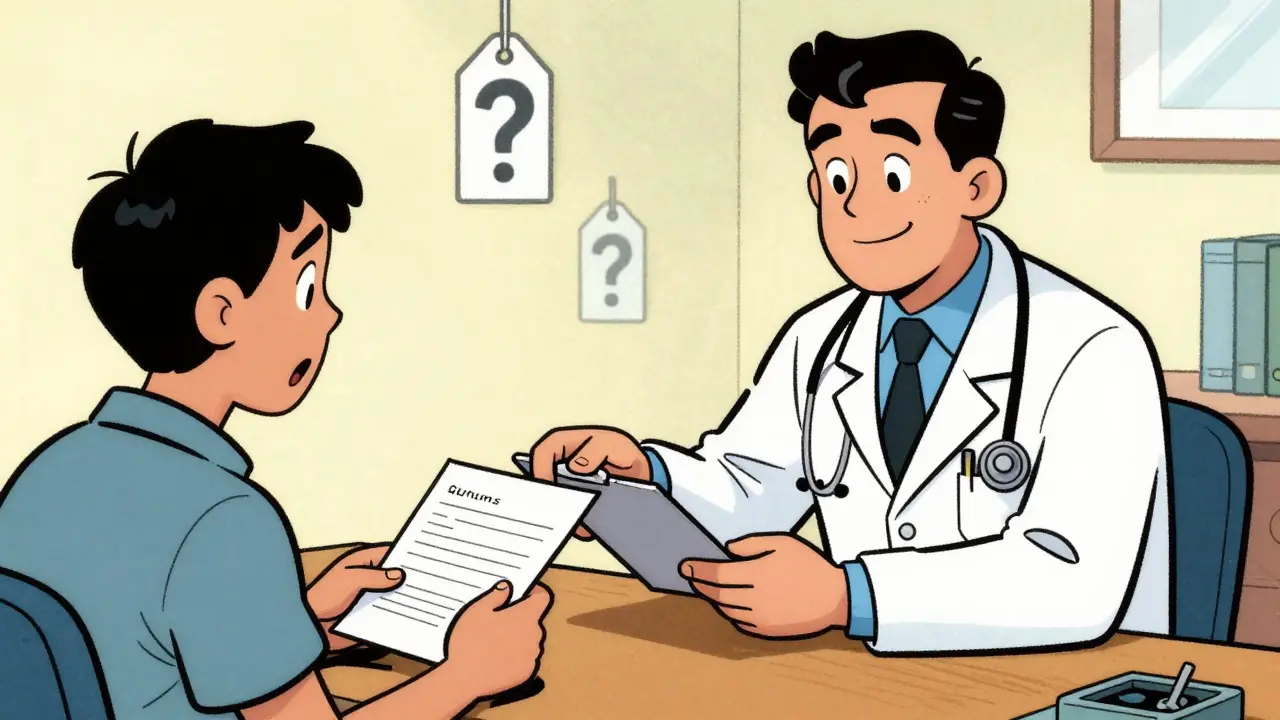
Imagine walking out of a doctor's office with a prescription that you can't afford. You tell your physician, and they frown. They genuinely don't know how much that pill will actually cost you at the pharmacy counter. This disconnect isn't just an annoyance; it's a massive hole in the healthcare system. By now, most of us accept that medical bills are complex, but there is a deeper issue brewing behind the scenes. Do the people writing the prescriptions actually understand the price tags attached to them?
The short answer is mostly no. While we might expect doctors to be experts on everything related to our bodies, including what those treatments cost patients, reality paints a different picture. We are standing in early 2026, and despite years of chatter about "value-based care," the core problem remains stubbornly persistent. Doctors consistently miss the mark when guessing drug prices, and this lack of **provider cost awareness** has real financial consequences for families.
The Shocking Gap in Physician Knowledge
For decades, researchers have tried to measure exactly how well clinicians estimate medication costs. The data is startling. Back in 2007, a major systematic review analyzed nearly 2,000 physicians across various countries. The findings set the stage for all future research. When asked to estimate the price of cheap generic drugs, doctors overestimated the costs by about 31%. Meanwhile, they underestimated expensive brand-name medications by a huge margin-roughly 74%. Accuracy rates were poor across the board, but especially for inexpensive options.
Clinical Cost Estimation is the ability of healthcare providers to accurately assess medication expenses, which directly impacts patient affordability and adherence decisions. Despite efforts to improve transparency, studies from 2024 continue to show that less than half of primary care physicians feel confident discussing these costs with patients.This hasn't changed significantly even as technology advanced. By 2025, a follow-up analysis showed only minor improvements in estimation accuracy. One specific metric that stands out is the threshold of a 25% margin. If a doctor guesses a price within 25% of the actual retail cost, we consider that "accurate." In a comprehensive study involving 254 medical students and practicing doctors, only 5.4% of generic drug estimates fell within this safe zone. For proprietary brand drugs, that number rose slightly to 13.7%, which is still alarmingly low.
Why the Numbers Don't Add Up
You might wonder why a professional who treats the body can't navigate the bill. The answer lies in how pricing works today. Unlike a grocery store where a cereal box has a printed price tag, pharmaceutical pricing is opaque. A drug might cost $15 in one pharmacy and $320 in another, depending on insurance contracts, formulary tiers, and regional agreements. Doctors simply cannot keep up with these shifting variables without specific tools designed to help them.
There is also a misconception about where drug prices come from. Many people, including some in the medical field, assume high prices equal high Research and Development (R&D) costs. This logic suggests that expensive drugs cost more because they were harder to invent. Data from the Kaiser Family Foundation (KFF) contradicts this. Public perception holds that R&D is a major driver, but 44% of medical students understood that prices are actually uncorrelated with development spending. Even fewer understood this dynamic in clinical practice settings.
| Group | Estimation Accuracy Rate | Knowledge of Cost Sources |
|---|---|---|
| Practicing Doctors | 17.81 / 24 Scale | 84% identify sources |
| Medical Students | 15.56 / 24 Scale | 40% identify sources |
| Patients (General) | Variability High | Limited Access |
The table above highlights a critical difference. Experienced doctors do perform better than students, likely due to on-the-job exposure. However, the gap between knowing where to find information and actually using it effectively remains wide. Only 84% of doctors claimed to know a source, compared to 40% of students, yet both groups failed at accurate estimation tasks.
The Impact on Patient Behavior
This lack of knowledge isn't just academic; it changes how people manage their health. When a patient gets a prescription they can't afford, they don't always tell the doctor. They might skip doses, cut pills in half, or stop taking the medication entirely. This leads to worse health outcomes and higher long-term costs. The Kaiser Family Foundation noted that in 2023, 28% of adults reported non-adherence to medication specifically because of cost.
Dr. Daniel Morgan from the University of Maryland summed it up perfectly during a discussion on the Wiley study. He argued that cost awareness is essential for therapeutic reasoning. If you don't account for cost, your treatment plan is incomplete. A regimen that cures a disease financially bankrupts a family, or causes a heart failure due to skipped doses, is ultimately a failure.
Medication Non-Adherence refers to situations where patients fail to take medications as prescribed, often driven by financial barriers and lack of provider communication regarding price.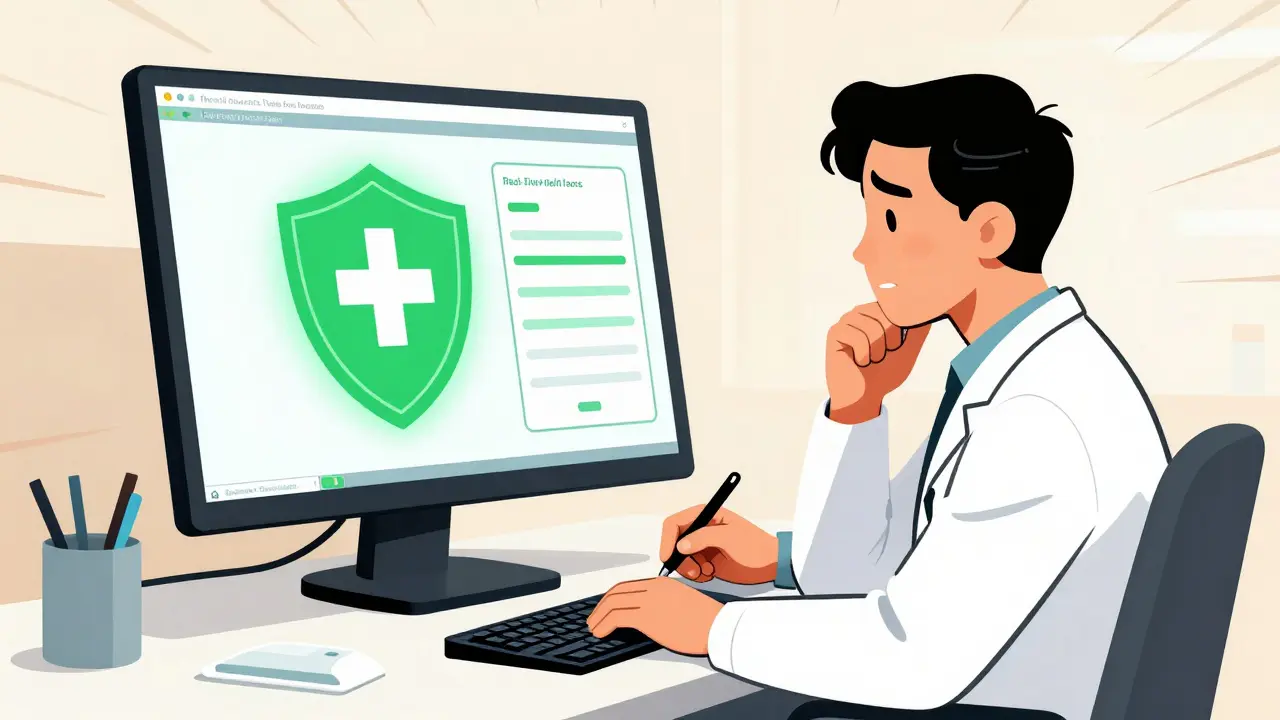
Technology and Point-of-Care Solutions
So, how do we fix this? The leading solution involves electronic systems. Modern hospitals are implementing Real-Time Benefit Tools (RTBTs). These systems sit inside the doctor's computer screen while they type a prescription. Instead of just seeing the drug name, the system pops up a window showing the estimated patient copay based on their insurance status.
A study published in JAMA Internal Medicine examined this exact scenario. Researchers looked at primary care physicians using Epic systems with cost alerts turned on. The result was tangible change. One in eight physicians revised their prescription after seeing a cost alert. That ratio improved to one in six when the potential savings for the patient exceeded $20 per month. This proves that when information is available at the moment of decision, behavior shifts.
However, implementation isn't perfect. Residents discussed on online forums noted that while alerts are helpful, they aren't always precise. An alert might show insurer-specific pricing but fail to account for patient-specific deductible balances. For example, if a patient has already met their deductible for the year, the copay might be lower than the system predicts. Still, having a baseline helps more than guessing blindly. Implementing these tools is expensive-UCHealth spent about $2.3 million developing their integrated system-but the savings on patient out-of-pocket expenses justify the investment for many large networks.
Educational Reform and Future Trends
While software helps, the curriculum in medical schools is catching up slowly. As of late 2024, more than half of U.S. medical schools still lacked formal components dedicated to drug pricing education. Training needs to evolve beyond just pharmacology to include health economics. Dr. Foster Goss and Anna Sinaiko have been pivotal voices here, demonstrating that training improves confidence, even if accuracy remains difficult due to market complexity.
We also see a policy shift reshaping the landscape. The Inflation Reduction Act, passed back in 2022, allowed Medicare to negotiate drug prices. This created a ripple effect. With government scrutiny increasing, drug prices are coming under tighter control. Reports from December 2024 showed that manufacturers increased prices for five major drugs without clinical justification, prompting regulators to flag them.
Looking ahead to the rest of 2026 and beyond, the Institute for Clinical Excellence projects that three-quarters of health systems will adopt advanced benefit tools by 2027. The goal is clear: align the economic incentives of the prescriber with the financial reality of the patient. It is no longer enough to just cure; we must prescribe sustainably.
Why don't doctors know drug prices?
Doctors often lack access to transparent, real-time pricing data. Pharmaceutical costs vary wildly based on insurance plans, pharmacy location, and manufacturer rebates, making it impossible to memorize prices without specialized software assistance.
How does poor cost awareness affect patients?
When physicians prescribe unaffordable medications, patients often skip doses or stop treatment entirely. This leads to medication non-adherence, worsening chronic conditions, and higher emergency room usage rates overall.
Are Electronic Health Records helping?
Yes, integration of cost alerts within EHRs significantly improves prescribing habits. Studies show physicians revise up to 12.5% of prescriptions when presented with out-of-pocket cost warnings during the ordering process.
What role does medical school play in this?
Curriculum gaps remain significant. About 56% of U.S. medical schools lacked specific drug pricing training modules as of 2024, contributing to the knowledge deficit seen in newer practitioners.
Is this changing with new laws?
Legislation like the 2022 Inflation Reduction Act is increasing scrutiny on drug pricing. Medicare negotiation provisions and CMS reporting requirements are forcing greater transparency and encouraging value-based prescribing.