
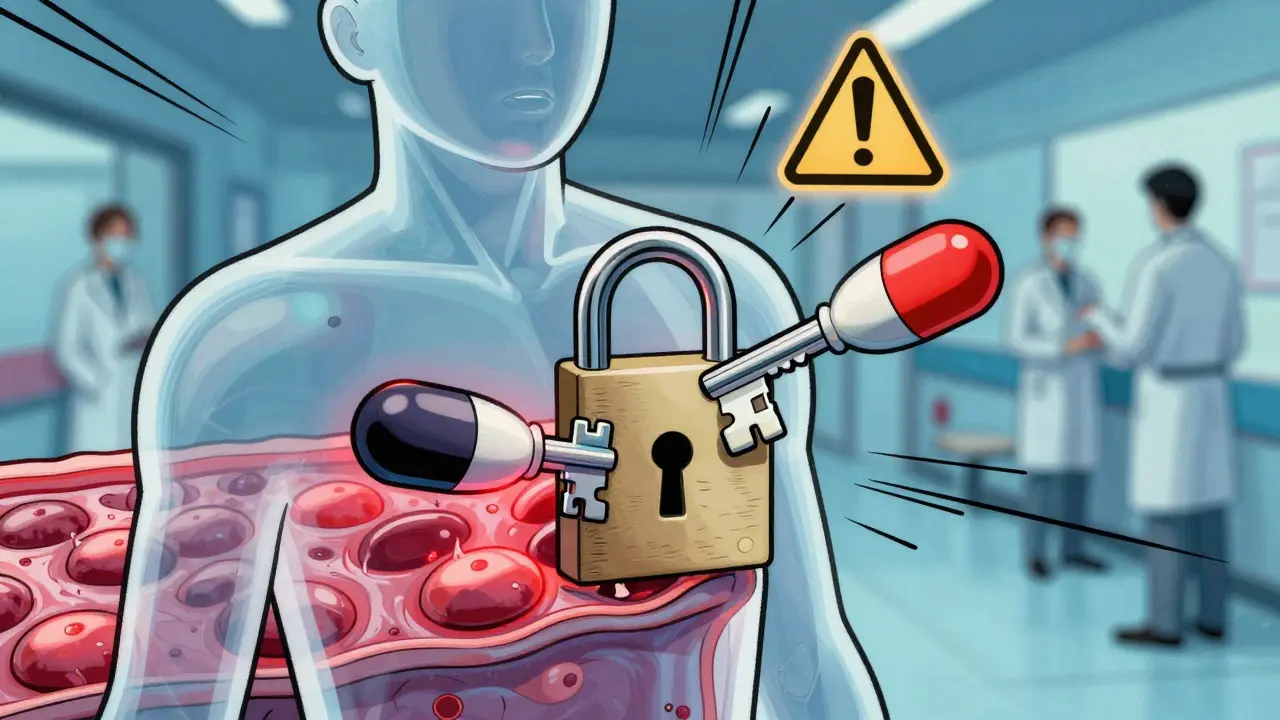
When you take two drugs at the same time, they don’t just sit quietly in your body. They talk to each other - sometimes helping, sometimes hurting. This isn’t about one drug changing how the other is absorbed or broken down. That’s pharmacokinetics. This is about what happens at the receptor level, where drugs actually do their work. This is pharmacodynamic drug interaction - and it’s more dangerous than most people realize.
What Exactly Is a Pharmacodynamic Interaction?
Think of your body’s receptors like locks. Drugs are keys. A pharmacodynamic interaction happens when one key changes how another key fits into the same lock - or even blocks it entirely - without changing how much of the key is in the room. The concentration of the drugs stays the same, but what they do to your body doesn’t. This isn’t theory. It’s daily practice. In hospitals, about 40% of serious drug interactions are pharmacodynamic, according to a 2017 analysis of over 12,000 patient records. And unlike pharmacokinetic interactions - where you can just lower the dose - pharmacodynamic ones often require you to stop one drug completely. Because you can’t dose your way out of a receptor battle.The Three Types: Synergy, Additivity, and Antagonism
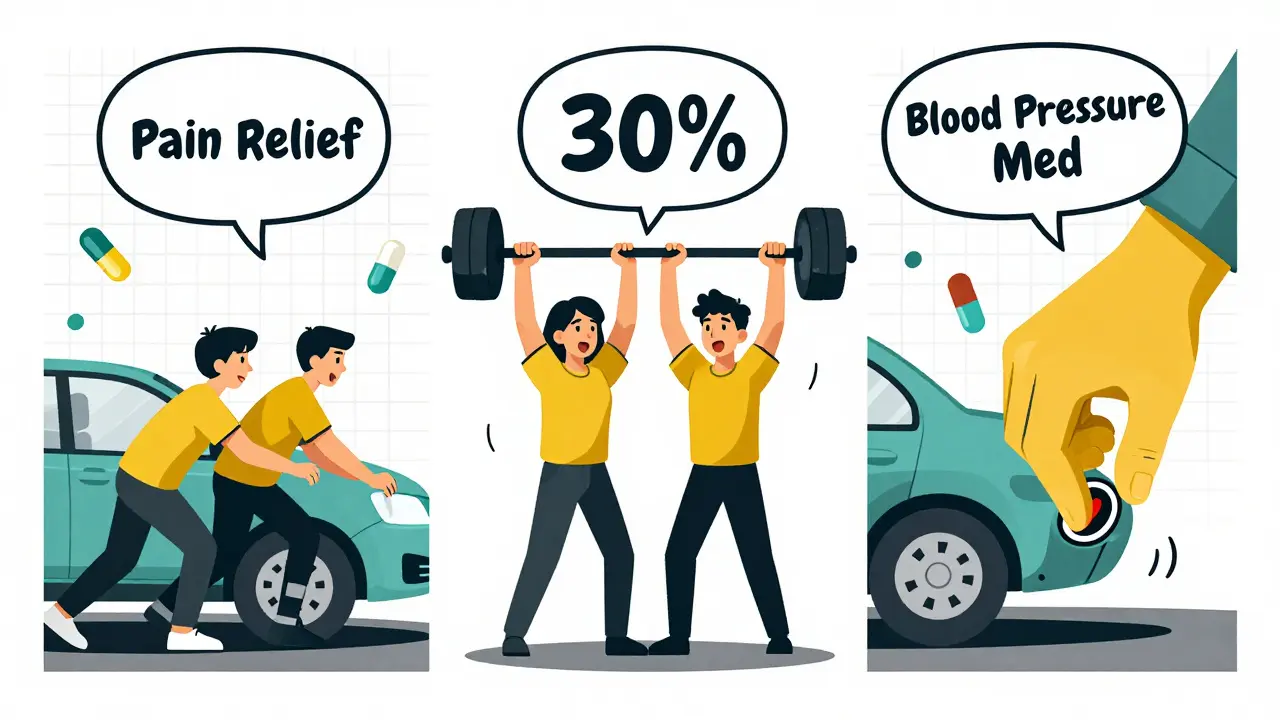
There are three main ways drugs interact at the receptor level:- Synergistic: Together, they do more than the sum of their parts. Like two people pushing a car - one can’t move it alone, but together, they roll it downhill.
- Additive: Their effects just add up. Like taking two painkillers that each reduce pain by 30% - together, you get 60% relief.
- Antagonistic: One drug blocks or reduces the effect of the other. Like turning off the engine while someone’s trying to drive.
Take albuterol and propranolol. Albuterol opens your airways by activating beta-2 receptors. Propranolol blocks those same receptors. If you’re asthmatic and take propranolol for high blood pressure, you could end up with a severe asthma attack - not because the albuterol dose is too low, but because the blocker won’t let it work.
Another example: NSAIDs like ibuprofen and ACE inhibitors like lisinopril. NSAIDs reduce kidney blood flow by about 25% by shutting down protective prostaglandins. That makes ACE inhibitors less effective at lowering blood pressure. You’re not getting the full benefit - and your kidneys are working harder. This isn’t rare. The NHS lists over 280 such combinations as “potentially harmful and contraindicated.”
The Most Dangerous Combinations
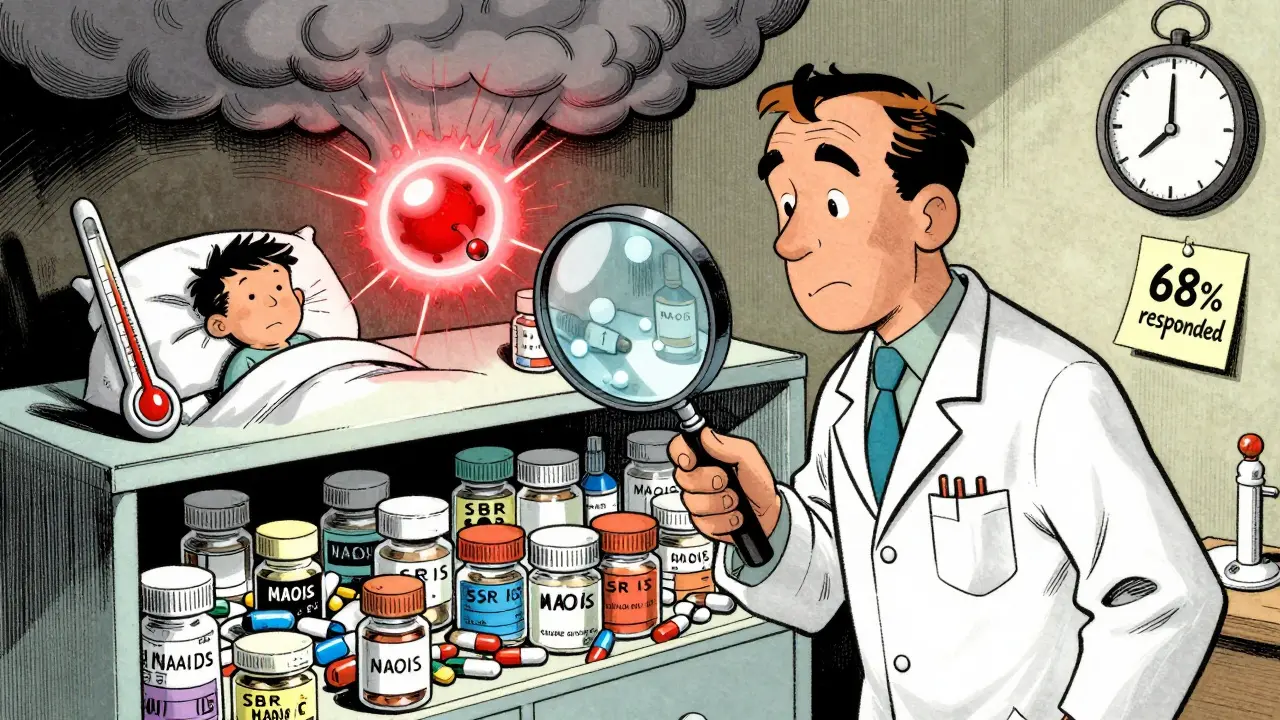
Some interactions aren’t just inconvenient - they’re life-threatening.- SSRIs + MAOIs: Mixing antidepressants like sertraline with MAOIs like phenelzine can trigger serotonin syndrome - a dangerous spike in serotonin that causes high fever, seizures, and organ failure. Studies show this combo increases serotonin syndrome risk by 24 times.
- Opioids + opioid antagonists: Giving naloxone to someone dependent on morphine doesn’t just reverse the high - it triggers full-blown withdrawal, including vomiting, tremors, and cardiac stress. In emergency rooms, this is a known trap for untrained staff.
- Linezolid + SSRIs: Linezolid, an antibiotic, is also a weak MAOI. When paired with sertraline, it caused serotonin syndrome in a 72-year-old patient who spent three days in intensive care. This exact case was posted on r/Pharmacy in 2023 and got over 180 upvotes - because it’s happened more than once.
These aren’t edge cases. They’re textbook examples. And they’re avoidable - if you know to look.
When Interactions Help: The Good Side
Not all pharmacodynamic interactions are bad. Some are designed on purpose.Trimethoprim and sulfamethoxazole (Bactrim) work together to block two steps in bacterial folic acid production. Alone, each drug needs a high dose. Together, they’re more effective at lower doses - reducing side effects and improving outcomes. This synergy cuts the needed dose of each by 75%.
Even more surprising: low-dose naltrexone (an opioid blocker) combined with antidepressants has shown promise in treatment-resistant depression. In a 2021 trial of 142 patients, 68% responded to the combo - compared to just 42% on antidepressants alone. The theory? Naltrexone briefly blocks opioid receptors, causing the brain to ramp up natural endorphin production. That boost may lift mood.
This isn’t magic. It’s pharmacology. And it’s why doctors sometimes combine drugs intentionally - if they understand the mechanism.
Why It’s Hard to Spot
Doctors and pharmacists don’t miss these interactions because they’re careless. They miss them because the systems aren’t built to catch them well.Computer alerts flag over 80% of pharmacokinetic interactions - like statins with grapefruit juice. But for pharmacodynamic ones? Only about 78% of alerts are accurate. The rest are noise. And 22% of dangerous interactions slip through entirely.
Why? Algorithms are built to look for “known pairs.” But what if a new drug acts like an old one? Or what if two drugs don’t share a receptor but interfere through a physiological pathway - like NSAIDs reducing kidney blood flow and blunting diuretic effects? That’s harder to code.
Plus, most clinicians aren’t trained to think in receptor terms. They remember “don’t mix X and Y,” but not why. That’s why 63% of physicians report encountering at least one dangerous pharmacodynamic interaction every month - and 38% of those involve anticoagulants and antiplatelets like aspirin and warfarin.
Who’s at Highest Risk?
It’s not just the elderly - though they’re the most vulnerable.People taking five or more medications - common in chronic conditions like heart failure, diabetes, or arthritis - are at highest risk. The average 70-year-old takes 4.8 prescriptions. Each new drug adds another chance for a hidden interaction.
Drugs with a narrow therapeutic index are the biggest red flags. These are medicines where the difference between a helpful dose and a toxic one is tiny. Think digoxin, warfarin, lithium, or phenytoin. If a drug changes how another one works at the receptor level, even a small shift can mean hospitalization - or death.
And here’s the kicker: 83% of life-threatening pharmacodynamic interactions involve at least one drug with a therapeutic index below 3.0. That’s not a guess. It’s from the NIH’s 2019 analysis.
How to Stay Safe
You don’t need to be a pharmacologist to protect yourself. Here’s what actually works:- Know your top three meds. If you’re on blood pressure meds, antidepressants, or painkillers, know how they work. Google “what does [drug name] do?” - not just “side effects.”
- Ask your pharmacist. Pharmacists see more drug interactions than anyone. Ask: “Could this interact with anything I’m already taking - even over-the-counter stuff?”
- Use trusted databases. The University of Liverpool’s HIV Drug Interactions database is used by 89% of infectious disease specialists. It’s free and covers many non-HIV drugs too.
- Watch for sudden changes. If you start a new drug and feel dizzy, short of breath, or unusually tired - don’t assume it’s “just adjusting.” It could be an interaction.
- Keep a list. Write down every pill, patch, and supplement. Bring it to every appointment. Even “natural” products like St. John’s Wort can block antidepressants.
And if you’re a caregiver for someone on multiple drugs? Be the person who asks the hard question: “Why are we giving both of these?”
The Future: Better Tools, Better Outcomes
The field is changing. The FDA now requires pharmacodynamic interaction studies for all new CNS drugs. The European Medicines Agency saw that number jump from 19% in 2015 to 34% in 2022. That’s because we’re learning how to predict these interactions better.Researchers at UCSF built a machine learning model that predicts serotonin syndrome risk with 89% accuracy. The UK is piloting a system that flags risky combinations in real time as doctors write prescriptions. And a $4.7 million European database launched in January 2023 is building the most comprehensive pharmacodynamic map ever.
But tech alone won’t fix this. The most effective solution? Pharmacist-led reviews. A 2021 review in BMJ found that when pharmacists actively reviewed medications for elderly patients, they prevented 58% of serious pharmacodynamic interactions - mostly by catching NSAID and antihypertensive combos.
That’s the real takeaway: Knowledge + systems = safety. Not just one or the other.
Bottom Line
Pharmacodynamic interactions aren’t theoretical. They’re happening right now - in clinics, hospitals, and homes. They’re silent, often invisible, and sometimes deadly. But they’re not random. They follow rules. Receptors. Pathways. Dose-response curves.You don’t need to memorize every combination. But you do need to know: When drugs combine, they don’t just add up - they change each other. That’s why asking “What does this do?” matters more than ever.
Stay informed. Stay curious. And never assume two drugs are safe together just because your doctor prescribed them.
What’s the difference between pharmacodynamic and pharmacokinetic drug interactions?
Pharmacokinetic interactions change how your body handles the drug - like how fast it’s absorbed, broken down, or cleared. For example, grapefruit juice slows down the breakdown of some statins, making them build up to dangerous levels. Pharmacodynamic interactions change how the drug works at its target - like blocking a receptor or boosting a response - without changing the drug’s concentration in your blood. One is about movement; the other is about effect.
Can over-the-counter drugs cause pharmacodynamic interactions?
Absolutely. NSAIDs like ibuprofen or naproxen can blunt the effect of blood pressure meds by reducing kidney blood flow. Antihistamines like diphenhydramine can add to sedation when taken with antidepressants or sleep aids. Even herbal supplements like St. John’s Wort can interfere with serotonin levels - making SSRIs less effective or increasing serotonin syndrome risk. There’s no such thing as “safe” just because it’s OTC.
Why do some drug combinations work well together?
Some combinations are designed to be synergistic - meaning they hit different targets in the same disease pathway. For example, trimethoprim and sulfamethoxazole block two steps in bacterial folic acid production, making the combo far more effective than either drug alone. Other combinations, like low-dose naltrexone with antidepressants, work by triggering the body’s own healing responses. These aren’t accidents - they’re intentional pharmacology.
Are pharmacodynamic interactions more dangerous than pharmacokinetic ones?
They’re different - and often more unpredictable. Pharmacokinetic interactions can usually be managed by adjusting doses. Pharmacodynamic ones often require stopping one drug entirely because you can’t “dose your way out” of receptor competition. A 2020 analysis found 68% of serious adverse events from pharmacodynamic interactions led to hospitalization, compared to 42% for pharmacokinetic ones.
How can I check for drug interactions myself?
Use free, trusted resources like the University of Liverpool’s Drug Interactions Checker or the FDA’s Drug Interaction Database. Always bring your full medication list - including supplements and OTC drugs - to your pharmacist. Don’t rely on apps that only flag the most obvious pairs. The most dangerous interactions are often the subtle ones, like NSAIDs reducing blood pressure control.
Is this a growing problem?
Yes. As people live longer and take more medications - the average person over 65 takes nearly five prescriptions - the chance of harmful interactions rises. The global market for drug interaction software is growing at over 10% per year. And with aging populations, this isn’t slowing down. The real challenge isn’t finding the interactions - it’s making sure clinicians are trained to recognize and act on them.