
When hurricanes hit, medicines disappear
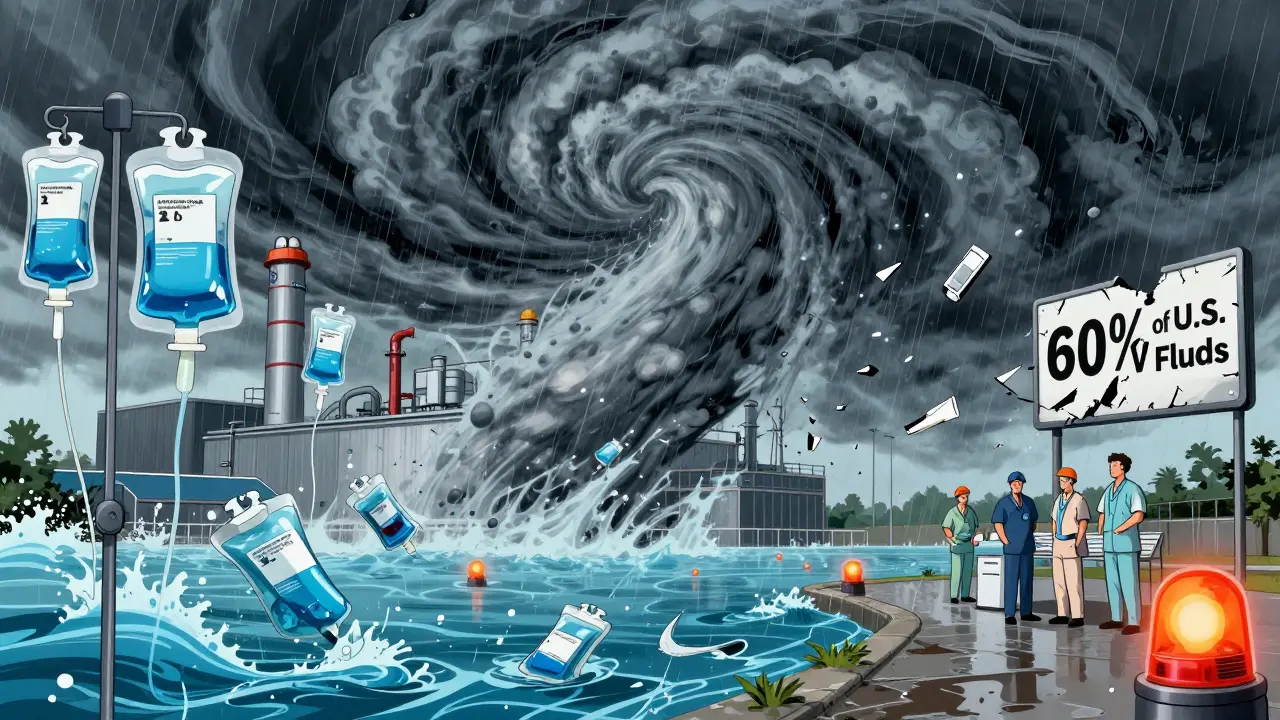
It’s not just homes and power lines that get destroyed in a major storm. When Hurricane Helene slammed into North Carolina in September 2024, it didn’t just knock out electricity-it shut down the single facility in the U.S. that made 60% of the nation’s IV fluids. Within 72 hours, hospitals across the country were rationing saline bags. Cancer patients had to delay treatments. Newborns in NICUs got diluted solutions. Elective surgeries were canceled. This wasn’t an accident. It was a predictable failure.
The U.S. pharmaceutical supply chain is built on efficiency, not resilience. Companies rely on just-in-time production and a handful of high-risk manufacturing hubs. Puerto Rico alone used to produce 10% of all FDA-approved drugs and 40% of sterile injectables. After Hurricane Maria in 2017, insulin and saline shortages lasted over a year. That was a wake-up call. But little has changed.
Why one storm can break the whole system
Most people think drug shortages happen because of cost or demand. But increasingly, they’re caused by weather. Between 2017 and 2024, nearly one-third of all drug shortages in the U.S. were linked to natural disasters, according to the FDA. Hurricanes are the biggest threat-responsible for nearly half of all climate-related disruptions. Floods, wildfires, and tornadoes follow, but none hit as hard or as often.
The problem isn’t just the storm. It’s where the factories are. Over two-thirds of U.S. drug manufacturing facilities sit in counties that have experienced at least one federally declared weather disaster since 2018. That includes places like North Cove, North Carolina-home to Baxter’s IV fluid plant-and Spruce Pine, where 90% of the world’s high-purity quartz is mined for medical device chips. One flood or fire in any of these spots can ripple across the entire system.
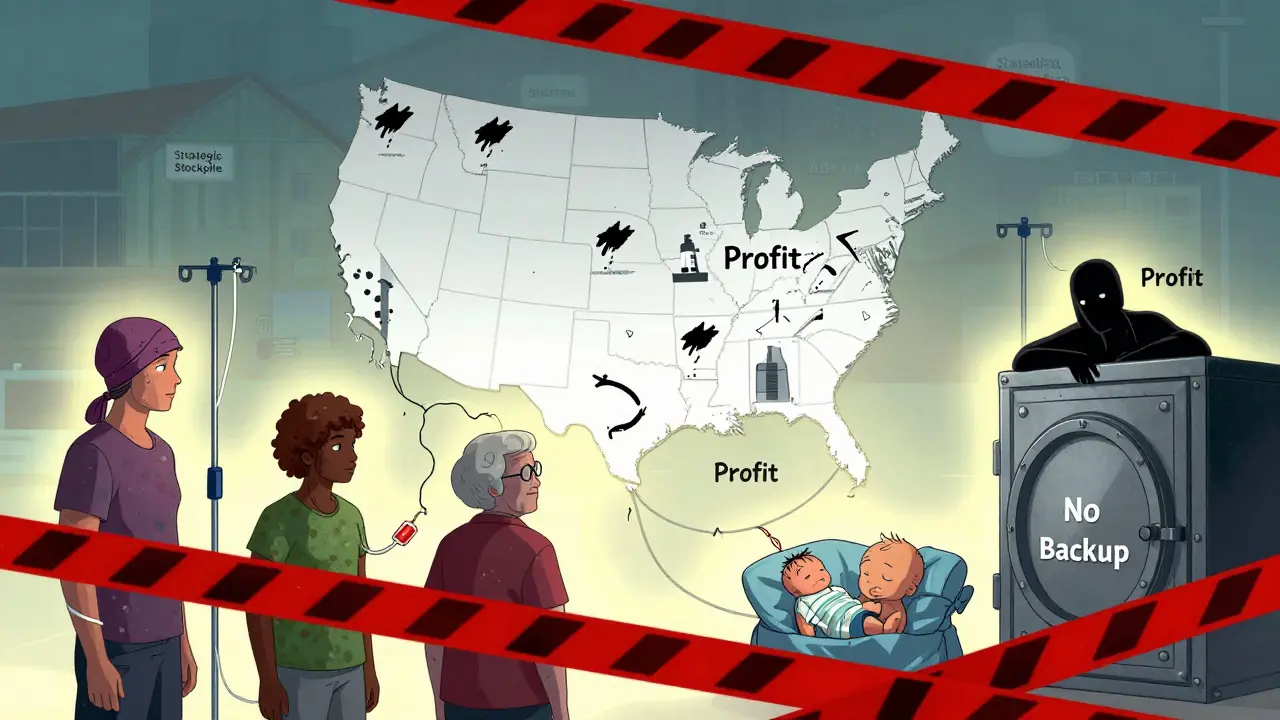
And there’s almost no backup. About 78% of sterile injectable drugs-like antibiotics, painkillers, and chemotherapy agents-have only one or two manufacturers in the entire country. If that one plant goes down, there’s no quick replacement. It takes six to twelve months to get a new facility up and running. Specialized equipment? That can take two to three years to order and install. When disaster strikes, there’s no off-switch to flip.
What drugs are most at risk
It’s not just the flashy new drugs. The most vulnerable are the old, cheap, generic ones that hospitals depend on every day. Saline solution. Epinephrine. Insulin. Fentanyl. These aren’t luxury items-they’re lifelines.
After Hurricane Maria, 14 critical drugs went into shortage. Saline bags dropped to 10% of normal supply. Hospitals had to choose who got fluids and who didn’t. Cancer patients waited weeks for chemo. Diabetics rationed insulin. In 2022, flooding at Abbott’s infant formula plant in Michigan made an already bad shortage even worse. In 2023, a tornado hit Pfizer’s facility in Rocky Mount, knocking out 27 specific medicines.
The pattern is clear: when a disaster hits, it doesn’t just affect one product. It hits categories. IV fluids. Antibiotics. Anesthetics. Sterile injectables. These aren’t optional. They’re used in emergency rooms, ICUs, and operating theaters every single day. When they’re gone, care slows down. People suffer. Some die.
Why the industry isn’t ready
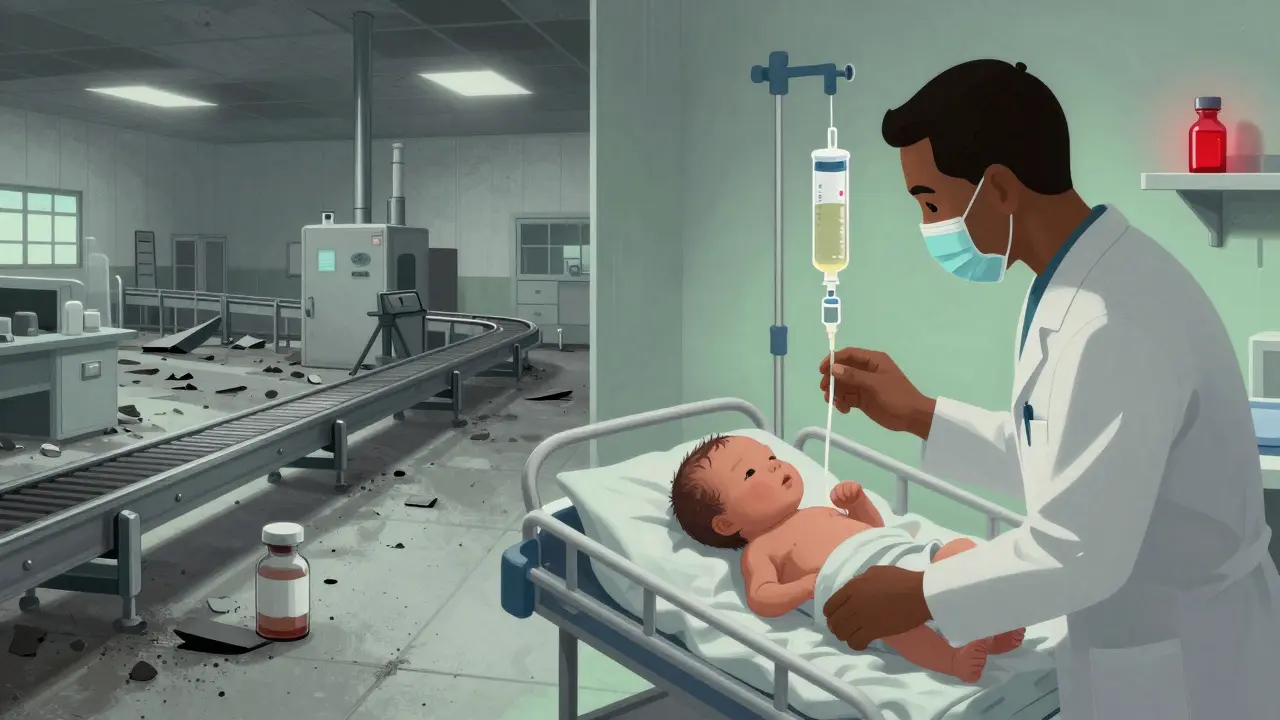
Pharmaceutical companies are good at making drugs. They’re not good at preparing for climate disasters. Most still operate on a just-in-time model-meaning they keep minimal inventory and rely on constant, uninterrupted production. That works fine in calm weather. It collapses when the power goes out for weeks.
Even when companies know the risk, they don’t act. A 2024 Deloitte survey found that 68% of top drug makers now assess climate risks-but only 31% have taken real steps to fix them. Why? Because building redundancy costs money. Storing extra inventory eats into profits. Moving factories to safer areas is expensive and slow. And right now, there’s no law forcing them to do it.
Regulators are starting to catch up. In October 2024, the FDA proposed a new rule requiring manufacturers of critical drugs to keep 90-day emergency stockpiles and submit climate risk plans. That’s a start. But it won’t be mandatory until 2026. And even then, enforcement is uncertain. Meanwhile, hospitals are left scrambling. A 2024 study showed that extending the use-by date of a drug during a shortage takes pharmacy staff 12 to 24 hours per product. That’s hours they don’t have during a crisis.
What’s being done-and what’s not working
Some progress is happening, but it’s patchy. After Hurricane Maria, the FDA started allowing temporary imports of drugs from Europe during shortages. But it took 28 days to get those approvals through. By then, the damage was done.
Now, pilot programs are testing smarter solutions. The Strategic National Stockpile has begun storing emergency IV fluids and injectables in hurricane-prone states. During Helene, that program cut shortage duration by 40% compared to Maria. That’s a win. AI tools like Sensos.io are now predicting storm impacts on supply chains 14 days in advance, letting hospitals order extra stock before the storm hits.
But these fixes are small. Only a handful of hospitals have mapped their entire supply chain-down to Tier 3 suppliers. Mayo Clinic did it, and cut their response time by 65%. But most hospitals, especially smaller ones, don’t have the staff or money to do the same. That means rural clinics and community hospitals get hit hardest when disasters strike.
The future is getting worse
Climate models predict a 25-30% increase in Category 4 and 5 hurricanes by 2030. That’s not a distant threat-it’s a looming crisis. The 65.7% of drug plants in disaster-prone counties are sitting ducks. And as storms get stronger, the gaps in our system will widen.
Experts warn that without major changes, we could see 8 to 10 major climate-related drug shortages every year by 2027. Cancer patients, heart disease patients, newborns, and elderly patients will be the ones paying the price. The American Society of Clinical Oncology says it plainly: treatment delays will become routine.
Some analysts say investing $12-15 billion in resilient infrastructure could cut shortage frequency by 70%. That sounds like a lot-but it’s less than what the U.S. spends on antibiotics in a single year. The cost of inaction? Lives lost, treatments delayed, emergency rooms overwhelmed.
What needs to change
We need to stop treating drug shortages as a supply problem and start seeing them as a climate security issue. Here’s what that means in practice:
- Build redundancy: No critical drug should have only one manufacturer. The government should incentivize multiple production sites in different climate zones.
- Stockpile essentials: IV fluids, insulin, epinephrine, and antibiotics should be held in geographically distributed, climate-proof warehouses. Not just for emergencies-every day.
- Fast-track approvals: During disasters, the FDA needs a real-time approval system for alternative suppliers-not a 28-day paperwork process.
- Protect the vulnerable: Smaller hospitals need funding and tools to map their supply chains. No patient should die because their clinic can’t afford to plan ahead.
- Make manufacturers pay: If a company makes a life-saving drug, it should be required to have a climate resilience plan. No exceptions.
This isn’t about making drugs more expensive. It’s about making sure they’re available when you need them most. A saline bag costs pennies. But when it’s gone, the cost is measured in lives.
What you can do
If you or someone you care about depends on regular medication-especially insulin, IV fluids, or injectables-talk to your doctor. Ask: "Is there a backup plan if this drug goes into shortage?" Keep a 30-day supply on hand if possible. Know your pharmacy’s backup suppliers. Join patient advocacy groups pushing for policy change.
Drug shortages aren’t inevitable. They’re the result of choices we’ve made-and choices we can still change. The next storm is coming. Will we be ready?
All Comments
Lisa Rodriguez January 31, 2026
I work in a rural ER and we just got a shipment of saline that expired last month. They told us to use it anyway because there's no backup. This isn't just policy failure-it's people dying because we chose profits over lives.
My niece is on chemo and we had to drive 90 miles to get her meds last week. No one in power seems to get that these aren't 'inconveniences'-they're life-or-death.
Lilliana Lowe February 1, 2026
The structural vulnerability of the pharmaceutical supply chain is not merely a logistical concern-it is a systemic failure of risk governance in a post-industrial capitalist economy. The reliance on just-in-time manufacturing, devoid of redundancy, is a textbook example of optimization bias leading to catastrophic systemic fragility. The FDA’s proposed 90-day stockpile mandate is a minimal, tardy, and insufficient corrective measure that fails to address the root cause: the commodification of essential medicines.
vivian papadatu February 2, 2026
I’ve been in healthcare for 22 years. I’ve seen shortages before-but never like this.
After Maria, we rationed insulin like it was gold. Last year, a flood took out a plant that made our only source of pediatric antibiotics. Kids got sick. Parents cried. And the corporate reps? They sent us a PDF about "supply chain resilience best practices."
We need warehouses in the Midwest. Not just in hurricane zones. And we need to pay manufacturers to build them-not just beg them.
Nancy Nino February 2, 2026
Ah yes, the classic "climate change is killing your insulin" narrative. How convenient. Next you’ll tell me the reason your car broke down was because of rising sea levels.
Maybe if people stopped demanding free medicine and started paying for it, companies wouldn’t cut corners. Or maybe-just maybe-hospitals should stop being lazy and stockpile like every other industry does.
Jaden Green February 3, 2026
Let’s be honest-this entire article is performative outrage dressed up as journalism. The real issue? The FDA has been over-regulating for decades, making it so expensive and slow to build new facilities that companies have no choice but to consolidate.
And now you want to force them to build redundant plants? At what cost? Who’s going to pay? The patient? The taxpayer? The same people who can’t afford their prescriptions now?
This isn’t about climate. It’s about the fact that we’ve turned healthcare into a moral crusade instead of an economic system. And now we’re surprised when it breaks?
Angel Fitzpatrick February 4, 2026
You think this is about hurricanes? Nah.
This is a psyop. The same people who control the vaccines control the IV fluid plants. They let disasters happen so they can push their digital ID rollout and ration meds under the guise of "emergency."
Did you know Baxter’s plant is owned by a company that also owns the AI system that predicts drug demand? Coincidence? Or is this all part of the Great Reset?
They want you dependent. They want you scared. And they want you to beg for permission to live.
Chris & Kara Cutler February 5, 2026
This needs to go viral. 🚨
Tag your reps. Call your hospital. Tell them: NO MORE RATIONING.
Our lives aren’t a supply chain spreadsheet. 💪
Donna Macaranas February 6, 2026
I read this and just sat there. Not because I didn’t care-but because I’ve seen this movie before. And nothing ever changes.
My dad’s on insulin. We’ve had to switch pharmacies three times in two years just to get it. I don’t even get mad anymore. I just… wait.
Maybe one day someone will fix it. But I won’t hold my breath.
Rachel Liew February 8, 2026
i just want to say thank you for writing this. my mom is on chemo and we lost her meds for 3 weeks last year. we had to drive to three different hospitals. no one helped. no one even apologized.
it feels like we’re invisible. like our lives dont matter unless we’re rich enough to fly to canada for our drugs.
please don’t let this be forgotten.
Melissa Melville February 8, 2026
So let me get this straight-after a hurricane, we’re supposed to believe the reason we can’t get saline is because the factory flooded? Not because the same company made 12 different versions of a drug called 'Vitamin B12 Boost' last year and sold it for $200 a bottle?
Meanwhile, the CEO got a $14 million bonus. Hmm.
Deep Rank February 8, 2026
You know what’s funny? In India, we’ve been dealing with drug shortages for decades-not because of hurricanes, but because of corruption, bad infrastructure, and greedy pharma companies. And yet, we still manage. Why? Because we don’t wait for someone to save us. We find alternatives. We import. We make do.
Here in the US, you all think you deserve perfection. You think medicine should be delivered like Amazon Prime. But life isn’t like that.
Maybe instead of demanding the government fix it, you should learn to adapt. Or at least stop blaming climate change for your entitlement.