
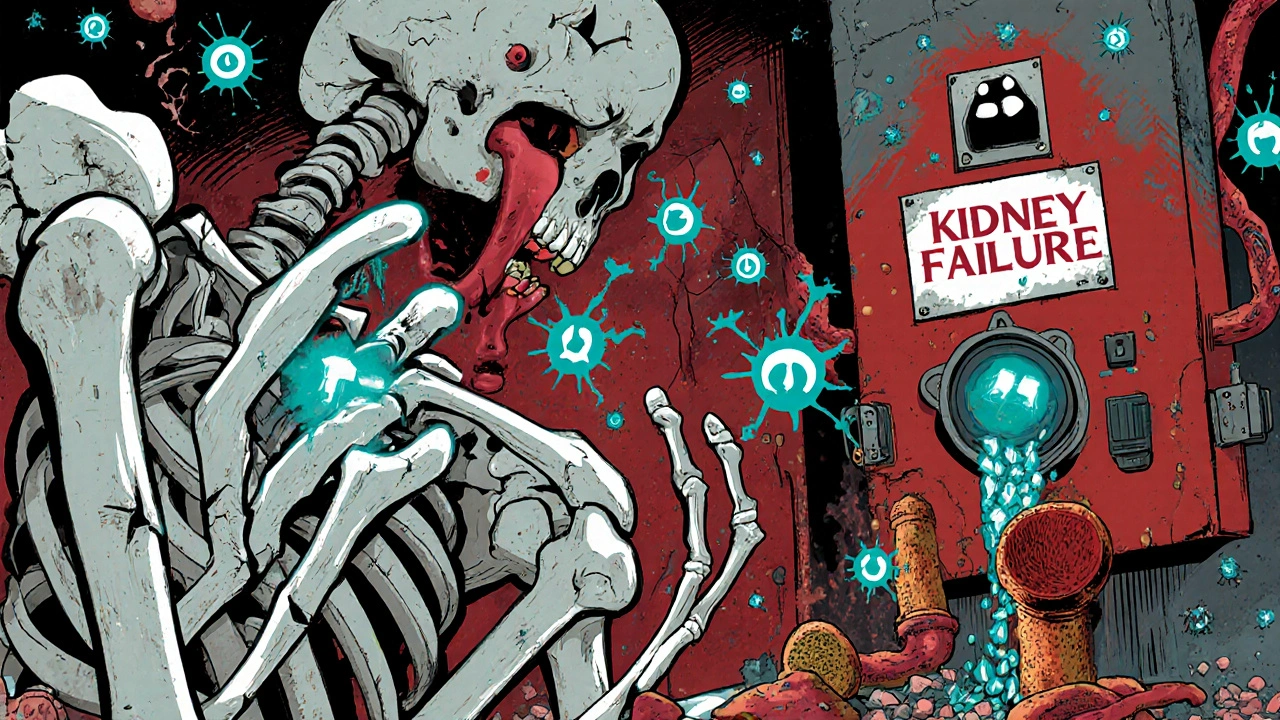
When your kidneys start to fail, they don’t just stop filtering waste. They also lose their ability to keep your bones and blood vessels healthy. This is where CKD-MBD-Chronic Kidney Disease-Mineral and Bone Disorder-comes in. It’s not just a bone problem. It’s a full-body imbalance involving calcium, parathyroid hormone (PTH), and vitamin D that can lead to fractures, heart attacks, and early death. And it affects nearly everyone with moderate to severe kidney disease.
What Exactly Is CKD-MBD?
Before 2006, doctors called this condition renal osteodystrophy, thinking it was only about bone damage. But research showed the problem runs deeper. It’s not just bone weakening-it’s calcium and phosphate swirling out of control, blood vessels hardening like pipes coated in rust, and hormones going haywire. The Kidney Disease: Improving Global Outcomes (KDIGO) group renamed it CKD-MBD to reflect the whole picture.
By Stage 3 CKD (when kidney function drops below 60%), your body already starts struggling. Phosphate builds up because your kidneys can’t flush it out. Your bones stop making enough active vitamin D. Your parathyroid glands go into overdrive trying to fix it. And before you know it, you’re caught in a cycle that gets worse with every passing month.
The Three Players: Calcium, PTH, and Vitamin D
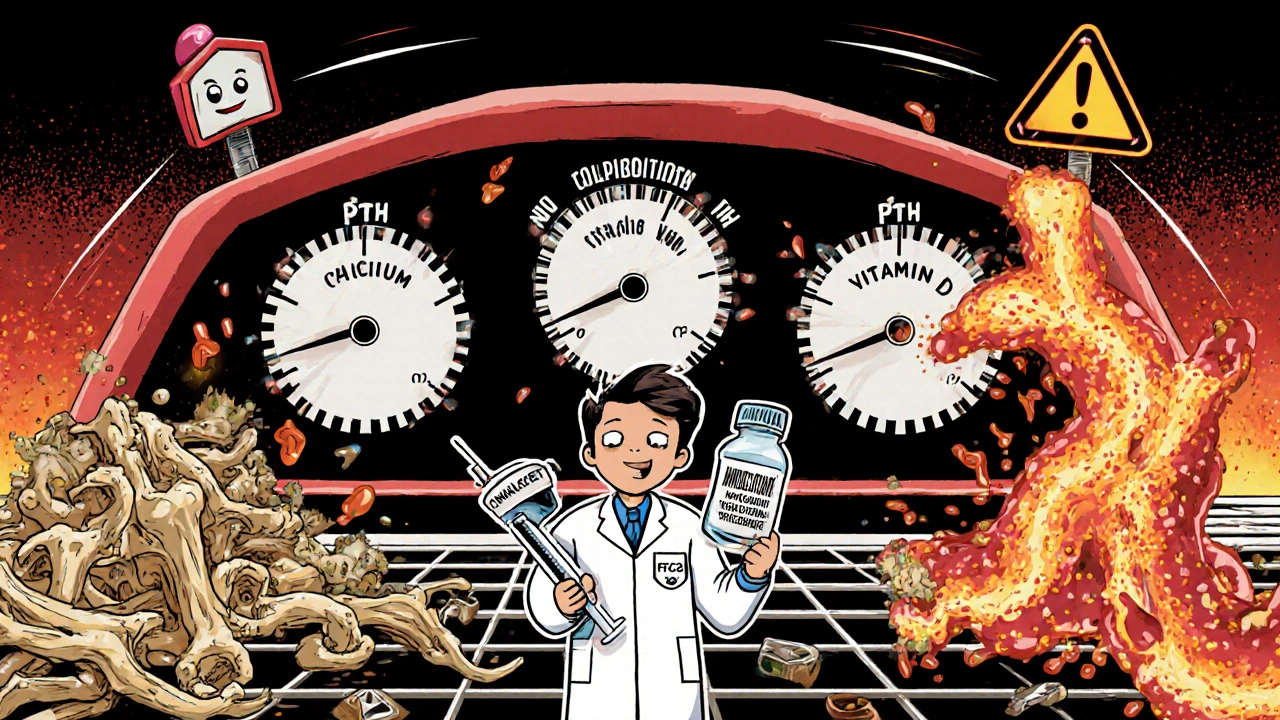
Think of calcium, PTH, and vitamin D as a team that’s supposed to work together. In healthy kidneys, they balance each other. In CKD, they turn on each other.
Calcium is the building block of bones and helps nerves and muscles function. Normally, your kidneys help keep calcium levels steady. But when kidney function drops, calcium levels fall. Your body panics and starts pulling calcium from your bones to keep your blood levels up. That’s why your bones get weak-even if a DEXA scan says your bone density looks fine.
PTH is the hormone your parathyroid glands release when calcium drops. In early CKD, PTH rises to try to pull more calcium from bones and increase vitamin D production. But over time, the glands grow too big and start pumping out too much PTH-sometimes over 800 pg/mL. That’s like a smoke alarm that won’t stop screaming. High PTH doesn’t mean your bones are strong. It means they’re being eaten away.
Vitamin D is the key that unlocks calcium from your food and puts it into your blood. Your kidneys turn vitamin D into its active form, calcitriol. When kidneys fail, they can’t do this job. That means even if you eat enough vitamin D or get sunlight, your body can’t use it. About 80-90% of people with Stage 3-5 CKD are deficient. And low vitamin D doesn’t just hurt your bones-it’s linked to a 30% higher risk of dying.
What Happens When This System Breaks Down
The damage isn’t just in your bones. It’s in your heart.
When phosphate builds up and calcium levels rise together, they form crystals that stick to your blood vessels. This is called vascular calcification. By Stage 5D (dialysis), 75-90% of patients have it. Coronary arteries can calcify three to five times faster than in healthy people. Every 1 mg/dL rise in phosphate means an 18% higher chance of dying from heart disease.
Your bones aren’t safe either. Two main types of bone disease show up:
- High turnover disease (osteitis fibrosa cystica): PTH is sky-high, bones are crumbling, and you’re at risk for fractures. This used to be the most common type-but it’s now less frequent.
- Low turnover disease (adynamic bone disease): PTH is too low, bones stop remodeling, and they become brittle. This is now the most common form in dialysis patients-up to 60%. It’s sneaky because bone density tests look normal, but the bone structure is weak.
Both types increase fracture risk by 2.5 to 5 times compared to people without kidney disease. A simple fall can break a hip-and recovery is harder when your bones are already damaged.
How Is It Diagnosed?
There’s no single test. Doctors look at a mix of blood markers and symptoms.
Here’s what’s checked regularly:
- Serum phosphate: Target is 2.7-4.6 mg/dL for Stage 3-5 CKD. Above 4.5 mg/dL? That’s a red flag. In 70% of Stage 3-5 patients, levels are already too high.
- PTH: Target is 2-9 times the upper limit of normal (usually 150-600 pg/mL). But numbers alone don’t tell the whole story. A PTH of 200 might mean healthy compensation-or it might mean early bone loss.
- Calcium: Keep it between 8.4-10.2 mg/dL. Too low? Bones suffer. Too high? Blood vessels calcify.
- 25-hydroxyvitamin D: Below 30 ng/mL? You’re deficient. Most guidelines now say aim for at least 30, not just 20.
Bone biopsy is the gold standard for knowing exactly what’s happening inside your bones-but it’s invasive. Fewer than 5% of patients get one. Instead, doctors use blood markers like bone-specific alkaline phosphatase (BSAP) and PINP to guess bone turnover.
For vascular calcification, a simple chest X-ray can show calcium deposits. But CT scans (Agatston score) are more accurate. By Stage 4, 40% of patients already have coronary calcification. By dialysis? It’s 80%.
Treatment: Fixing the Whole System
You can’t fix one piece without breaking another. That’s why treatment has to be balanced.
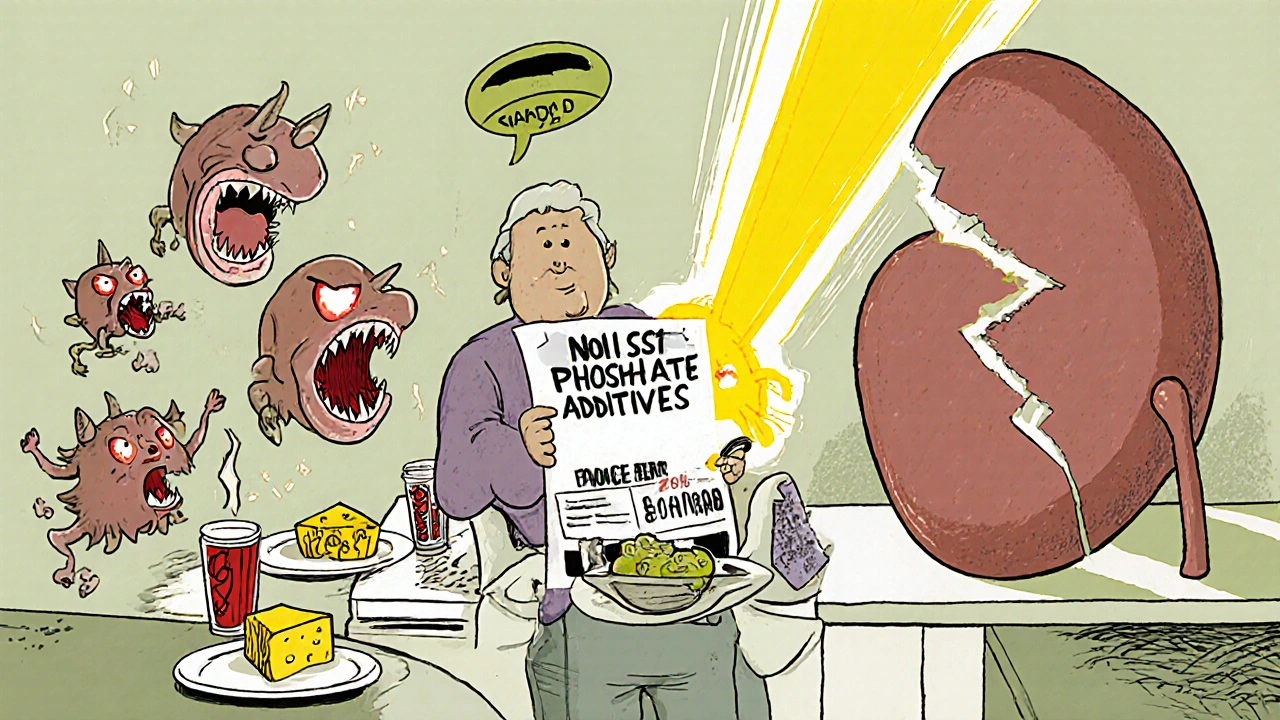
Phosphate control: Diet is first. Cut back on processed foods, colas, cheese, and packaged meats-they’re loaded with hidden phosphate. Aim for 800-1,000 mg/day. If that’s not enough, binders help. But here’s the catch: calcium-based binders (like calcium carbonate) can raise your calcium levels and worsen vascular calcification. So doctors now prefer non-calcium binders like sevelamer or lanthanum carbonate. These don’t add calcium to your blood, but they’re more expensive.
Vitamin D: Start with plain vitamin D3 (cholecalciferol)-1,000 to 4,000 IU daily. It’s safe, cheap, and cuts mortality risk by 15%. Active forms like calcitriol or paricalcitol are only used if PTH is above 500 pg/mL. Why? Because they raise calcium and phosphate too. Too much can cause dangerous calcification.
Calcium: Don’t overdo it. Stick to the target range. Avoid aluminum-based binders-they cause brain toxicity. And don’t take extra calcium supplements unless your doctor says so.
PTH control: If PTH stays above 800 pg/mL despite diet and binders, calcimimetics like cinacalcet or etelcalcetide can help. These drugs trick your parathyroid gland into thinking calcium is higher than it is, so it stops overproducing PTH. Etelcalcetide, given by injection, reduces PTH by 45%-better than cinacalcet’s 30%.
And here’s the newest insight: FGF23-a hormone made by bone cells-is the earliest warning sign. It rises years before phosphate does. In Stage 3 CKD, FGF23 can be 10 to 1,000 times higher than normal. It’s a signal that your kidneys are failing and your body is already in crisis mode. Researchers are now testing drugs that block FGF23 or boost Klotho (a protein that helps FGF23 work). Early animal studies show Klotho supplementation cuts vascular calcification by 50-60%.
What About Children?
CKD-MBD doesn’t just affect adults. In kids, it stunts growth. By Stage 5, many are 1.5 to 2 standard deviations below average height. Their bones don’t grow right because vitamin D and phosphate are out of balance. Aggressive treatment with vitamin D and phosphate binders can help them grow closer to normal-but it has to start early.
The Big Shift: From Numbers to Whole-Body Health
Doctors used to chase numbers: lower phosphate, raise vitamin D, crush PTH. Now we know that’s not enough. One study showed that pushing phosphate below 4.5 mg/dL actually increased death risk-probably because patients ate less protein and became malnourished.
The new goal? Balance. Keep phosphate in range without starving. Keep vitamin D sufficient without overloading calcium. Keep PTH controlled without turning bones to dust. And always watch for calcification.
As one expert put it: "Treating just one piece is like fixing one tire while the rest of the car is falling apart."
What You Can Do Today
If you have CKD:
- Ask for your phosphate, calcium, PTH, and vitamin D levels every 3-6 months.
- Review your diet with a renal dietitian. Avoid phosphate additives-check labels for "phos" or "phosphate."
- Take vitamin D3 as directed. Don’t self-prescribe active forms.
- Don’t ignore bone pain or fractures. They’re not just "old age."
- Ask if you’re a candidate for calcimimetics if your PTH is very high.
And if you’re a caregiver: watch for fatigue, bone pain, or trouble walking. These aren’t normal signs of aging-they’re signs your loved one’s mineral system is failing.
What’s Next?
Research is moving fast. Anti-sclerostin drugs like romosozumab are being tested to rebuild bone in CKD patients. New phosphate binders are in development. And there’s growing evidence that early intervention in Stage 3 CKD-before phosphate spikes-can delay or even prevent the worst of CKD-MBD.
The message is clear: CKD-MBD doesn’t wait. It starts quietly, long before symptoms appear. The sooner you understand it, the better your chances of keeping your bones strong and your heart alive.
Is CKD-MBD the same as osteoporosis?
No. Osteoporosis is bone loss due to aging or hormones, and it’s common in postmenopausal women. CKD-MBD is caused by kidney failure and involves abnormal calcium, phosphate, and PTH levels. While both can cause fractures, CKD-MBD also includes blood vessel calcification and is often linked to low bone turnover-not just low density. A bone scan can’t tell them apart without additional blood tests.
Can I take regular vitamin D supplements if I have CKD?
Yes-plain vitamin D3 (cholecalciferol) is safe and recommended for most people with CKD who are deficient. But avoid active forms like calcitriol or doxercalciferol unless your doctor prescribes them. Active forms can raise calcium and phosphate to dangerous levels, increasing heart risks. Always check your levels before starting any supplement.
Why are phosphate binders so important?
Phosphate can’t be filtered out by failing kidneys, so it builds up in your blood. High phosphate directly triggers vascular calcification and makes PTH rise. Binders stick to phosphate in your gut and stop it from being absorbed. Without them, even a low-phosphate diet isn’t enough. But not all binders are equal-calcium-based ones can worsen calcification, so non-calcium options like sevelamer are preferred for most patients.
Does dialysis fix CKD-MBD?
Not really. Dialysis removes some phosphate and helps with fluid balance, but it doesn’t restore kidney hormone function. Many dialysis patients still have high PTH, low vitamin D, and vascular calcification. In fact, 90% of dialysis patients have CKD-MBD. Dialysis helps, but it’s not a cure. Diet, binders, and medications are still needed.
Can CKD-MBD be reversed?
Some parts can be slowed or partially reversed-especially if caught early. Lowering phosphate and correcting vitamin D can reduce PTH and slow bone loss. Vascular calcification is harder to reverse, but studies show it can stabilize with tight control. In children, aggressive treatment can restore normal growth. But once bone structure is severely damaged or arteries are heavily calcified, full reversal isn’t possible. Prevention is the best strategy.
All Comments
gina rodriguez November 28, 2025
This post really broke it down for me. I’ve been struggling with my phosphate levels and didn’t realize how much it was affecting my heart too. Thanks for explaining the connection between bone health and vascular calcification-it’s eye-opening.
Sue Barnes November 28, 2025
Ugh, another medical jargon dump. Everyone knows dialysis doesn’t fix everything-why do doctors keep acting like it’s magic? You’re just delaying the inevitable with expensive binders and pills.
jobin joshua November 30, 2025
Bro, this is wild 😱 I had no idea phosphate was hiding in my snacks! Just checked my protein bars-'phosphate' in the ingredients list 😳 I’m switching to whole foods now. Thanks for the heads-up!
Sachin Agnihotri December 1, 2025
Really appreciate this breakdown! I’ve been taking vitamin D3 for months now, and my levels finally went up-no more bone aches! But I still don’t know if I should try sevelamer... anyone else on it?
Diana Askew December 2, 2025
They don’t want you to know this, but phosphate binders are just a scam to keep you buying meds. The real fix? Stop eating processed food. And why do they always test calcium? It’s all controlled by the pharma giants.
King Property December 3, 2025
Everyone’s missing the point. The real problem is Klotho deficiency. The science’s been out since 2018-Klotho protein is the key to reversing calcification. But the FDA won’t approve anything because Big Pharma doesn’t profit from proteins. They want you hooked on pills.
Pawittar Singh December 4, 2025
Man, this is gold 🙌 I’ve been telling my cousin with Stage 4 CKD to get his phosphate checked-he was ignoring it. Now I’m sending him this. You’re right-early action matters. Keep spreading this knowledge!
Josh Evans December 5, 2025
Just wanted to say thanks for the clear info. My mom’s on dialysis and we’ve been confused about the vitamin D stuff. We’re starting D3 tomorrow-no active forms. Simple, safe, makes sense.
Allison Reed December 5, 2025
Excellent summary. The shift from chasing numbers to prioritizing whole-body balance is long overdue. I’ve seen too many patients crushed by aggressive phosphate-lowering regimens that left them malnourished. Balance truly is everything.
Jacob Keil December 7, 2025
so like… if the kidneys fail, why dont we just grow new ones? like… nature does it in lizards right? why cant we? maybe its a conspiracy… or maybe we’re just not smart enough… or maybe the system is rigged… idk man
Evelyn Salazar Garcia December 8, 2025
Another American medical blog. We don’t even have access to these binders in rural areas. Why bother?
Alexander Levin December 10, 2025
They’re lying about dialysis. It’s not just a treatment-it’s a money machine. They’ll keep you on it forever while your bones turn to dust. Watch the documentary "Kidney Inc."
Ady Young December 11, 2025
Just had my first FGF23 test done-mine was through the roof. Didn’t even know that was a thing. This post actually made me ask my nephrologist about it. He was impressed. Good info.
Travis Freeman December 12, 2025
As someone who grew up in India and now lives in the States, I’ve seen how different the care is. Here, they test everything. Back home, most don’t even get phosphate checked. This info could save lives where resources are scarce. Thank you for writing this.