
Methadone Cardiac Risk & Monitoring Calculator
-
-
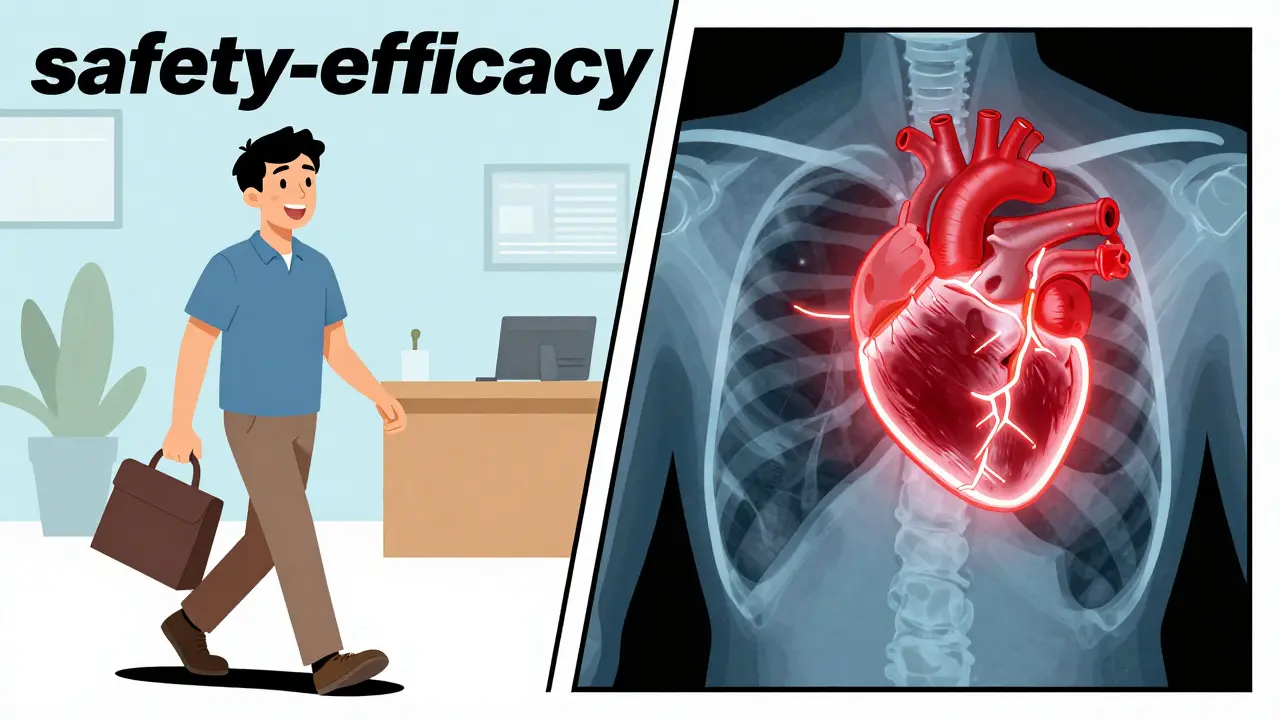
Imagine a patient who is doing great on methadone maintenance-their cravings are gone, they're holding down a job, and their life is stabilizing. But beneath the surface, a silent electrical shift is happening in their heart. This is the "safety-efficacy paradox." The very doses that make the treatment work can also increase the risk of a fatal heart rhythm. For many providers, an ECG is just a piece of paper, but when opioid side effects include the potential for sudden cardiac arrest, that paper becomes a critical safety tool.
What Exactly is QT Prolongation?
To understand the risk, we have to look at the heart's electrical cycle. After the heart beats, it needs to "reset" or repolarize before the next contraction. This reset phase is measured on an ECG as the QT interval. When this interval gets too long, the heart is essentially hanging in a state of electrical instability.
Methadone causes this by blocking the hERG potassium channels (specifically the KCNH2 gene). Normally, these channels let potassium exit the cell to end the electrical impulse. Methadone plugs these channels, slowing down the reset process. If the delay is significant enough, it can trigger Torsades de Pointes, a terrifying ventricular tachycardia that can quickly turn into ventricular fibrillation and cause sudden death.
Measuring the Risk: The QTc Interval
Because heart rate changes the length of the QT interval, doctors use the "corrected" QT, or QTc. Think of this as a normalized value that tells you if the heart is actually delayed regardless of whether the patient's pulse is 60 or 100 beats per minute.
| Status | Men (ms) | Women (ms) | Clinical Action |
|---|---|---|---|
| Normal | ≤ 430 | ≤ 450 | Routine monitoring |
| Borderline | 431 - 450 | 451 - 470 | Increased vigilance |
| Prolonged | > 450 | > 470 | Risk assessment/reduction |
| Critical | > 500 | > 500 | Immediate intervention |
When the QTc hits 500 milliseconds, the risk of sudden cardiac death jumps roughly four-fold. This is the danger zone where medication adjustments are no longer optional-they are mandatory.
Who is Most at Risk?
Not every patient on methadone will develop a long QT. The risk is a combination of the drug dose and the patient's unique biology. A 30-year-old man on 60mg of methadone has a very different risk profile than a 70-year-old woman on 150mg who also takes an antidepressant.
Key risk factors include:
- Age and Gender: Women and those over 65 are significantly more prone to prolongation. Women, specifically, have about 2.5 times the risk of men.
- Electrolyte Imbalances: This is a huge one. If potassium drops below 3.5 mmol/L or magnesium falls below 1.5 mg/dL, the heart becomes incredibly unstable.
- Heart History: People with structural heart disease, heart failure (ejection fraction < 40%), or a history of bradycardia (heart rate < 50 bpm) are at high risk.
- Comorbidities: Sleep Apnea is common in this population. The intermittent lack of oxygen during sleep can further irritate the heart's electrical system, making an arrhythmia more likely.
Dangerous Drug Interactions
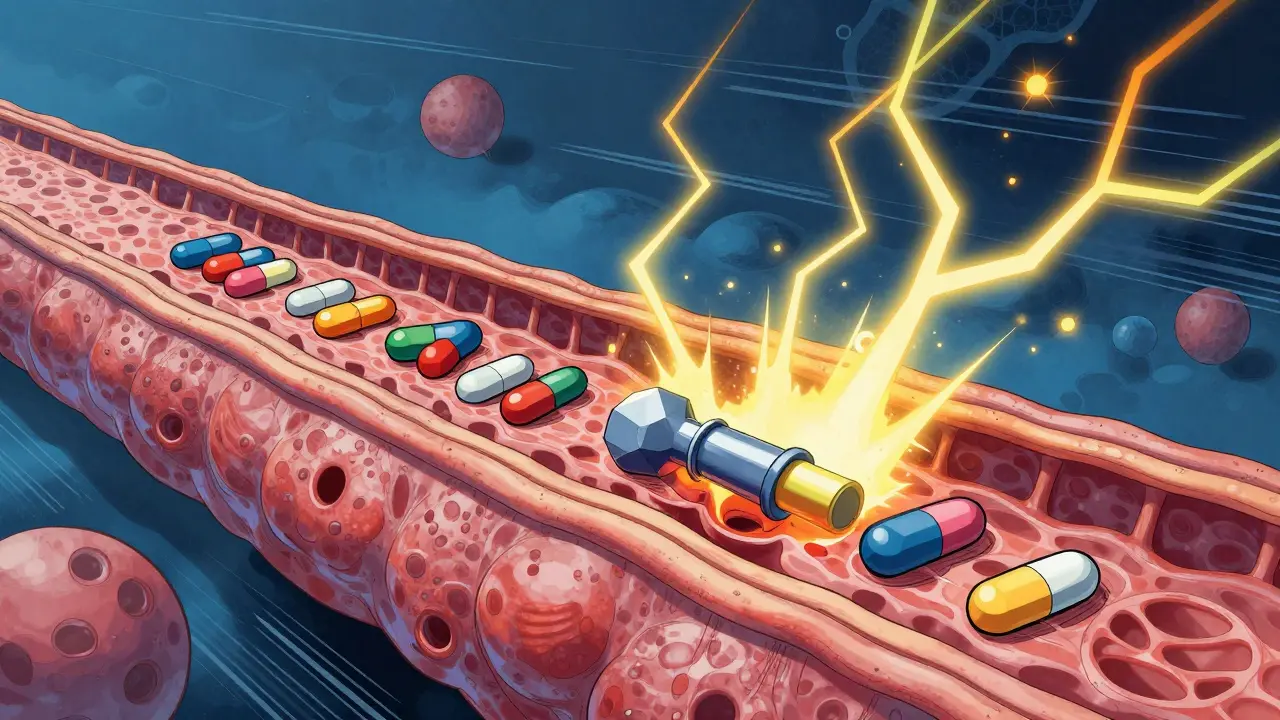
Methadone doesn't act alone. Many patients are on a cocktail of medications for mental health or infections, and some of these act as "force multipliers" for QT prolongation.
The biggest culprits are inhibitors of the Cytochrome P450 3A4 enzyme. This enzyme is responsible for breaking down methadone in the liver. If you block the enzyme, methadone levels in the blood spike. For example, using fluconazole or certain SSRIs like fluvoxamine can increase methadone concentrations by up to 50%, effectively giving the patient a massive dose increase without changing the pill.
Other risky additions include tricyclic antidepressants, haloperidol, and certain antibiotics like moxifloxacin. When these overlap, the risk of Torsades de Pointes moves from "rare" to "serious concern."
ECG Monitoring Protocol: A Step-by-Step Approach
Instead of guessing, clinics should follow a risk-stratified monitoring plan. This ensures that high-risk patients get the attention they need without over-testing low-risk ones.
- Baseline Assessment: Every patient should have an ECG before starting methadone. This tells you if they have a congenital long QT or an underlying heart issue.
- Steady-State Check: Measure the QTc 2 to 4 weeks after starting therapy or after any significant dose increase. This is when the drug has reached a stable level in the blood.
- Ongoing Monitoring:
- Low Risk: (QTc < 450ms men / 470ms women, no other factors) $\rightarrow$ Every 6 months.
- Moderate Risk: (QTc 450-480ms men / 470-500ms women, or 1-2 risk factors) $\rightarrow$ Every 3 months.
- High Risk: (QTc > 480ms men / 500ms women, or 3+ risk factors) $\rightarrow$ Monthly monitoring.
If a patient's QTc increases by more than 60ms from their baseline, or exceeds 500ms total, it's time to act. This usually involves reducing the methadone dose, correcting electrolytes, and bringing in a cardiologist. In some cases, switching to Buprenorphine is the safest move, as it has a much lower affinity for the hERG channels.
The Real-World Impact of Monitoring
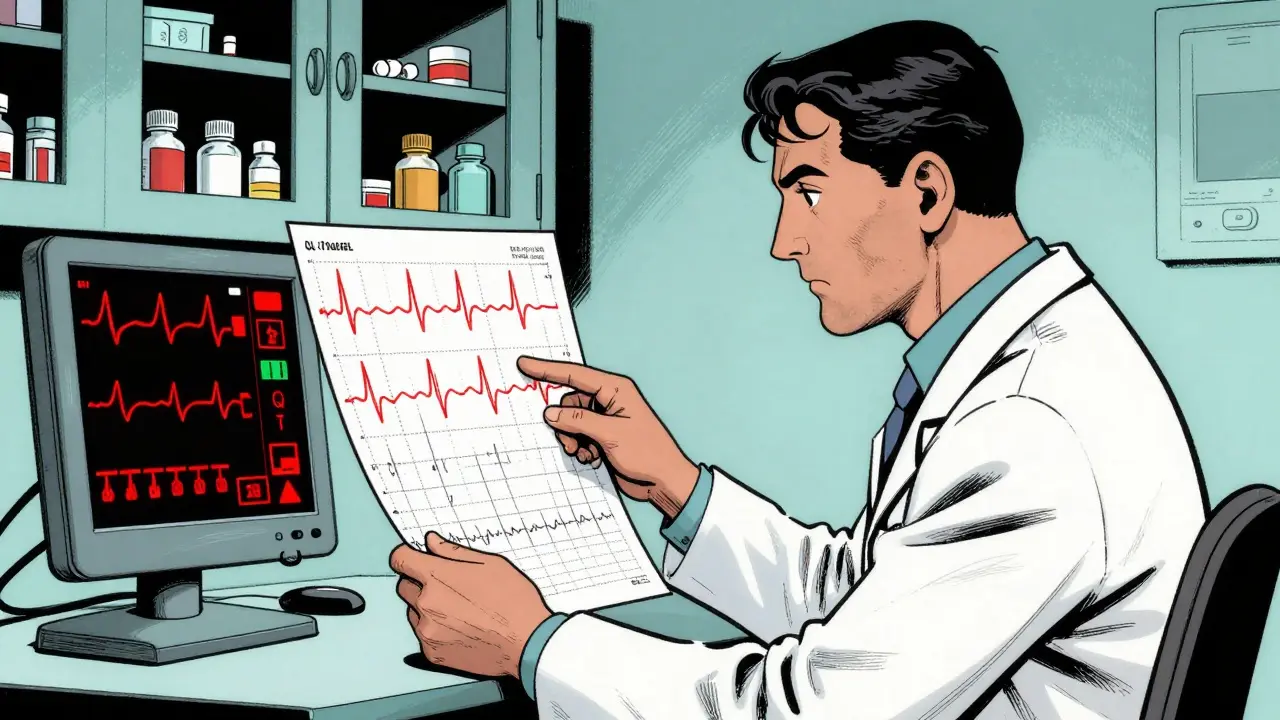
Some might argue that the risk is too low to justify constant ECGs. However, the data says otherwise. A recent study in JAMA Internal Medicine showed that structured QT monitoring protocols reduced serious cardiac events by 67%. That's not just a statistical fluke; it's the difference between a patient staying in treatment and a patient suffering a fatal event.
The tragedy is that these deaths are often misdiagnosed. Because of the stigma around opioid use, when a patient on methadone dies suddenly, the cause is frequently attributed to a "narcotic overdose" or a "drug-related complication." In reality, it may have been a preventable arrhythmia that could have been caught with a simple ECG.
Does every methadone patient need an ECG?
While a baseline ECG is recommended for everyone, the frequency of follow-ups depends on risk. Patients on doses under 100 mg/day with no other risk factors may not need frequent monitoring, but those with high doses, elderly patients, or those on interacting medications require a stricter schedule.
What is the safest alternative if a patient's QT interval is too long?
Buprenorphine is often the preferred alternative because it does not prolong the QT interval to the same extent as methadone. Switching may be necessary if the QTc exceeds 500ms and dose reduction doesn't solve the problem.
How do electrolytes affect methadone's cardiac risk?
Low levels of potassium (hypokalemia) and magnesium (hypomagnesemia) make the heart's electrical system more unstable. This makes it much easier for methadone's blockade of potassium channels to trigger a lethal arrhythmia like Torsades de Pointes.
Can a patient be on methadone if they have a heart condition?
Yes, but they require much closer supervision. Patients with heart failure or a history of bradycardia are categorized as high-risk and should have monthly ECGs and a cardiology consultation to ensure their dose remains safe.
What should I do if a patient's QTc is 510ms?
This is a critical value. You should immediately consider reducing the methadone dose, check for and correct any electrolyte imbalances (potassium and magnesium), and refer the patient to a cardiologist for further evaluation.
Next Steps and Troubleshooting
For clinic managers, the first step is establishing a standardized tracking system. Don't rely on the patient to remember their last ECG; use a digital flag in the electronic health record (EHR) that alerts the provider every 3 or 6 months based on the patient's risk category.
If you encounter a patient with a borderline QTc (e.g., 460ms for a man), don't panic, but do a full medication review. Look for any recently added antidepressants or antibiotics. Often, simply swapping one interacting medication for a safer alternative can bring the QTc back into the normal range without needing to disrupt the methadone dose that is keeping the patient stable.