
Melanoma is the deadliest form of skin cancer, but it’s also one of the most preventable. Unlike other skin cancers that grow slowly, melanoma can spread to other parts of the body in weeks if left unchecked. The good news? If caught early, the five-year survival rate is over 99%. If it’s found late, that number drops to 35%. That’s not a small difference-it’s life or death.
What Causes Melanoma?
Most melanomas are caused by ultraviolet (UV) radiation, mostly from the sun, but also from tanning beds. About 90% of cases are linked to UV exposure, according to the Cure Melanoma Foundation. This isn’t just about getting sunburned once in a while. It’s about cumulative damage over years-every tan, every burn, every hour spent in the sun without protection adds up. People with fair skin, light eyes, or red hair are at higher risk, but melanoma doesn’t care about your skin tone. In fact, melanoma in people with darker skin often appears in less obvious places: under the nails, on the palms, or on the soles of the feet. That’s why it’s often diagnosed later in Black, Asian, and Hispanic populations. One patient on the Melanoma Research Foundation forum shared how doctors kept calling a dark spot on their foot a bruise-until it was Stage III acral lentiginous melanoma.The ABCDE Rule: How to Spot Melanoma Early
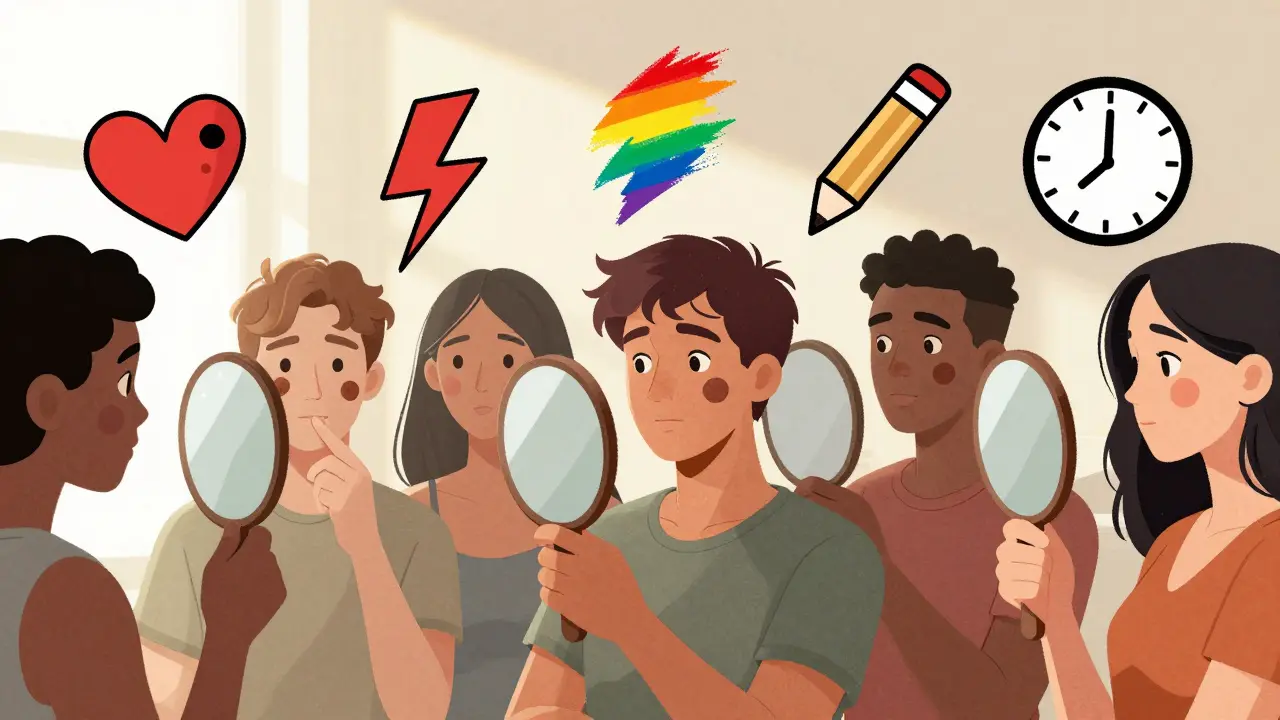
You don’t need a doctor to find a suspicious mole. You just need to know what to look for. The ABCDE rule is the gold standard for self-checks:- Asymmetry: One half doesn’t match the other.
- Border: Edges are ragged, blurred, or uneven.
- Color: Multiple shades of brown, black, red, white, or blue.
- Diameter: Larger than 6mm-about the size of a pencil eraser.
- Evolving: Changing in size, shape, color, or texture over time.
Who Needs Professional Skin Checks?
Not everyone needs to see a dermatologist every month. But if you have any of these risk factors, you should get checked every 3 to 6 months:- More than 50 moles on your body
- A family history of melanoma
- A past diagnosis of melanoma or other skin cancer
- Fair skin that burns easily
- History of severe sunburns, especially as a child
How Melanoma Is Diagnosed
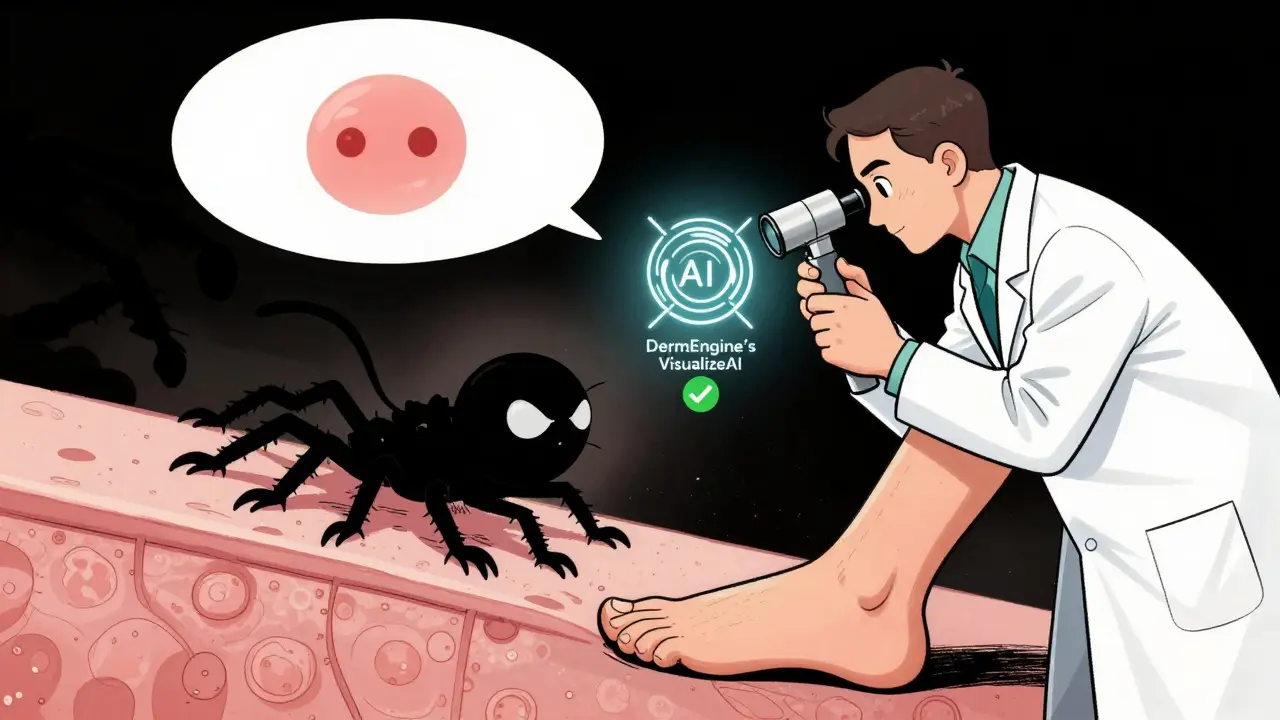
If your doctor spots something suspicious, they’ll likely do a biopsy. That means removing a small piece of the mole and sending it to a lab. It’s quick, local anesthetic is used, and it’s the only way to confirm melanoma. Advanced tools like total body photography and reflectance confocal microscopy are becoming more common in clinics. Total body photography takes photos of your whole skin surface so doctors can track changes over time. It takes 15 to 20 minutes and costs a few hundred dollars-often covered by insurance if you’re high-risk. In early 2025, the FDA approved DermEngine’s VisualizeAI, the first AI-assisted dermoscopy tool. In trials, it spotted melanoma with 93.2% accuracy. It doesn’t replace doctors-it helps them spot things they might miss.Stages of Melanoma and Treatment Options
Melanoma is staged from 0 to IV. Treatment depends entirely on how far it’s spread.- Stage 0 (in situ): Only in the top layer of skin. Treated with simple surgery-removing the mole with a small margin of healthy skin. Survival rate: nearly 100%.
- Stage I-II: Still localized, but deeper. Surgery is still the main treatment. For tumors over 0.8mm, doctors often do a sentinel lymph node biopsy to check if cancer has reached nearby lymph nodes. Five-year survival: 90-97%.
- Stage III: Cancer has spread to lymph nodes. Surgery is followed by immunotherapy drugs like nivolumab, pembrolizumab, or ipilimumab. These help your immune system fight the cancer. Annual cost: $150,000-$200,000. Side effects can be serious, but they’re often manageable.
- Stage IV: Cancer has spread to distant organs like the lungs, liver, or brain. Immunotherapy is the first line. The combo of nivolumab and ipilimumab (from the CheckMate 067 trial) gives a 52% five-year survival rate. Targeted therapy (like dabrafenib and trametinib) works only if you have a BRAF gene mutation-which about half of melanoma patients do.
Cost and Access: The Hidden Crisis
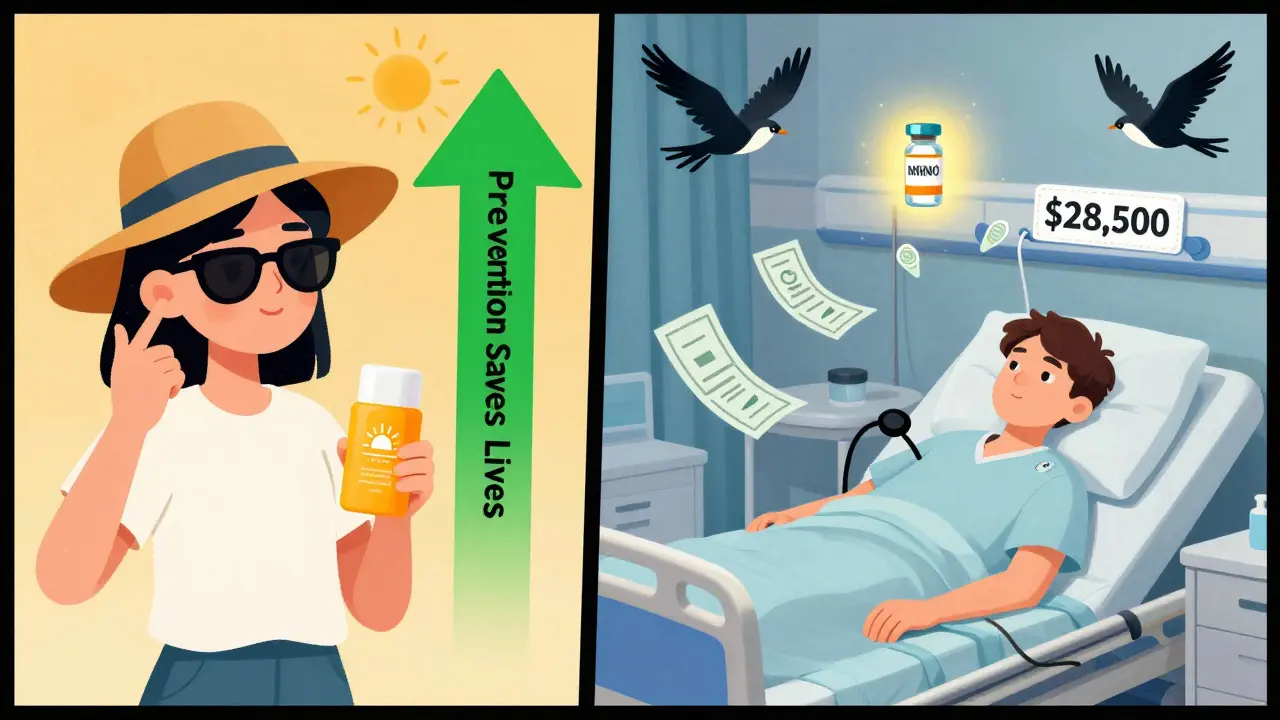
Melanoma treatment is expensive. The U.S. spends $3.4 billion a year on it. Medicare alone pays $1.8 billion annually. But prevention funding? Just $0.02 per person. Patients are feeling the pinch. On Reddit, 42% of people posting about melanoma mentioned financial stress. One man paid $28,500 out-of-pocket for a single infusion of nivolumab-even with insurance. That’s not a mistake. It’s the system. Access is uneven. In Mississippi, there’s only 1.2 dermatologists per 100,000 people. In Massachusetts, there are nearly 8. That’s why late-stage diagnosis rates are 22% in Mississippi and only 14% in Massachusetts. New programs are trying to fix this. The American Academy of Dermatology is testing teledermatology kiosks in 150 Walmart clinics in rural areas. The CDC is also funding UV index alerts in weather apps, aiming to reach 120 million people by 2026.Prevention Works-But Most People Don’t Do It
Melanoma is preventable. That’s the most important thing to remember. Use sunscreen daily. Not just at the beach. On your face, neck, hands, and ears. Use SPF 30 or higher. Reapply every two hours. Wear hats and UV-blocking sunglasses. Avoid tanning beds completely. The Skin Cancer Foundation says tanning bed users have a 58% higher risk of melanoma. But here’s the problem: only 14.3% of U.S. high school students use sunscreen consistently, according to the CDC. Cost is a barrier for 67% of low-income families. The math is simple: every $1 spent on UV protection saves $3.50 in treatment costs. That’s not just a health win-it’s an economic one.What You Can Do Today
You don’t need to wait for a doctor’s appointment to protect yourself.- Check your skin every month. Use the ABCDE rule. Take photos of moles if you can.
- Use sunscreen every day-even when it’s cloudy.
- Wear a wide-brimmed hat and UV-blocking sunglasses when outside.
- Never use a tanning bed.
- If you’re high-risk, schedule a professional skin exam every 3-6 months.
- Use a free UV index app (like QSun’s Ultraviolet UV Index) to know when sun exposure is dangerous.
Can melanoma be cured if caught early?
Yes. When melanoma is caught before it spreads beyond the top layer of skin (Stage 0 or I), the five-year survival rate is over 99%. Early detection through regular skin checks is the single most effective way to ensure a full recovery.
Do I need to see a dermatologist if I have no family history of melanoma?
Yes, if you have other risk factors: more than 50 moles, fair skin that burns easily, or a history of sunburns. Even without family history, UV exposure is the main cause. Most melanoma cases occur in people with no known genetic risk.
Are tanning beds safer than the sun?
No. Tanning beds emit UVA and UVB radiation at intensities up to 15 times stronger than the midday sun. Using them before age 35 increases melanoma risk by 75%. There is no safe level of indoor tanning.
Can people with dark skin get melanoma?
Yes. While less common, melanoma in people with darker skin often appears on the palms, soles, under nails, or in the mouth. It’s frequently diagnosed later because it’s not expected-and that leads to worse outcomes. Everyone should check all areas of their skin, not just sun-exposed ones.
Is immunotherapy better than targeted therapy for melanoma?
It depends. Immunotherapy (like pembrolizumab) works for more people and offers longer-lasting results, with fewer severe side effects (14% grade 3-4 reactions). Targeted therapy (like dabrafenib/trametinib) works faster and is more effective if you have a BRAF mutation-but only about half of patients have that mutation. Many patients start with immunotherapy, and targeted therapy is used if immunotherapy fails or if the cancer has BRAF mutations.
How often should I check my skin?
Once a month. Take 10-15 minutes after a shower, using a mirror to check hard-to-see areas like your back, scalp, and between toes. Take photos of moles to track changes. If you’re high-risk, see a dermatologist every 3-6 months.
What should I do if I find a suspicious mole?
Don’t panic. Don’t wait. Make an appointment with a dermatologist as soon as possible. Most suspicious moles turn out to be harmless. But if it’s melanoma, early action saves lives. Avoid trying to remove it yourself-this can spread cancer cells.
Can sunscreen prevent melanoma completely?
No sunscreen blocks 100% of UV rays, but daily use reduces melanoma risk by 40-50%. It’s not a magic shield-it’s part of a bigger strategy: avoid midday sun, wear protective clothing, and never tan indoors. Sunscreen is essential, but not enough on its own.
All Comments
Keith Oliver January 29, 2026
Bro, I just checked my back with a mirror and found a mole that’s kinda asymmetrical. I didn’t even know I had it. Guess I’m gonna start using sunscreen daily. No more beach trips without a hat. 🤷♂️
Kacey Yates January 30, 2026
Sunscreen is not optional anymore. I use SPF 50 every damn day even when it’s cloudy. My dermatologist said I’ve avoided 3 potential melanomas just by being obsessive. You think you’re safe but you’re not.
ryan Sifontes January 31, 2026
They say UV exposure causes 90% of cases but what about the 10%? Who’s testing the water? The air? The damn Wi-Fi? I’ve got a spot on my heel and no one will listen.
Laura Arnal February 1, 2026
You got this 💪 Seriously though if you’re reading this and you’ve been putting off a skin check just do it. I waited 2 years and now I’m helping others avoid my mistake. No regrets after early detection 🌞❤️
DHARMAN CHELLANI February 3, 2026
Most people dont even know what melanoma looks like. They think its only dark spots. Its not. Its a silent killer disguised as a freckle.
Pawan Kumar February 4, 2026
The efficacy of the mRNA vaccine is statistically significant but its availability is constrained by pharmaceutical monopolies. One must question the ethical implications of a 44% reduction in recurrence being accessible only to those who can afford $120,000 per cycle. This is not medicine. This is market arbitrage.
Jasneet Minhas February 5, 2026
In India we dont even have sunscreen in ration shops. But hey at least we dont use tanning beds. Still... my cousin got melanoma under his toe. Doctors thought it was a bruise. Took 8 months to diagnose. 😔
Eli In February 6, 2026
I’m from a rural town in Kentucky. We had a teledermatology kiosk installed at the Walmart last month. Got my mole checked in 10 minutes. No wait. No stress. Just a camera and a nurse. 🙏 This is what healthcare should look like.
Doug Gray February 7, 2026
The paradox of prevention: we are told to avoid UV exposure yet we are also told to synthesize vitamin D. Is this a systemic cognitive dissonance? Or is the entire paradigm of dermatological risk constructed by industry-aligned epistemologies? 🤔
Kristie Horst February 8, 2026
I appreciate the thoroughness of this post. Truly. But I must note that the framing of "melanoma is preventable" risks victim-blaming. Not everyone has access to sunscreen. Not everyone can afford to miss work for a dermatology visit. The onus cannot rest solely on the individual.
Laia Freeman February 8, 2026
OMG I JUST REALIZED I’VE NEVER USED SUNSCREEN ON MY EARS!!! 😱 I’m getting a hat today. And I’m taking selfies of my moles every month. I’m not dying because I was lazy. #SkinCheckChallenge
paul walker February 8, 2026
I used to think sunscreen was for beach days. Now I put it on before I brush my teeth. Best habit I ever picked up. Don’t wait for a diagnosis. Just do it.
Alex Flores Gomez February 9, 2026
The FDA approved AI tool is cool but dont forget the human in the loop. Algorithms miss things. Like that one guy in the forum who had a melanoma under his nail. AI flagged it as a bruise. Doc caught it. Tech helps. Not replaces.