
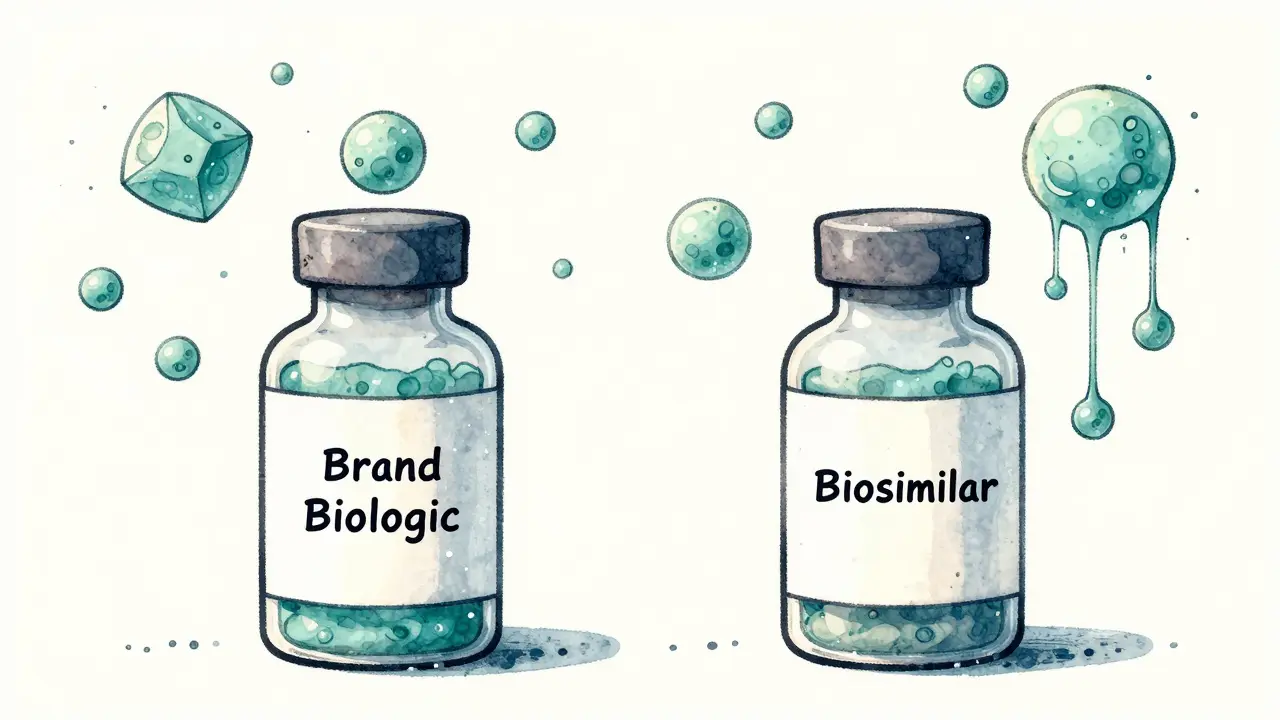
When you take a pill for high blood pressure, you expect every tablet to be exactly the same. That’s because small-molecule drugs are made through chemical synthesis-they’re like copies of a blueprint, built atom by atom. But when it comes to biologics and biosimilars, that expectation doesn’t hold. These drugs are made from living cells, and that changes everything. Between one batch and the next, the molecules can vary slightly. Not because of poor quality, but because biology is messy. This is called lot-to-lot variability, and it’s not a flaw-it’s a fact of life for biologic medicines.
Why Biologics Are Never Identical
Biologics are large, complex proteins-like antibodies or hormones-that are produced inside living cells, usually in bioreactors. Think of it like baking bread with yeast. Even if you use the same recipe, the same oven, and the same flour, no two loaves turn out exactly the same. Temperature, fermentation time, yeast activity-all these tiny differences add up. The same thing happens in biologic manufacturing. Cells don’t make perfect copies. After the protein is made, extra sugar molecules might attach, amino acids might shift, or the protein might fold slightly differently. These are called post-translational modifications, and they happen naturally.The U.S. Food and Drug Administration (FDA) says each lot of a biologic can contain millions of slightly different versions of the same protein. That doesn’t mean it’s unsafe. It means it’s biological. And that’s why you can’t call a biosimilar a “generic” like you would for a pill. Generics are exact copies. Biosimilars are highly similar-but not identical. The FDA explicitly states: “Biosimilars Are Not Generics.”
How Regulators Handle the Variation
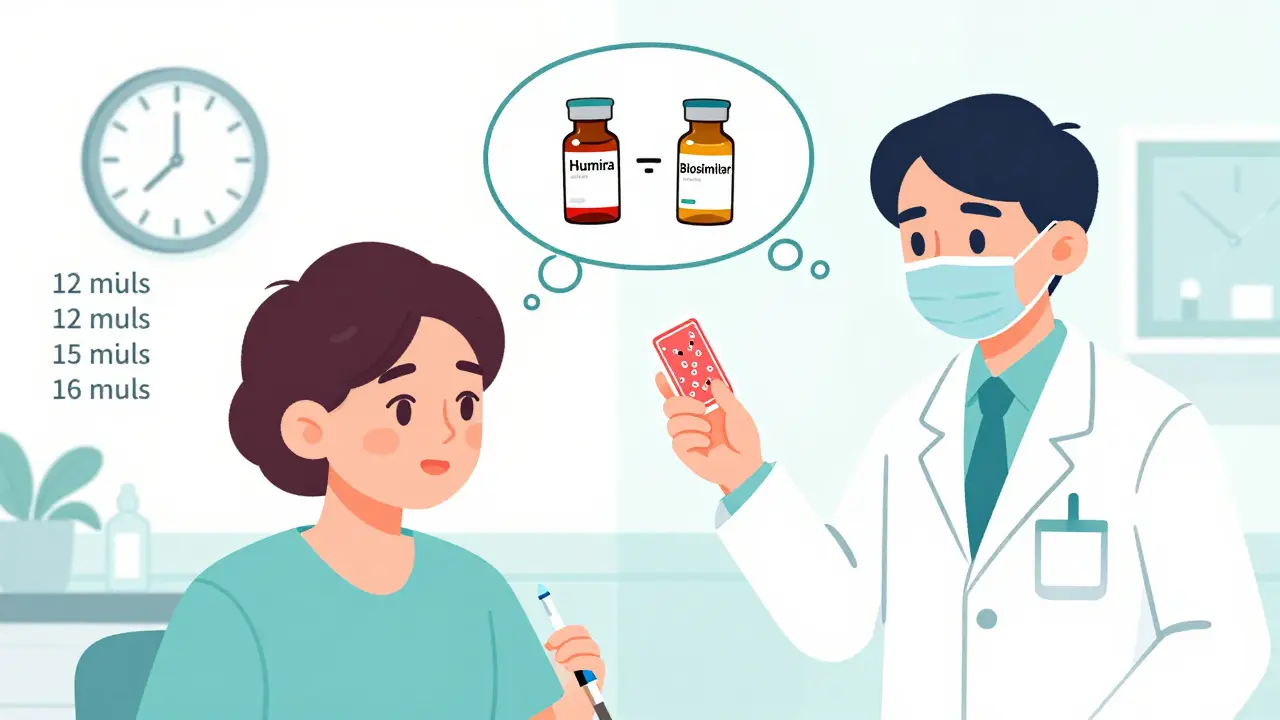
The FDA doesn’t ignore lot-to-lot variability. They require manufacturers to prove they can control it. Before a biosimilar gets approved, companies must show they’ve analyzed the reference product-say, Humira or Enbrel-down to the molecular level. They compare hundreds of characteristics: shape, charge, sugar patterns, purity, stability. They test multiple lots of the original drug and multiple lots of their own product. The goal? To prove the biosimilar’s variation pattern matches the original. Not perfectly. But closely enough that it won’t affect how well the drug works or how safe it is.It’s not enough to say “it’s similar.” The FDA demands proof. That means running dozens of analytical tests, some so sensitive they can detect differences smaller than a single sugar molecule. If the biosimilar’s lot-to-lot changes fall within the same range as the reference product’s, it passes. If it’s too different? The application gets rejected.
Interchangeability: The Higher Bar
There’s a special designation some biosimilars earn: “interchangeable.” That means a pharmacist can swap it for the brand-name drug without asking the doctor. But getting there is harder. To qualify, a company must prove that switching back and forth between the reference product and the biosimilar doesn’t increase risk or reduce effectiveness. That means running clinical studies where patients alternate between the two drugs over several months. One study might involve 500 patients switching four times over 12 months. If their immune response, disease activity, and side effects stay stable? They get the interchangeable stamp.As of May 2024, 12 out of 53 approved biosimilars in the U.S. have this designation. That number is growing. By 2026, experts predict 70% of new biosimilar applications will include interchangeability data. Why? Because it unlocks cost savings. Pharmacies can substitute automatically, and insurers can push for cheaper options without extra paperwork.

Biosimilars vs. Generics: The Real Difference
Here’s the simplest way to tell them apart:- Generics: Made from chemicals. Exact copies. Approved through the ANDA pathway. Requires bioequivalence studies-showing the body absorbs the drug the same way.
- Biosimilars: Made from living cells. Highly similar, not identical. Approved through the 351(k) pathway. Requires analytical, functional, and clinical studies to prove similarity despite natural variation.
The difference isn’t just technical. It’s economic. A generic version of a small-molecule drug can cost 80-90% less. A biosimilar? Usually 15-35% cheaper. That’s because making a biologic is expensive. It takes years, specialized facilities, and thousands of quality checks. But even that 15-35% adds up. In 2023, biosimilars saved the U.S. healthcare system an estimated $4.6 billion. By 2028, that number could hit $35 billion.
What This Means for Labs and Patients
It’s not just doctors and regulators who deal with lot-to-lot variability. Labs do too. Many diagnostic tests rely on reagents-chemicals that react with patient samples to give results. If a lab switches to a new lot of reagent, and that lot behaves differently, test results can shift. A 0.5% change in a glucose or HbA1c test might seem tiny. But for a diabetic patient, that could mean a change in insulin dose.A 2022 survey found that 78% of lab directors consider reagent lot changes a significant challenge. Why? Because quality control materials don’t always behave like real patient samples. A control might look fine, but patient results could drift. That’s why labs must verify new lots using at least 20 patient samples, tested in duplicate. It’s time-consuming. Smaller labs spend 15-20% of their tech time just verifying new reagent lots.
Some labs use “moving averages” to track results over time. If the average patient value for a test suddenly shifts, it’s a red flag. It might mean a lot change. Or it might mean something else. Either way, they have to investigate.
The Future: More Complexity, Better Tools
The next wave of biologics is even more complex. Antibody-drug conjugates, cell therapies, gene therapies-they’re not just proteins anymore. They’re living cells injected into patients, or tiny genetic instructions delivered by viruses. These will have even more variability than today’s biologics.But technology is catching up. Advanced mass spectrometry, AI-driven data analysis, and high-throughput screening now let scientists map out thousands of molecular variants in a single day. What used to take months can now be done in weeks. The FDA’s “totality of the evidence” approach is evolving to use these tools more deeply. Instead of just comparing a few key markers, they’re looking at the whole molecular profile.
And the goal remains the same: make sure patients get safe, effective medicine-even when the medicine isn’t perfectly identical from one bottle to the next.
What Patients Should Know
If your doctor prescribes a biosimilar, you’re not getting an inferior drug. You’re getting a medicine that’s been rigorously tested to perform just like the original. The variation between lots is normal. It’s expected. And it’s managed.Don’t panic if your pharmacy switches your biologic to a biosimilar. If it’s interchangeable, the switch is safe. If it’s not, your doctor will be consulted. Either way, your treatment won’t change in effectiveness. The only difference? You might pay less.
And if you’re in a clinical trial or taking a biologic for a serious condition like rheumatoid arthritis or cancer, know this: regulators and manufacturers are watching every lot. Every change. Every patient result. Because even tiny variations matter. And they’re not taking chances.
Is lot-to-lot variability a sign of poor quality in biosimilars?
No. Lot-to-lot variability is normal and expected in all biologics, including brand-name drugs. It’s caused by the biological manufacturing process using living cells, not by poor quality control. The FDA requires manufacturers to demonstrate that variations between lots are consistent with the reference product and do not affect safety or effectiveness.
Can I tell if my biosimilar is from a different lot than before?
No, you can’t tell by looking at the medicine. Biosimilars look and work the same. Even if the lot number on the packaging changes, the clinical effect should be identical. Manufacturers must prove that any variation between lots stays within acceptable limits that don’t impact patient outcomes.
Why are biosimilars more expensive than generics?
Because biologics are made from living cells, not chemicals. Manufacturing requires complex facilities, strict controls, and extensive testing to ensure consistency despite natural variation. A generic drug might cost 90% less than the brand. A biosimilar typically costs 15-35% less. The higher cost reflects the complexity of production, not inferior quality.
What does “interchangeable” mean for a biosimilar?
An interchangeable biosimilar has met additional FDA requirements proving it can be switched with the reference product without increasing risk or reducing effectiveness. Pharmacists can substitute it automatically, just like with generics. To earn this designation, companies must run clinical switching studies where patients alternate between the two products multiple times.
Do lot-to-lot changes affect how often I need to take my biologic?
No. The dosing, frequency, and route of administration remain the same between reference products and biosimilars, and across different lots. The FDA requires manufacturers to prove that any variation does not change how the drug works in the body. You follow the same schedule regardless of the lot number.
All Comments
Frank SSS December 30, 2025
So let me get this straight-we’re paying $70k a year for a drug that’s literally different every time it’s made, and we’re supposed to trust it because ‘biology is messy’? Cool. I’ll just sip my tea and wait for the next batch to turn my immune system into a rave.
Paul Huppert December 31, 2025
This actually makes a lot of sense. I work in a lab and we deal with reagent lots all the time. One batch gives you a 0.3% higher reading, next one’s fine. It’s wild how much tiny variations matter in practice.
Hanna Spittel January 1, 2026
😂 Also, the FDA is just letting Big Pharma slide. You think they’re testing this? Nah. They’re just signing papers while sipping lattes. #BiosimilarScam
Branden Temew January 3, 2026
It’s funny how we demand perfect consistency from biology but get mad when it refuses to obey. We treat cells like robots, then cry when they act like living things. Maybe the problem isn’t the medicine-it’s our expectation that nature should follow our spreadsheets.
Brady K. January 3, 2026
Let’s be real-this isn’t ‘biological variability,’ it’s corporate liability laundering. They call it ‘tolerance’ so they can slap a 35% discount label on it and call it a win. Meanwhile, patients are guinea pigs in a high-stakes game of molecular Russian roulette.
Deepika D January 4, 2026
As someone who’s trained new technicians in India on biologic QC protocols, I can tell you this variability isn’t just accepted-it’s *engineered into* the process. We don’t fight it, we map it. Every batch gets a molecular fingerprint. If it’s within ±1.2% of the reference profile, we greenlight it. It’s not magic-it’s science with patience. And yes, we test with 50+ patient samples, not just controls. Smaller labs? They’re drowning. We need more funding for decentralized validation tools.
Bennett Ryynanen January 5, 2026
Why are we even debating this? If it works and doesn’t kill you, it’s fine. My cousin’s been on a biosimilar for RA for two years. Still walking. Still working. Still saving $1,200/month. Stop overthinking and let people get cheaper meds.
Lawver Stanton January 7, 2026
Okay, but have you considered that the ‘lot-to-lot’ variability might be the *real* reason some patients report ‘loss of efficacy’? I’ve seen it-patient switches from Brand A to Biosimilar X, and suddenly their CRP spikes. Labs say ‘it’s within range,’ but what about the 0.07% difference in sialylation that no one’s validated in vivo? The FDA’s ‘totality of evidence’ is just a fancy way of saying ‘we don’t have the data but we need to approve something.’ And now they’re pushing interchangeability? Please. I’ve seen patients get switched three times in a year. Three. Different. Lots. And no one’s tracking the cumulative effect. This isn’t innovation. It’s negligence dressed up as progress.
Sara Stinnett January 8, 2026
Let me be blunt: this entire system is a glitter-coated dumpster fire. We’ve turned medicine into a chemistry set where the only rule is ‘close enough.’ If a biosimilar’s glycosylation profile is ‘similar’ to the original, we’re supposed to believe it’s functionally equivalent? That’s like saying two Picasso paintings are the same because they both have brushstrokes. The FDA isn’t regulating-they’re curating a myth. And the worst part? We’re all complicit. We cheer for the ‘savings’ while quietly hoping our next injection doesn’t turn us into a human experiment.
linda permata sari January 9, 2026
In my village in Indonesia, we say: ‘The tree gives fruit, but no two fruits taste the same-and that’s why they’re sweet.’ Maybe we’re not meant to control biology. Maybe we’re meant to listen to it.
Brandon Boyd January 11, 2026
Don’t let the naysayers scare you. This is progress. We’re learning to work *with* biology, not against it. The tools we have now-AI, mass spec, machine learning-are giving us unprecedented insight. We’re not just tolerating variability-we’re using it to make better drugs. Every tiny difference is a data point. And guess what? That’s how science moves forward.
Emma Hooper January 12, 2026
My oncologist switched me to a biosimilar last year. I asked if it was ‘the same.’ He said, ‘It’s not identical, but it’s identical enough.’ I laughed. Then I cried. Then I paid $40 instead of $400. I’m alive. That’s the only metric that matters.
Martin Viau January 13, 2026
Canada’s been doing this for years. We’ve got 18 interchangeable biosimilars. Zero lawsuits. Zero public panic. Why? Because we trust our regulators. And we don’t let fear-mongering idiots scare patients away from cheaper, effective care. If you’re still scared, take the damn shot.