
Most people with insomnia reach for pills first. But what if the real solution doesn’t come in a bottle? What if the answer lies in changing how you think about sleep-and how you act around it? CBT-I isn’t a miracle cure. It’s not quick. But it’s the most proven, lasting way to fix chronic insomnia without drugs-and it’s backed by over 40 years of research.
Why Pills Don’t Solve Insomnia
Sleeping pills might help you nod off tonight, but they don’t fix why you can’t sleep in the first place. They mask the problem. And when you stop taking them? The insomnia usually comes back-sometimes worse. Studies show that after stopping medication, most people return to their old sleep patterns within weeks. Meanwhile, CBT-I builds skills that keep working long after the last session.Take a look at the numbers. A 2015 meta-analysis of 20 studies found that CBT-I reduces the time it takes to fall asleep by an average of 19 minutes and cuts nighttime wakefulness by 26 minutes. That’s as good as medication. But here’s the kicker: CBT-I keeps working. After treatment ends, sleep keeps improving. Medication? It fades.
What Is CBT-I? (And Why It’s Not Just "Good Sleep Hygiene")
CBT-I stands for Cognitive Behavioral Therapy for Insomnia. It’s not about drinking chamomile tea or turning off your phone at 9 p.m. Those are surface-level tips-useful, but not enough. CBT-I targets the deeper drivers of insomnia: the thoughts that keep you lying awake, and the habits that train your brain to associate your bed with stress instead of sleep.It’s structured. Usually 6 to 8 sessions. You don’t just talk-you do. You track your sleep. You adjust your schedule. You rewire your thinking. It’s like physical therapy for your sleep system.
The 5 Core Techniques of CBT-I
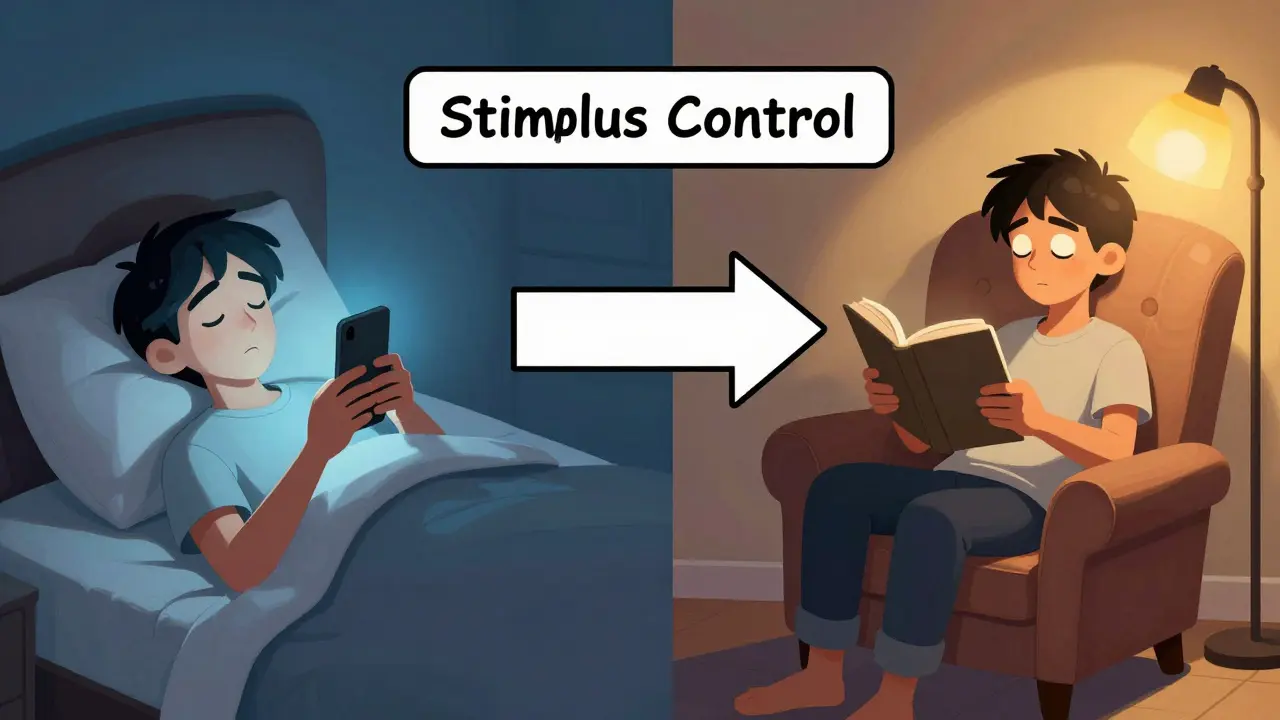
1. Stimulus Control Therapy
This is simple, but hard to stick to. Your bed should only be for sleep and sex. That’s it. No scrolling. No working. No lying there worrying. If you’re not asleep after 20 minutes, get up. Go to another room. Do something quiet and boring-read a physical book under dim light. When you feel sleepy, go back to bed. Repeat as needed.Why does this work? Because over time, your brain has learned that bed = anxiety. Stimulus control breaks that link. It rebuilds the association: bed = sleep. A 2023 network meta-analysis confirmed this technique alone improves sleep onset and reduces nighttime awakenings.
2. Sleep Restriction Therapy
This sounds crazy: you’re told to spend less time in bed to sleep better. But here’s the science. If you’re only sleeping 5 hours a night but lying in bed for 8, your body doesn’t build enough sleep pressure. You’re not tired enough to fall asleep easily.CBT-I starts by calculating your average sleep time (based on your sleep diary). If you’re sleeping 5.5 hours, you limit your time in bed to 5.5 hours. That might mean going to bed at 1 a.m. and waking at 6:30 a.m. No exceptions. Even on weekends.
Yes, you’ll feel tired the first few days. That’s normal. You’re creating mild sleep deprivation to reset your drive to sleep. Within 1-2 weeks, your sleep efficiency (the percentage of time in bed actually spent sleeping) starts climbing. Goal: over 85%. When it hits that, you slowly add 15 minutes of time in bed every week.
Studies show this technique alone can improve sleep efficiency by 12-15% in just 6 weeks. And it’s one of the most effective parts of CBT-I.
3. Cognitive Restructuring
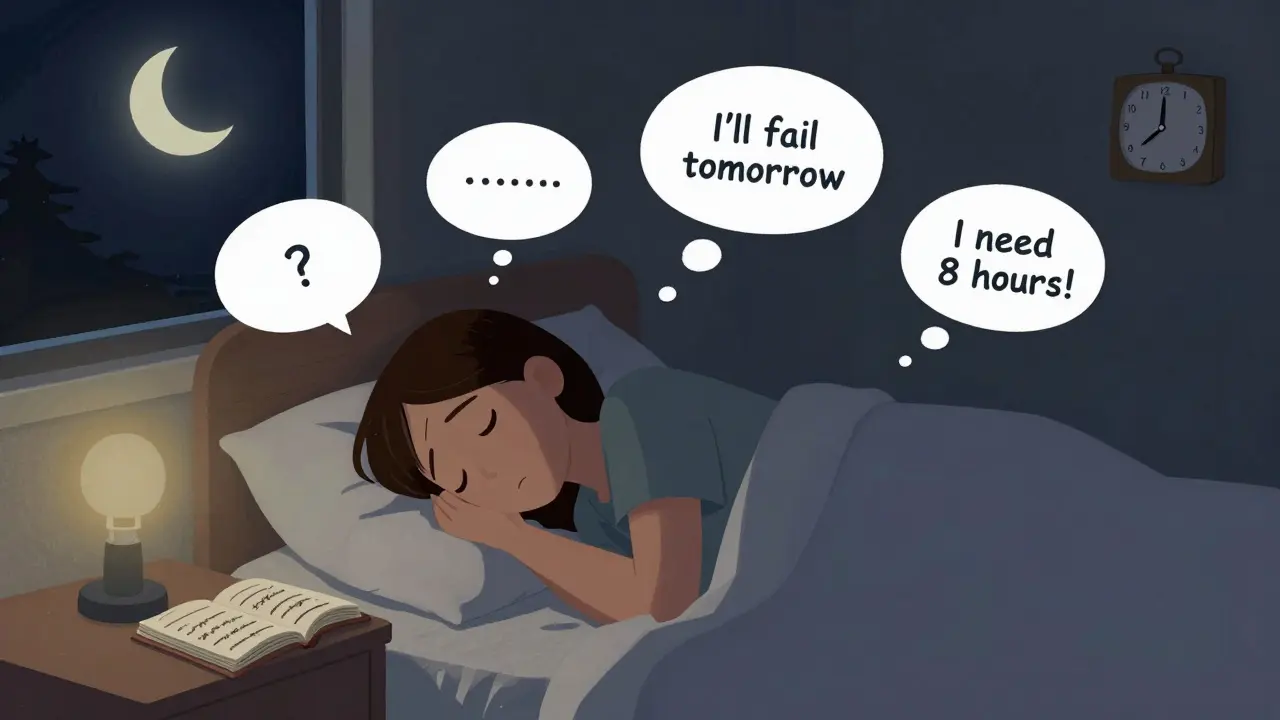
This is where thoughts get challenged. You might say: "I need 8 hours or I’ll be useless tomorrow." Or: "If I don’t sleep tonight, my whole week is ruined." CBT-I helps you spot these catastrophic thoughts and replace them with realistic ones. Instead of "I’ll fail at work," try: "I’ll feel tired tomorrow, but I’ve survived before. My body will adapt." Research shows that people with insomnia often overestimate how much sleep they need and underestimate their ability to function. This creates anxiety-which makes sleep harder. CBT-I breaks that cycle.4. Sleep Hygiene Education
This isn’t the whole solution, but it’s part of the foundation. Avoid caffeine after 2 p.m. Limit alcohol-it fragments sleep. Get morning sunlight (even 10 minutes helps regulate your rhythm). Keep your bedroom cool, dark, and quiet. Exercise regularly, but not right before bed.These aren’t magic fixes. But when combined with the other CBT-I techniques, they remove obstacles to sleep.
5. Relaxation Training
Anxiety keeps your nervous system wired. Relaxation techniques teach your body how to shut down. Diaphragmatic breathing (deep belly breaths) slows your heart rate. Progressive muscle relaxation-tensing and releasing each muscle group-reduces physical tension.One 2023 study found that combining relaxation with sleep restriction boosted sleep efficiency more than either alone. You don’t need to meditate for an hour. Just 5-10 minutes of breathing before bed can make a difference.
How Long Does It Take to Work?
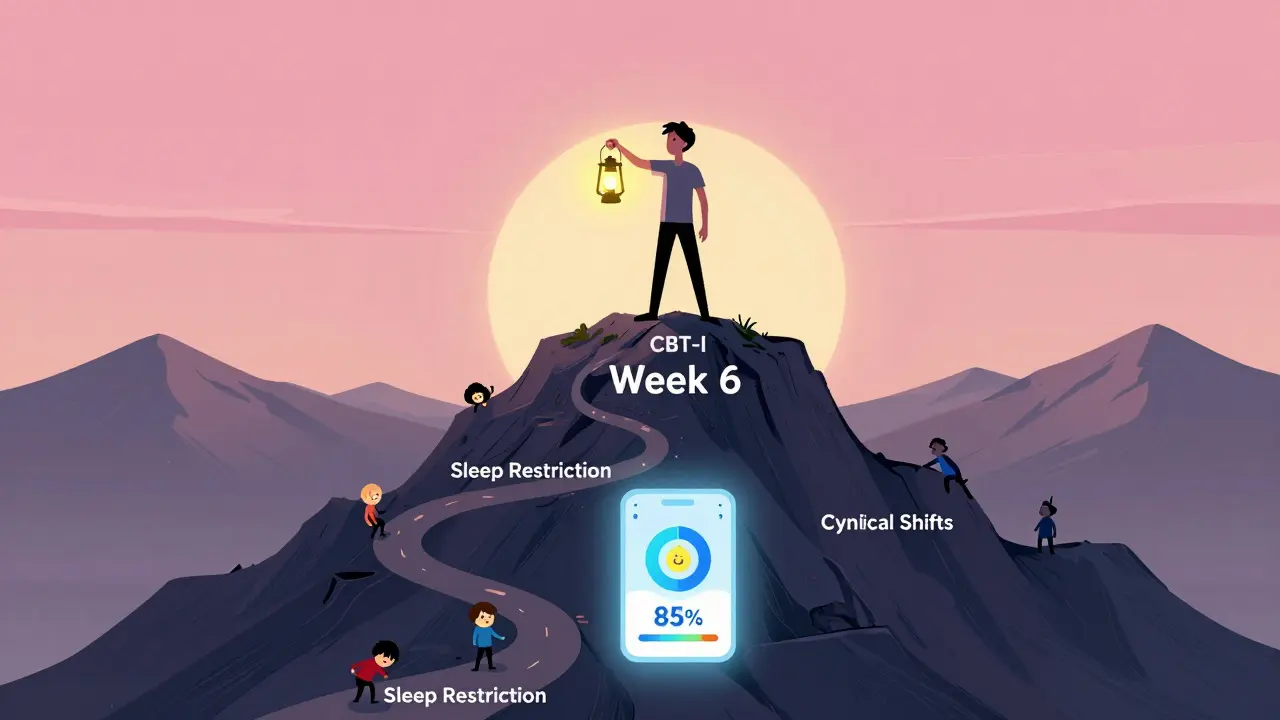
It’s not instant. Most people see changes in 2-4 weeks. The biggest shift happens between weeks 3 and 6. The first week is often the hardest. Sleep restriction means less time in bed. You’ll feel tired. Maybe even irritable. But that’s the point.By week 6, most people report:
- Falling asleep 15-20 minutes faster
- Waking up less during the night
- Feeling more rested in the morning
- Reduced anxiety about sleep
And here’s the real win: after treatment ends, sleep doesn’t crash. It keeps improving. A 2023 JAMA Network Open study of over 1,200 people using digital CBT-I found that 76% still had better sleep six months later. That’s not luck. That’s skill.
Digital CBT-I Works Just as Well
You don’t need a therapist. Digital platforms like Sleepio and CBT-i Coach deliver the same protocols through apps. A 2023 study compared digital CBT-I to in-person therapy and found nearly identical results. Response rates were within 5% of each other.And accessibility? Huge. Only about 1,500 certified CBT-I providers exist in the U.S. But digital tools are available 24/7. Medicare and 85% of private insurers now cover them. Some are even FDA-cleared as medical devices.
Who Benefits Most?
CBT-I works for almost everyone with chronic insomnia. But it’s especially powerful for:- People who can’t take sleep meds (pregnant individuals, those with liver issues)
- People with anxiety or PTSD-where sleep problems are tied to racing thoughts
- Adolescents-a 2024 study showed CBT-I reduced insomnia symptoms by over 1 standard deviation in teens
- Cancer survivors and people with chronic pain
It’s not a one-size-fits-all, but it’s adaptable. The techniques can be tweaked for different lifestyles, schedules, and health conditions.
What Stops People From Succeeding?
The biggest roadblocks aren’t technical-they’re behavioral.- Skipping sleep diaries. You can’t fix what you don’t measure.
- Breaking the wake-up rule. Even on weekends. A 30-minute variation is the max.
- Napping. It kills sleep pressure. If you must nap, keep it under 20 minutes and before 3 p.m.
- Giving up too soon. The first week feels awful. But it’s the turning point.
Studies show about 25% of people struggle to stick with sleep restriction in the first two weeks. That’s normal. The key? Don’t quit. Talk to your provider. Adjust slightly. But don’t go back to old habits.
What Happens After CBT-I?
You don’t need to do it forever. Once your sleep is stable, you maintain it. Keep your wake time consistent. Avoid naps. Stick to your wind-down routine. If you slip, go back to your sleep diary for a few days. You’ve already learned the tools. You just need to use them.That’s the power of CBT-I. It doesn’t depend on pills, therapists, or apps. It gives you control. Real, lasting control.
Can CBT-I help if I’ve been taking sleeping pills for years?
Yes. Many people successfully stop sleeping pills while doing CBT-I, but it should be done gradually and under guidance. CBT-I addresses the root causes of insomnia, so as your sleep improves naturally, your need for medication decreases. Studies show that combining CBT-I with tapering off medication leads to better long-term outcomes than either alone. Never stop medication abruptly-talk to your doctor about a safe plan.
Is CBT-I only for people with severe insomnia?
No. CBT-I works for mild, moderate, and severe insomnia. In fact, people with mild insomnia often see faster results because they haven’t developed as many negative sleep habits. The techniques are scalable-you don’t need to be "bad" at sleep to benefit. If you’ve been struggling for more than 3 months, CBT-I is the most effective next step.
Why do I feel worse during the first week of CBT-I?
That’s normal, especially with sleep restriction. You’re reducing time in bed to build stronger sleep pressure. You’ll feel sleepier during the day, maybe even a bit foggy or irritable. This isn’t a sign it’s not working-it’s a sign your body is adjusting. Most people report feeling significantly better by week 3. The temporary discomfort leads to lasting change.
Do I need a therapist to do CBT-I?
No. While working with a certified behavioral sleep medicine specialist is ideal, digital CBT-I platforms like Sleepio, CBT-i Coach, and Somryst are clinically proven to be just as effective. They guide you step by step, track your progress, and adjust based on your sleep diary. Many are covered by insurance. The core techniques are the same-whether delivered in person or online.
Can CBT-I help with early waking or waking up too early?
Yes. Early waking is often linked to a misaligned circadian rhythm or anxiety about sleep. CBT-I helps by stabilizing your sleep schedule, reducing nighttime arousal, and using stimulus control to reinforce that bed = sleep. Sleep restriction can be adjusted to match your natural sleep window. If you wake at 4 a.m. and can’t fall back asleep, get up, do something quiet, and wait until your scheduled wake time. Over time, your body learns to stay asleep longer.