
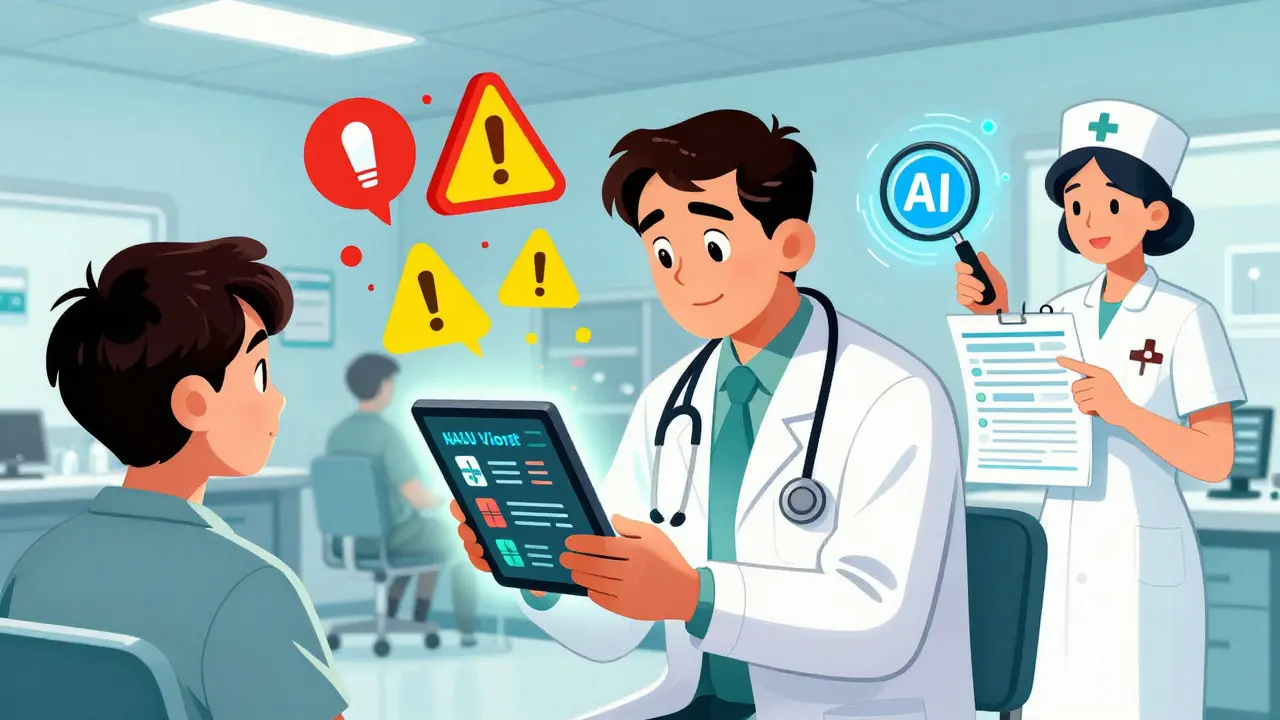
Every time a patient takes a new medication, there’s a risk-sometimes small, sometimes serious-that something unexpected will happen. A rash. A spike in liver enzymes. A dangerous interaction with another drug. These are called adverse drug reactions, and catching them early can save lives. For decades, doctors and pharmacists reported these events on paper, mailed them in, or waited for patients to call back. It was slow. Incomplete. Often missed entirely.
Today, that’s changing. Clinician portals and specialized drug safety apps are turning pharmacovigilance from a reactive paperwork chore into a real-time, data-driven safety net. But using them right? That’s where most teams struggle. It’s not just about logging in. It’s about knowing what to look for, how to interpret alerts, and when to trust the system-and when not to.
What Clinician Portals Actually Do
These aren’t fancy dashboards for fun. They’re built to catch signals early. Modern platforms pull data directly from electronic health records (EHRs), clinical trials, lab systems, and pharmacy databases. They look for patterns: a sudden spike in low blood pressure after a new antibiotic, repeated reports of confusion in elderly patients taking a specific combination, or abnormal lab values tied to a newly approved drug.
Think of it like a smoke alarm for medications. The system doesn’t know if it’s a burnt toast or a real fire. But it alerts you. Then it’s your job-your clinical judgment-to decide what’s real.
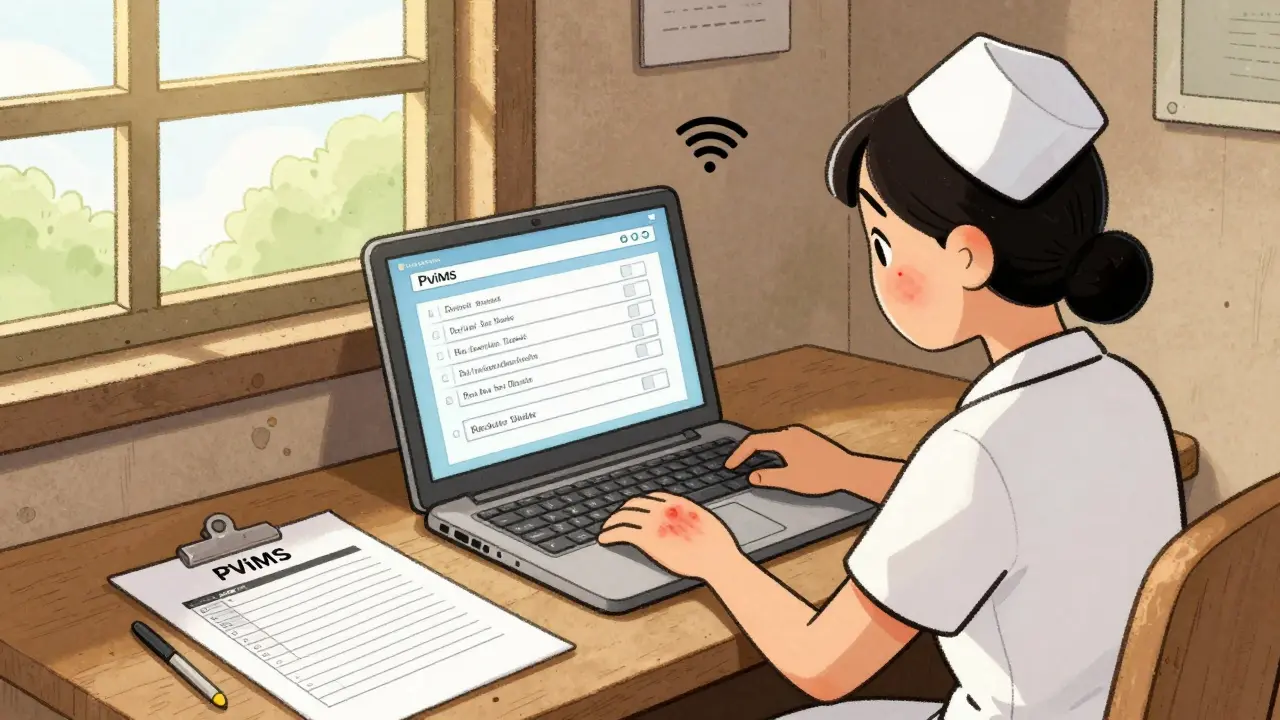
Platforms like Cloudbyz, IQVIA’s tools, and Medi-Span from Wolters Kluwer do this differently. Cloudbyz works best in clinical trials, connecting directly to trial data systems. Medi-Span is built into hospital EHRs like Epic and Cerner, giving doctors alerts right in their workflow. PViMS, used in over 28 low-resource countries, is simple enough for a nurse in a remote clinic to use on a basic laptop with spotty internet.
How to Start Using a Portal
If your hospital or company just rolled out a new safety portal, don’t panic. Here’s how to get up to speed without wasting time.
- Know your system. Is it Cloudbyz? Medi-Span? PViMS? Each has a different interface. Cloudbyz shows real-time safety dashboards with drill-downs to individual patient records. Medi-Span pops up alerts when you prescribe. PViMS gives you dropdown menus for reporting-no typing required.
- Understand the alert types. Not all alerts are equal. Some are “red flags”-like a drug linked to sudden cardiac arrest. Others are “yellow flags”-a mild side effect reported in 3 patients last week. Learn how your system categorizes them. Ignore the noise. Focus on the signals that matter.
- Check the data source. Is the alert based on a structured lab value? That’s reliable. Is it pulled from a doctor’s free-text note? That’s 65-78% accurate at best. Always verify. Look at the original chart. Talk to the nurse. Don’t report a signal based on a vague note like “patient seemed off.”
- Use the causality tools. Most portals have built-in tools to help you rate how likely the drug caused the reaction. Is it “definite”? “Probable”? “Possible”? Use the standardized MedDRA codes. Don’t guess. The system needs consistent data to spot trends.
- Report everything-even if you’re unsure. You’re not diagnosing. You’re flagging. If a patient on a new diabetes drug develops unusual bruising, report it. Even if you think it’s just a vitamin deficiency. The system needs more data to confirm or rule it out.
What the Apps Can’t Do (And Why You Still Need Humans)
AI is great at finding patterns. But it doesn’t know if a patient’s “fatigue” is from their new blood pressure pill-or from working two jobs and sleeping four hours a night.
In 2023, the FDA found that 22% of automated safety signals were false positives because the system didn’t understand context. A patient on statins had elevated liver enzymes. The system flagged it as a drug reaction. Turns out, the patient had hepatitis C. The drug wasn’t the problem.
That’s why every major platform still requires a Qualified Person for Pharmacovigilance (LQPPV) to review every signal. The AI points you to the needle. You find the haystack.
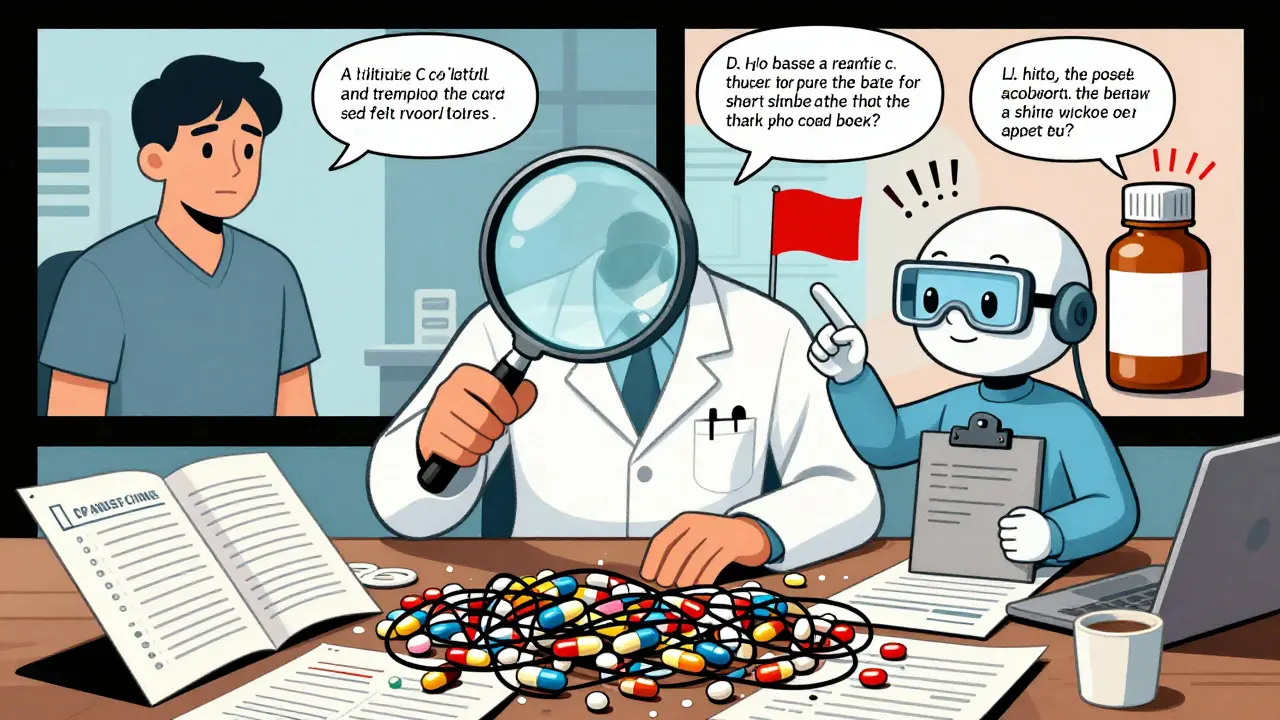
Also, apps can’t handle complex cases. If a patient is on 12 medications and develops a rare neurological symptom? No algorithm can untangle that. You need someone who understands drug metabolism, drug interactions, and the patient’s full history.
Think of these tools as co-pilots. They don’t fly the plane. They just make sure you don’t miss the warning light.
Real-World Pitfalls and How to Avoid Them
People think these portals are magic. They’re not. Here’s what goes wrong-and how to fix it.
- Alert fatigue. If your EHR pings you with 20 drug interaction alerts every shift, you’ll start ignoring them. That’s dangerous. Hospitals using Medi-Span report that 40% of alerts are false. Work with your IT team to tune the system. Block alerts for low-risk combinations. Only keep the high-stakes ones.
- Bad data in, bad signal out. If your lab system sends “ALT: 85” but the portal expects “ALT: 85 U/L,” it won’t match. Or if a nurse types “patient had a rash” instead of selecting “maculopapular rash” from the MedDRA list, the system won’t group it with similar cases. Train staff on exact terminology. Use dropdowns. Don’t allow free text for safety events.
- Too much integration, too little training. Cloudbyz can cut safety report time from 3 weeks to 4 days. But if your team spends 11 weeks just mapping data fields, you’re not saving time-you’re drowning. Make sure your vendor provides hands-on training. Don’t assume your IT staff can handle it. Pharmacovigilance is a clinical skill, not an IT task.
- Ignoring the low-tech users. In rural clinics using PViMS, internet drops are common. If the portal crashes during reporting, data is lost. Make sure there’s an offline mode. Or a paper backup form. Safety can’t wait for a Wi-Fi signal.
Which Tool Is Right for You?
Not every hospital needs the same tool. Here’s a quick guide.
| Use Case | Best Platform | Why | Biggest Drawback |
|---|---|---|---|
| Large hospital with Epic/Cerner | Wolters Kluwer Medi-Span | Seamless EHR integration. Real-time interaction alerts. | Too many false positives. Clinician burnout risk. |
| Clinical trial site | Cloudbyz | Connects directly to EDC and CTMS. Tracks patients across phases. | 6-12 week setup. Expensive. Needs CDISC expertise. |
| Low-resource clinic (Africa, Southeast Asia) | PViMS | Free. Works on low-end devices. Simple UI. | No AI. No advanced analytics. Needs stable internet. |
| Research team needing FDA-compliant analysis | clinDataReview (open-source) | 100% FDA 21 CFR Part 11 compliant. Reproducible reports. | Requires R programming. Not for non-technical staff. |
| Pharma company with 50K+ patient records | IQVIA AI tools | Reduces false positives by 85%. Predictive signal detection. | Needs huge data. Regulatory scrutiny on AI transparency. |
Skills You Need to Use These Tools Well
You don’t need to be a coder. But you do need three things:
- Clinical pharmacology knowledge. You must know how drugs work, how they’re metabolized, and what interactions are dangerous. No app replaces this.
- Data literacy. Can you read a trend chart? Understand what “signal detection” means? Spot a cluster? If not, take a 2-hour course. Many are free through the FDA or WHO.
- Regulatory awareness. You’re not just reporting. You’re complying with FDA, EMA, and ICH guidelines. Know what’s mandatory. Know what’s optional. Get trained annually.
Most organizations report that staff need 80-120 hours of training to become proficient. That’s not optional. That’s safety.
What’s Next? The Future of Drug Safety
By 2027, 80% of pharmacovigilance teams will use AI-assisted tools. But here’s the catch: the best systems won’t just alert you. They’ll suggest next steps.
IQVIA’s new “AI co-pilot” can pull up similar past cases, show you how others handled them, and even draft a safety report for your review. Cloudbyz’s version 5.0 predicts which patients are at highest risk of a reaction based on their genetics, lab values, and meds.
But the FDA is cracking down. New 2026 guidelines require AI models to be explainable. No black boxes. If your system says “this drug caused liver failure,” it must show you why-step by step.
The winners won’t be the platforms with the fanciest AI. They’ll be the ones that make clinicians feel supported-not overwhelmed. That means clean interfaces. Smart alerts. And humans in the loop.
Drug safety isn’t about technology. It’s about people. The portal just gives you the tools to do your job better.
Do I need to report every side effect I see?
No-but you should report anything unusual, unexpected, or serious. Minor side effects like mild nausea or headache are common and usually don’t need reporting unless they’re happening in a pattern. Focus on events that are new, severe, or linked to a drug not known to cause them. When in doubt, report it. The system needs the data to spot true signals.
Can I use these tools on my phone?
Some, yes. PViMS works on mobile browsers in low-resource settings. Medi-Span alerts appear in EHR apps like Epic Mobile. But full reporting and analysis still require a laptop or desktop. Complex tasks like reviewing lab trends, checking drug interactions across multiple meds, or validating signals need a larger screen and better input tools. Don’t rely on your phone for serious safety reviews.
Are these systems only for big hospitals and pharma companies?
No. PViMS is free and used in clinics across Africa and Southeast Asia. Open-source tools like clinDataReview are available to anyone. Even small practices can use EHR-integrated tools like Medi-Span if their system supports it. Cost isn’t the barrier anymore-training and data quality are. Start small. Use what’s already in your EHR. Build from there.
How long does it take to set up a drug safety portal?
It varies. For Medi-Span in a hospital using Epic, it’s 4-6 weeks. For Cloudbyz in a clinical trial setting, it’s 8-12 weeks because of complex data mapping. PViMS can go live in 3 weeks. The biggest delays? Getting clean data from labs, pharmacy, and EHR systems. If your data is messy, the portal won’t work well-no matter how good the software is.
What happens if I don’t use these tools?
You’re flying blind. Traditional reporting-paper forms, delayed submissions-misses up to 90% of adverse events. You might not know a drug is dangerous until it’s pulled from the market. That’s not just risky for patients-it’s risky for you. Regulatory agencies are requiring real-time monitoring. Hospitals and pharma companies that don’t adopt these tools will face audits, fines, and loss of trust. Safety isn’t optional anymore.
All Comments
Matt W February 3, 2026
Just had a patient on a new anticoagulant develop bruising out of nowhere. Logged it in Medi-Span within minutes. System flagged it as 'possible' - turned out it was a vitamin K deficiency, not the drug. But if I hadn't reported it, we'd never have caught the pattern in the next three patients. These tools aren't perfect, but they're the only thing keeping us from flying blind.
Solomon Ahonsi February 4, 2026
Ugh. Another one of these 'AI will save us' rants. I've seen 3 different portals in 5 years. Every single one floods me with 30 alerts per shift. Half are 'aspirin + Tylenol = potential liver issue???' No. Just no. They make us more tired, not safer.
Anthony Massirman February 4, 2026
Report everything. Even the weird stuff. Your lazy colleague might think it's just 'patient seemed off' - but that's exactly how we found the link between that new statin and sudden tinnitus in 8 patients last year. The system doesn't care if you're unsure. It just needs the data.
Marc Durocher February 5, 2026
Let’s be real - the real problem isn’t the tech. It’s the nurses typing ‘rash’ instead of ‘maculopapular’. The doctors writing ‘patient not feeling well’ in the note. If your data’s garbage, the AI’s just yelling into a void. Fix the input first. Then we can talk about the rest.
Becky M. February 6, 2026
i just wanted to say i love that pvim is free and works on old phones. my clinic in rural texas uses it and we’ve caught 3 serious reactions just by reporting ‘patient got dizzy after new med’ - even if we spelled it wrong. no fancy training needed. just care.
Dan Pearson February 6, 2026
Oh wow, Canada’s got a portal that works? That’s cute. In the US, we’ve got real systems - IQVIA’s AI catches patterns before the patient even leaves the clinic. If you’re still using paper or some open-source junk, you’re not just behind - you’re endangering lives. Get with the program.
Eli Kiseop February 8, 2026
So if the system says a drug caused liver damage but the patient had hepatitis C do we still report it or just assume the AI got it wrong and ignore it
Nick Flake February 8, 2026
This is the most important thing I’ve read all year. 🙏 We’re not just reporting side effects - we’re building a living database of human safety. Every entry is a whisper from a patient who didn’t know they mattered. The tech? Just the megaphone. The real heroes? The nurses who type it in after a 12-hour shift. The doctors who double-check the chart. The pharmacists who call the patient at 7pm because ‘it just didn’t feel right.’ That’s the heart of this. Not the algorithm. Never the algorithm.
Brittany Marioni February 9, 2026
Let me just say - if your hospital hasn’t mandated annual pharmacovigilance training, you’re not just negligent - you’re legally liable. The EMA just fined a major hospital $2.3M for ‘inadequate signal detection protocols.’ And yes, that includes ignoring ‘yellow flags.’ Don’t be that person.
Monica Slypig February 10, 2026
Of course the FDA wants explainable AI - because only Americans can handle real innovation. In Europe they still use fax machines for safety reports. And in India? They write on napkins. Let’s not pretend this is a global effort. This is a US-led revolution - and if you’re not using IQVIA, you’re just wasting everyone’s time.
Hannah Gliane February 11, 2026
People who say 'just report everything' are the same ones who think a 17-year-old with acne on Accutane should be flagged as a 'serious adverse event.' We don't need more noise - we need better filters. If you can't tell the difference between a rash and a life-threatening reaction, maybe you shouldn't be prescribing.
Murarikar Satishwar February 12, 2026
I work in a small clinic in rural India. We use PViMS on a tablet with 3G. Last month, we reported a pattern of low platelets in patients on a new antimalarial. Two weeks later, the WHO issued a warning. We didn’t need fancy AI. We just needed to be consistent. Training took 4 hours. The system saved lives. That’s all that matters.
George Firican February 13, 2026
There’s a quiet truth here that no one wants to admit: we’re not building tools to catch adverse reactions - we’re building tools to protect institutions from lawsuits. The system doesn’t care if your patient’s fatigue is from working two jobs or a new beta-blocker. It just needs a checkbox. And the hospital? They care more about reducing their liability exposure than understanding the human story behind the signal. We’ve turned empathy into data points. And somewhere along the way, we forgot that medicine isn’t a spreadsheet - it’s a conversation. The portal can tell you what happened. But only you can ask why. And that’s the part no algorithm will ever replace - because it doesn’t know how to listen.
Bob Hynes February 14, 2026
My buddy at a hospital in Vancouver just got his portal set up. He said the biggest headache? Getting the pharmacy system to stop sending 'ALT: 85' and start sending 'ALT: 85 U/L'. Sounds stupid, right? But that one typo meant 40% of the alerts were useless. Took them 3 months to fix. So yeah - tech is great. But if your lab tech can’t spell 'units per liter', we’re all just yelling into the void.