
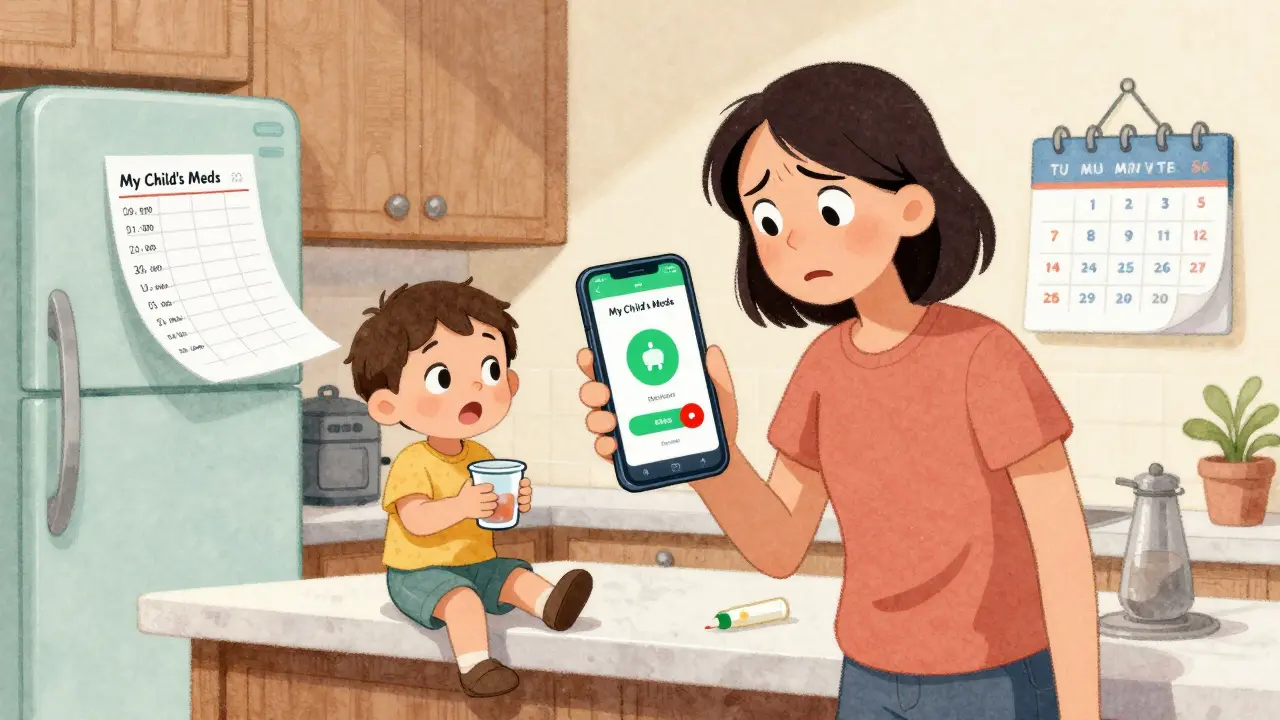
Getting the right dose of medicine for a child isn’t just tricky-it’s life-or-death. A wrong number, a mix-up between pounds and kilograms, or a missed dose can lead to serious harm. pediatric dose tracking isn’t optional anymore. It’s a safety necessity. Whether you’re a parent managing a toddler’s antibiotics or a nurse rushing through an emergency, the tools you use make all the difference.
Why Pediatric Dosing Is So Dangerous
Adult medications often use fixed doses. Kids don’t. Their bodies change fast. A 5-pound newborn needs a fraction of what a 50-pound child needs. That’s why every dose is calculated by weight-usually in kilograms. But most parents and even some clinicians think in pounds. That’s where errors start.Studies show pediatric medication errors happen up to three times more often than in adults. One study found manual calculations took nearly 19 seconds and had a 12% error rate. In a real emergency, that’s too long. And if you’re tired, stressed, or juggling multiple kids? The risk skyrockets.
Think about this: a parent gives ibuprofen because the child has a fever. They look at a printed chart. They misread the weight. They give 10 mL instead of 3.3 mL. That’s a 300% overdose. It’s not hypothetical. It happened. And it landed a 22-month-old in the ER.
Tools for Clinicians: Speed, Accuracy, and Integration
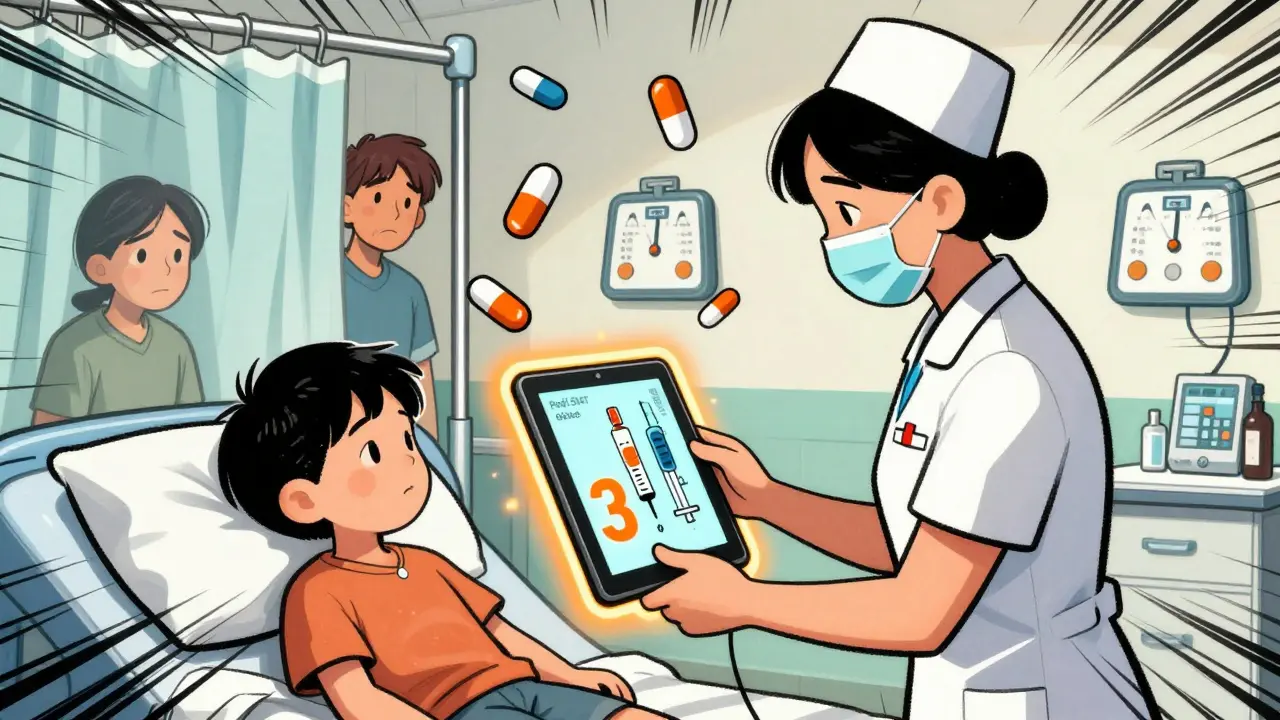
In hospitals and clinics, professionals rely on apps built for high-stakes moments. These aren’t just calculators-they’re clinical decision tools.Pedi STAT is the gold standard in emergency settings. Launched in 2009, it’s used in over 80% of U.S. children’s hospitals. Type in a weight-any unit-and it auto-converts. Pick a drug-like epinephrine or acetaminophen-and it spits out the exact dose, volume, and even the right syringe size. All in under three seconds. Version 4.2.1, updated in May 2023, handles over 200 pediatric medications. It works on iOS and Android, requires no login, and doesn’t store data. That’s intentional. No HIPAA headaches.
Epocrates is the go-to for broader use. With over 4,500 medications and drug interaction alerts, it’s a powerhouse. But it’s not built for speed. It’s built for depth. If you’re checking if amoxicillin interacts with a child’s asthma inhaler, Epocrates has you covered. The free version is solid. The $175/year Plus version adds advanced features like formulary checks and alerts for renal or hepatic dosing adjustments.
PedsGuide and the Harriet Lane Handbook app are reference bibles. PedsGuide, developed by Children’s Mercy Kansas City, has dosing for 600+ drugs and integrates with Epic and Cerner EHRs. But it’s locked behind institutional licenses. Parents can’t use it. And Harriet Lane? It’s accurate, comprehensive, and expensive-$69.99 a year. Great for residents, useless for a tired mom at 2 a.m.
Tools for Parents: Simplicity, Reminders, and Peace of Mind
Parents don’t need a medical database. They need a reminder system that stops them from giving the same medicine twice.My Child’s Meds is the only app endorsed by the Royal College of Paediatrics and Child Health. It’s built by pharmacists, pediatricians, and parents. You add your child’s name, weight, allergies, and meds. It sets up a calendar. It sends alerts. It tracks when doses are given-with a simple tap. No typing numbers. Just tap green for given, red for missed. It even blocks you from entering a second dose within the safe window. A 2023 study of 2,500 users found it reduced accidental double dosing by 38%.
Another standout is NP Peds MD. It doesn’t calculate doses. It shows them. Clean, color-coded charts for common OTC meds like Tylenol and Motrin. Just find your child’s weight, pick the drug, and see the right amount. No math. No guesswork. A Consumer Reports test showed 78% of parents used it correctly-compared to just 52% with printed charts.
And yes, there are bad apps. Free ones on Google Play that ask for weight in pounds but calculate in kilograms without warning. One parent told me she used one that didn’t even have a unit toggle. Her child got a massive overdose. She didn’t know until the ER called.
The Big Problem: No Bridge Between Clinic and Home
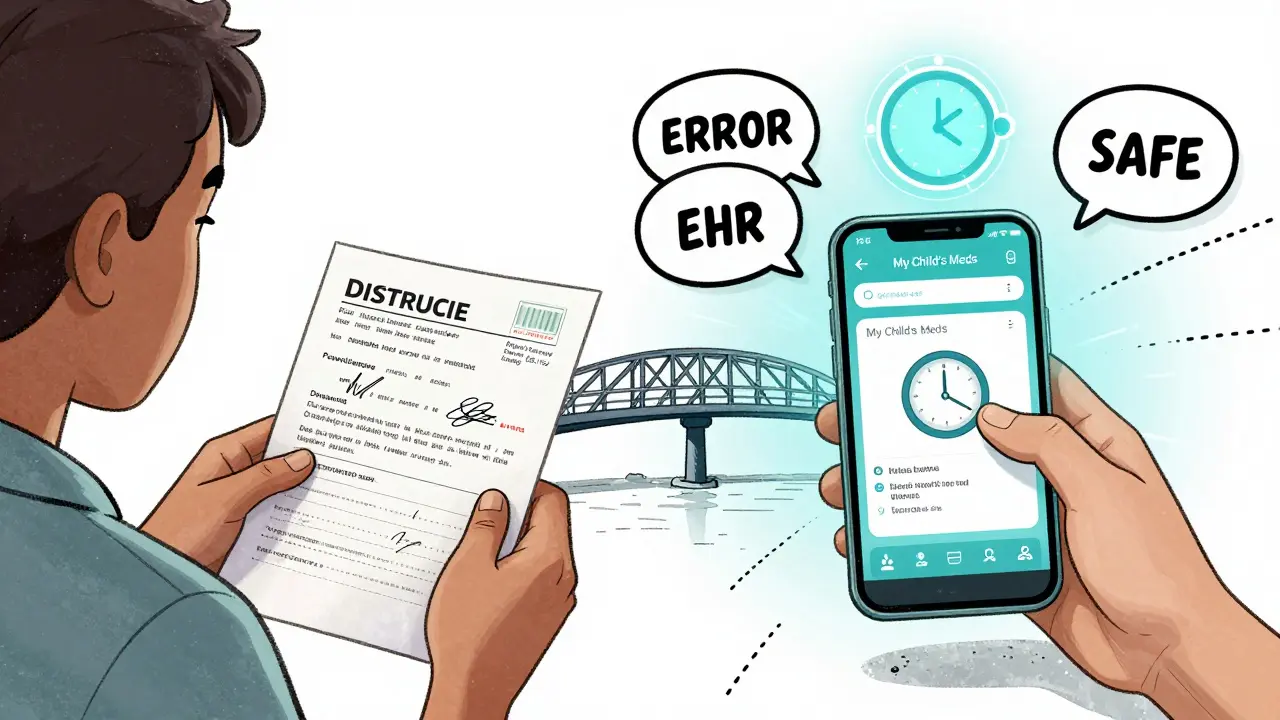
Here’s the ugly truth: your child’s hospital uses Pedi STAT. You use My Child’s Meds. The two don’t talk.When your kid gets discharged, you get a paper list. You try to enter it into your app. You miss a dose. You forget the concentration. You don’t know if the pharmacy gave you the right syrup. That’s when errors happen. A 2023 AAP survey found 87% of medication errors in kids occur during care transitions.
Some apps like ChildrensMD let you “share with provider”-a PDF of your medication log. That’s a start. But it’s manual. No one’s built a seamless, secure, two-way sync between hospital systems and parent apps yet. The HIMSS group is working on it. Expected in late 2025. Until then, you’re stuck.
How to Use These Tools Right
Using an app isn’t enough. You have to use it well.- Always double-check units. Is the app asking for kg or lb? If you’re not sure, ask your pharmacist. Most apps let you toggle-but not all.
- Never trust an app blindly. Cross-check the dose with a printed guideline or your provider’s instructions. Especially for high-alert drugs like insulin, morphine, or seizure meds.
- Keep a paper backup. Tech fails. Batteries die. Phones get lost. Print out your child’s current med list. Keep it in your wallet.
- Update weights regularly. Kids grow fast. A 15-pound baby at 3 months is 22 pounds at 8 months. Update your app every 30 days.
- Reconcile weekly. Compare your app’s log with your pharmacy’s fill history. Did they give you 100 mL when you only need 50? Catch it early.
For clinicians: Train your team. Use Pedi STAT in mock codes. Make it part of your orientation. Don’t assume everyone knows how to use it. A 2023 study found 63% of users made errors when entering weights in pounds instead of kilograms-because they didn’t realize the app auto-converted.
What’s Coming Next
The future is smarter. Pedi STAT is testing AI that predicts when a dose might be wrong before it’s given. Boston Children’s is trialing smart pill dispensers that unlock only the right dose at the right time. And new standards are being drafted to let parent apps talk to hospital systems-securely, safely, and automatically.But none of this matters if we don’t use what we have right now. The tools exist. The data proves they work. The question isn’t whether to use them. It’s whether you’re using them the right way.
Can I use any medication app for my child?
No. Only use apps built for pediatric dosing and backed by clinical guidelines. Avoid free apps that don’t list their sources or have no medical endorsements. Stick to My Child’s Meds, NP Peds MD, or apps approved by your child’s doctor. Unvalidated apps can give dangerously wrong doses.
Do I still need to know how to calculate doses by hand?
Yes. Technology fails. Batteries die. Apps crash. A 2023 simulation study found 22% of medical residents couldn’t manually calculate an epinephrine dose when their device was offline. Know the basic formula: dose = (weight in kg) × (dose per kg). Keep a printed reference card in your wallet.
Are pediatric dose apps safe for privacy?
Professional apps like Pedi STAT don’t store data, so they’re HIPAA-compliant by design. Parent apps like My Child’s Meds encrypt data and don’t share it with third parties. But avoid apps that ask for your child’s full name, birthdate, or medical ID unless they’re from a trusted hospital or pharmacy. Always check the privacy policy.
What’s the best app for a child with multiple medications?
My Child’s Meds is the only app designed for complex regimens. It supports multiple children, lets you set different schedules for each med, and flags potential overlaps. It’s the only one endorsed by major pediatric pharmacy groups. Other apps may track one or two meds-but struggle with five or more.
Why do some apps ask for weight in kg and others in lb?
Clinical apps like Pedi STAT use kg because that’s the global medical standard. Parent apps often let you choose because most caregivers think in pounds. But if an app doesn’t auto-convert or warn you about the unit, it’s risky. Always verify what unit the app expects-and never assume.
Can I use these apps for newborns and preemies?
Yes-but only with extreme caution. Pedi STAT includes dosing for neonates, including preterm infants. My Child’s Meds lets you enter weights as low as 1 kg. But neonatal dosing is extremely sensitive. Always confirm with your NICU team. Never rely on an app alone for a baby under 1 month old.
All Comments
Sandeep Jain December 26, 2025
My cousin in Delhi used a random app for her baby’s fever meds and almost lost him. No unit toggle, just typed 15 and hit go. Turned out it was mg/kg but she thought it was mL. Scary stuff. Glad this post exists.
roger dalomba December 26, 2025
Of course the only app that works is the one that costs $70/year. Because why make life easy for actual parents when you can monetize their panic?
Brittany Fuhs December 28, 2025
Anyone who uses a free app for their kid’s meds deserves whatever happens. This isn’t TikTok. Lives are at stake. And yes, I said it. You’re lucky your kid didn’t end up in the ICU.
Rajni Jain December 30, 2025
My daughter’s pediatrician gave me My Child’s Meds on a paper card. I downloaded it that night. Best thing I’ve done as a mom. No more guessing. No more panic at 3am. Seriously, try it.
Erwin Asilom December 30, 2025
Clarity is key. The post nails it: apps aren’t magic. They’re tools. And tools require context. Always cross-check. Always have a paper backup. Always update weight. Simple. Non-negotiable.
Sophia Daniels December 31, 2025
Let’s be real - if your kid’s dose is being calculated by an app you downloaded while waiting in line at Starbucks, you’re already one step away from a 911 call. And no, ‘it worked for my cousin’ doesn’t count as clinical evidence.
Steven Destiny January 1, 2026
This is the kind of post that saves lives. Stop scrolling. Stop doubting. Download My Child’s Meds. Set it up tonight. Your future self will thank you. And your kid? They’ll be fine.
Fabio Raphael January 2, 2026
I’m curious - how many of these apps actually integrate with pharmacy systems? Like, if I get a script filled at CVS, can it auto-populate into My Child’s Meds? Or am I stuck manually typing everything?
Amy Lesleighter (Wales) January 4, 2026
Just because you have an app doesn’t mean you’re safe. You still have to be awake. You still have to care. Tools help. But the person holding the phone? That’s the real safety net.
Sumler Luu January 5, 2026
My hospital uses Pedi STAT. My wife uses My Child’s Meds. We print the discharge meds and keep them in the car. We don’t trust the system. We trust each other. And the paper.
sakshi nagpal January 7, 2026
As someone from India, I see so many parents using random apps because they’re free. This post should be translated into Hindi, Tamil, Bengali - it’s not just a Western problem. Global pediatric safety needs global awareness.
Becky Baker January 7, 2026
Ugh. Another ‘trust the app’ post. Meanwhile, real doctors are overworked and underpaid, and we’re supposed to believe a $5 app is better than a nurse who’s been doing this for 20 years? Wake up.