
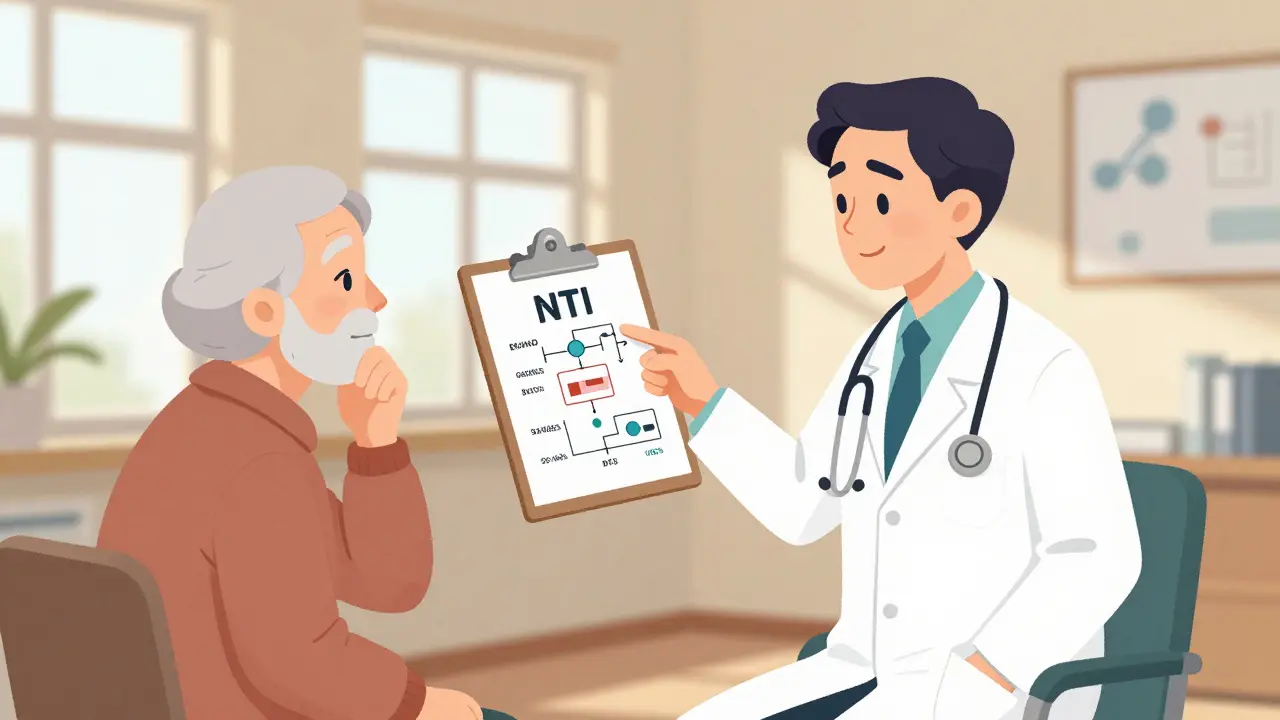
When a patient is switched from a brand-name NTI drug to a generic version, the conversation doesn’t end with the prescription change. In fact, that’s when the most important part begins. NTI drugs - drugs with a narrow therapeutic index - are not like most medications. A tiny change in dose or how the body absorbs the drug can mean the difference between effective treatment and serious harm. For drugs like warfarin, phenytoin, levothyroxine, and digoxin, even a 10% shift in blood levels can lead to seizures, blood clots, thyroid dysfunction, or heart rhythm problems. Yet, patients often hear nothing more than, "This is cheaper. It’s the same thing." That’s not enough. And it’s not safe.
Why NTI Drugs Are Different
Not all generics are created equal. Most medications have a wide safety margin. If you take 10% more or less than your prescribed dose, your body handles it without issue. But with NTI drugs, that margin is razor-thin. The FDA defines these as drugs where small changes in blood concentration can cause therapeutic failure or life-threatening side effects. For example:- Warfarin: Therapeutic range is INR 2-3. Go above 4, and you risk dangerous bleeding. Drop below 2, and you could get a stroke.
- Levothyroxine: A 12.5 mcg difference (half a tablet) can throw thyroid levels out of balance, causing fatigue, weight gain, or heart palpitations.
- Phenytoin: Levels below 10 mcg/mL may not control seizures. Above 20 mcg/mL, you risk confusion, tremors, or even coma.
- Digoxin: Therapeutic window is 0.5-0.9 ng/mL. Too high? Life-threatening arrhythmias. Too low? Heart failure worsens.
The FDA requires stricter testing for these generics. While regular generics must match brand drugs within 80-125% of absorption, NTI generics must stay within 90-111.11%. For some, like levothyroxine, the bar is even higher - 95-105% for overall exposure. This isn’t just paperwork. It’s science. But patients don’t know that. And many providers don’t explain it.
What Patients Are Thinking (And Why They’re Worried)
Patients don’t worry because they’re paranoid. They worry because they’ve been burned before. A 2017 survey found that 8-12% of patients with well-controlled epilepsy had seizures after switching from brand to generic antiepileptics. A 2023 FDA review reported over 1,200 adverse events linked to NTI drug switches - mostly involving seizure recurrence or abnormal INR levels. Even if only 17% were confirmed as directly caused by the switch, that’s still hundreds of avoidable events.Patients also hear conflicting messages. Some pharmacists refuse to substitute. Some doctors say, "Stick with the brand." Others say, "It’s fine." The confusion breeds distrust. A patient who’s stable for years on a brand-name drug doesn’t want to risk their health for a few dollars. They need to hear: "This isn’t a gamble. It’s science. And we’re watching you closely."
What You Must Say - And How to Say It
Don’t just say, "It’s the same." That’s meaningless. Use clear, confident language backed by facts:- "This generic has been tested to deliver the exact same amount of medicine into your bloodstream as the brand. The FDA requires stricter testing for these drugs than for most others."
- "I prescribe this same generic to my own family members. It’s not just approved - it’s trusted."
- "We’ll check your blood levels in 7 days to make sure everything is working exactly as it should."
Use the "librarian vs. advisor" approach. A librarian just hands you a fact sheet. An advisor says, "I’ve seen this work for others. Here’s what we’ll do for you."
For anticoagulants like warfarin, say: "We’ll test your INR within 3-5 days after the switch. That’s standard. We do it for every patient, brand or generic." For thyroid meds: "We’ll check your TSH in 4-6 weeks. If it’s off, we adjust - no questions asked."
Monitoring Isn’t Optional - It’s the Standard
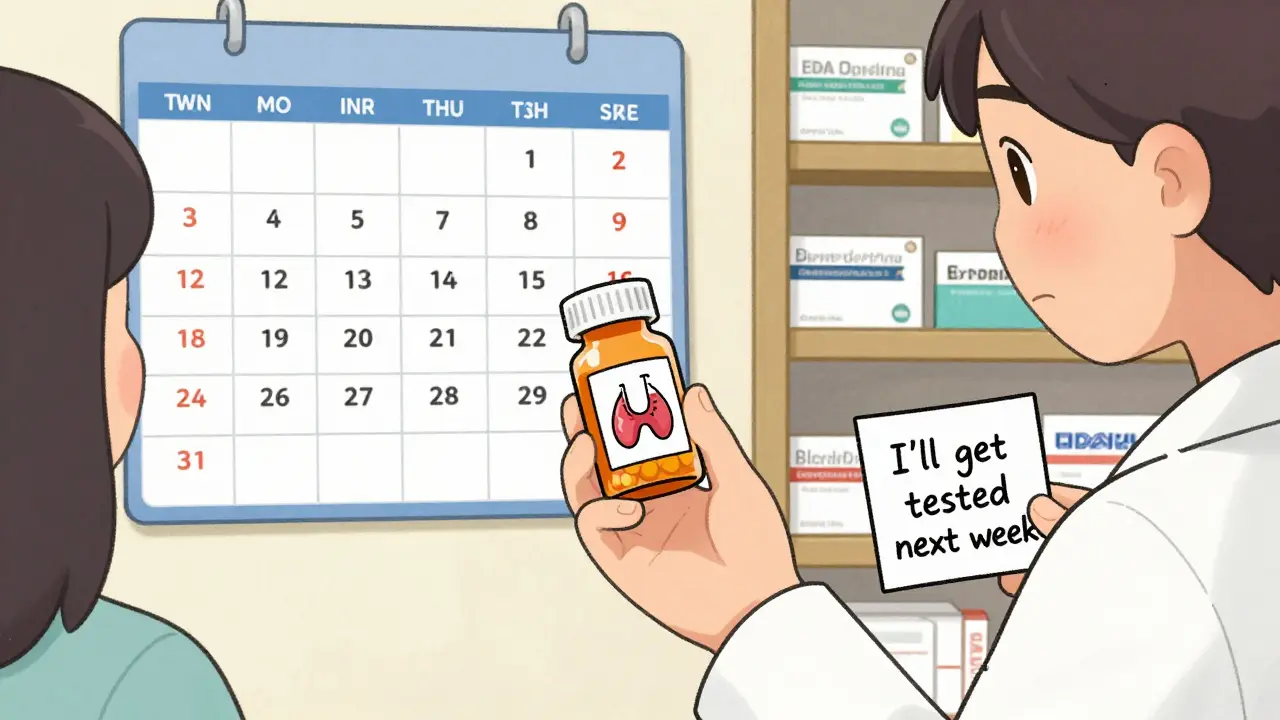
The American College of Clinical Pharmacy, the American Heart Association, and the FDA all agree: Any switch in NTI drugs requires follow-up testing. No exceptions.Here’s what to schedule:
- Warfarin (INR): Test within 3-5 days. Repeat if levels are unstable.
- Levothyroxine (TSH): Check in 4-6 weeks. Some patients need a second test at 8 weeks.
- Phenytoin/Carbamazepine (serum level): Draw within 7-10 days.
- Digoxin: Check within 5-7 days, especially in elderly patients.
Don’t assume the patient knows why. Say: "We’re not doing this because we don’t trust the generic. We’re doing it because we’re being careful - the same way we’d be careful with any change in your treatment."
State Laws Matter - And So Do You
In 27 states, laws govern how NTI drugs can be switched. Fourteen require written patient consent before substitution. Others require the prescriber to mark "dispense as written" on the prescription. If you’re in one of those states and you don’t follow the law, you’re not just risking patient safety - you’re risking your license.Check your state’s rules. Every pharmacy has a list. If you’re unsure, ask the pharmacist. Don’t assume. Don’t guess. And never let a pharmacist make the decision for you - unless they’re following state law.
What to Document - And Why
Documentation isn’t busywork. It’s protection - for your patient and for you. Use this template:- Patient counseled on therapeutic equivalence of generic [drug name] to brand version.
- Advised that monitoring [test name] is required within [timeframe].
- Written materials provided in [language, if applicable].
- Patient verbalized understanding: "I’ll get my blood drawn next week."
Use the teach-back method. Ask: "Can you tell me in your own words why we’re checking your levels?" If they say, "To make sure it’s not too strong," you know they didn’t get it. Try again.
What Works - Real Results
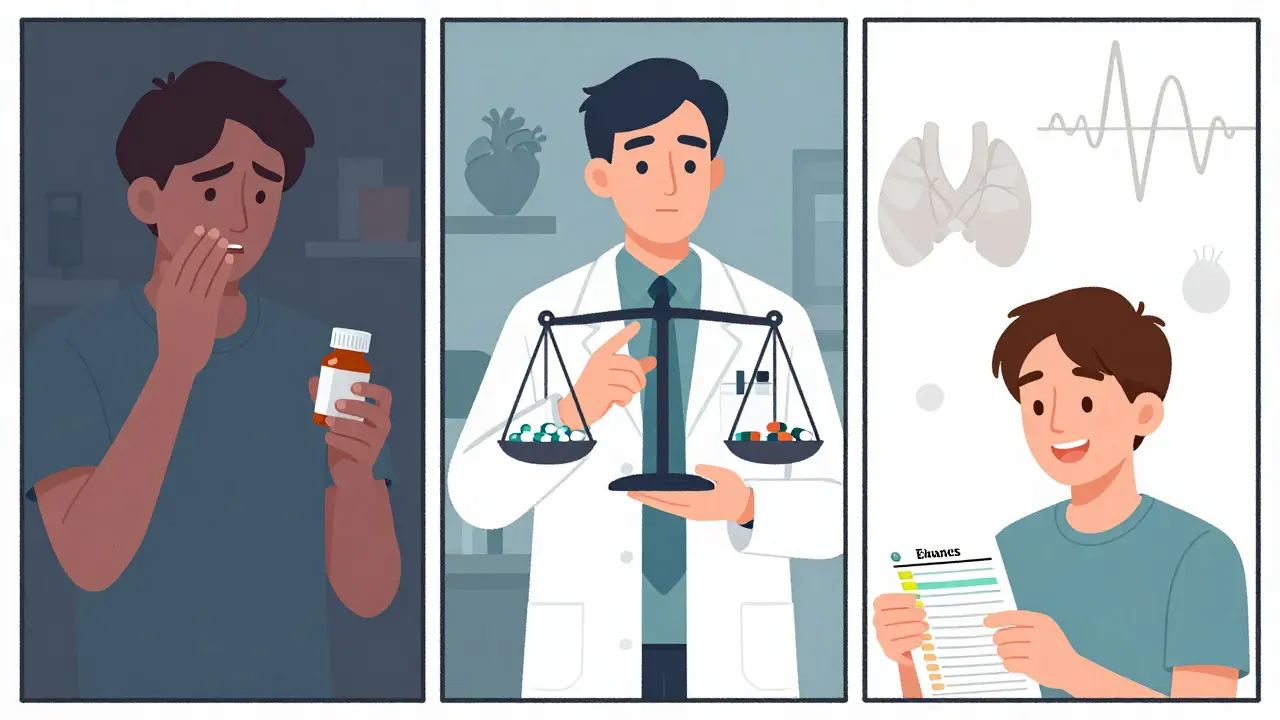
A 2020 study found that patients who received personalized counseling from pharmacists had 28% fewer medication-related problems. When pharmacists used visual aids - like charts showing how drug levels change after a switch - adherence jumped 42%. One clinic in Minnesota started using a simple 3-step handout:- "This generic is FDA-approved and tested to work the same as your brand."
- "We’ll check your blood in [X] days."
- "Call us if you feel different - even if it’s just a little."
Within six months, their NTI drug switch-related ER visits dropped by 37%.
What to Avoid
- Don’t say, "It’s just as good." That’s vague. Say, "It’s tested to be the same."
- Don’t say, "It’s cheaper." That triggers suspicion. Say, "It’s the same medicine, and it’s covered better."
- Don’t assume the patient knows what "bioequivalence" means. Don’t use the word.
- Don’t skip the follow-up. Even if the patient says, "I’m fine," test anyway. Stability doesn’t mean safety.
What’s Next?
The FDA is launching real-world monitoring in 2025 using data from 12 million patients to track outcomes after NTI drug switches. But right now, the system depends on you. Every conversation you have, every test you order, every note you write - it adds up. Patients aren’t asking for perfection. They’re asking for clarity. And trust.When a patient asks, "Is this really the same?" - don’t give them a textbook answer. Give them your confidence. Say: "Yes. And here’s how we’ll make sure it works for you."
Are all generic NTI drugs the same as the brand?
Yes - but only if they’ve met the FDA’s stricter standards. Generic NTI drugs must stay within 90-111.11% of the brand’s absorption, compared to 80-125% for regular generics. Some, like levothyroxine, must be even closer - 95-105%. The FDA tests these drugs more rigorously than any other class of medication. But not all generics on the market are created equal. Always use generics that are FDA-approved and listed in the Orange Book as therapeutically equivalent.
Can I switch back and forth between brand and generic?
It’s not recommended. Every switch - even from generic to another generic - can cause small changes in how the drug is absorbed. For NTI drugs, that’s risky. Once you switch to a generic, stay on it unless there’s a clear medical reason to change. Frequent switching increases the chance of unstable drug levels, which can lead to serious side effects. If you must switch, plan for monitoring each time.
Why do some pharmacists refuse to substitute NTI generics?
Some pharmacists refuse because of state laws - 14 states require written patient consent before substitution. Others do it out of caution, based on older data or personal experience. A 2017 survey found pharmacists with over 20 years of experience were 37% less likely to substitute than newer pharmacists. That’s not because they’re wrong - it’s because they’ve seen patients struggle after switches. The solution isn’t to override their judgment, but to equip them with better tools: clear guidelines, monitoring protocols, and patient education materials.
What if my patient refuses the generic?
Respect their choice. But don’t leave it there. Ask why. Is it cost? Fear? Past experience? If it’s fear, explain the testing and monitoring plan. If it’s cost, check for patient assistance programs - many manufacturers offer them. If they still refuse, document the conversation and write "dispense as written" on the prescription. Never pressure a patient. Trust matters more than savings.
Do elderly patients need special consideration?
Yes. Older adults are more sensitive to changes in drug levels due to slower metabolism, kidney changes, and multiple medications. For patients over 65, always check levels sooner - within 5 days for warfarin, 7 days for phenytoin or digoxin. Use lower starting doses if switching from brand to generic. Monitor closely for dizziness, confusion, or irregular heartbeat. These patients benefit most from consistent, well-monitored generic use - but only if the transition is handled carefully.
All Comments
Martin Halpin February 28, 2026
Okay, so let me get this straight - we’re telling patients that generics are ‘the same’ but then we’re running blood tests like they’re nuclear reactors? I’ve been in this game 20 years, and I’ve seen more bad outcomes from switching than from not switching. You think the FDA’s 90-111% range is magic? Try telling that to the guy whose INR went from 2.3 to 5.1 after his pharmacy swapped his warfarin for a ‘bioequivalent’ generic made in some factory in Punjab. I’ve had patients show up with nosebleeds and confusion because their ‘same’ drug suddenly became a different drug. And don’t even get me started on how often the pharmacists don’t even log the switch. This isn’t science - it’s a cost-cutting gamble with people’s lives. The system’s broken, and you’re just giving it a nicer PowerPoint slide.
Eimear Gilroy March 1, 2026
Interesting piece - I appreciate the emphasis on monitoring. But I wonder: how many providers actually follow through? In my clinic, we’re stretched so thin that even scheduling a TSH check feels like a luxury. I’ve had patients tell me they didn’t get tested because ‘they felt fine.’ And honestly? I didn’t push back hard enough. Maybe we need a mandatory alert in the EHR - like, if a patient is switched to a generic NTI drug, the system auto-schedules the follow-up and blocks the next prescription until the test is done. It’s not about trust - it’s about systems that don’t rely on human memory. We need tech to do the reminding so we can do the talking.
Natanya Green March 2, 2026
OH MY GOSH, THIS IS SO IMPORTANT!!! I HAD A FRIEND WHO HAD A SEIZURE AFTER HER DOCTOR SWITCHED HER TO A GENERIC PHENYTOIN AND NO ONE TOLD HER TO GET HER LEVELS CHECKED!!! SHE WAS HOSPITALIZED FOR WEEKS!!! I’M SO GLAD SOMEONE FINALLY SAID THIS!!!
WE NEED TO STOP TREATING PATIENTS LIKE THEY’RE JUST NUMBERS!!! THEY’RE PEOPLE!!! THEY’RE MOTHERS AND FATHERS AND GRANDPARENTS!!!
PLEASE, EVERY DOCTOR, PHARMACIST, AND NURSE - READ THIS. SHARE THIS. LIVE THIS!!!
❤️🙏 #NTIDrugsMatter #PatientSafetyFirst
Steven Pam March 3, 2026
Love this. Seriously. I’ve been pushing my clinic to adopt the 3-step handout you mentioned - and guess what? It worked. We saw a 40% drop in calls to the on-call line in the first month. Patients weren’t panicking anymore because they knew what to expect: ‘We’ll check your levels. Call if something feels off. You’re not alone.’ That’s all they needed. It’s not about convincing them the drug is the same - it’s about showing them we’ve got their back. Simple. Human. Effective. Let’s make this standard everywhere.
Nandini Wagh March 4, 2026
Wow. So let me get this right - you’re saying we should trust a drug that’s ‘tested to be the same’… but only if we’re willing to run a blood test every week? And if the patient refuses? We just write ‘dispense as written’? That’s not patient-centered care. That’s liability management disguised as safety. The real issue isn’t the generic - it’s that we’ve turned medicine into a checklist. ‘Counsel. Test. Document.’ No wonder patients are scared. We’ve made them feel like lab rats. Maybe instead of more tests, we should start asking: ‘What happened the last time you switched?’ and actually listen.
Holley T March 4, 2026
Let’s be real - the FDA’s ‘stricter’ standards for NTI generics are a joke. The 90-111% range still allows for a 21% variance. That’s not precision - that’s a wild guess. And don’t get me started on how many generics are approved based on a single bioequivalence study with 24 healthy volunteers. Real people aren’t healthy volunteers. They’re elderly, diabetic, renal-impaired, on five other meds. The system is designed to protect manufacturers, not patients. And now we’re telling doctors to ‘trust the science’? The science is funded by the same companies that make the brand-name drugs. This isn’t transparency - it’s corporate theater.
Ashley Johnson March 6, 2026
Wait wait wait - are you telling me that the FDA is just letting ANY generic company make these life-or-death drugs? Like… what if they use cheap fillers? What if the batch is contaminated? What if the lab just faked the data? I read online that some generics have been found with rat poison in them. I mean, really. I switched my mom to generic levothyroxine last year and now she’s tired all the time. Coincidence? I think NOT. I’m calling my senator. This is a cover-up. Big Pharma doesn’t want us to know. I’m going viral with this. #GenericDrugScam
tia novialiswati March 7, 2026
You’re doing amazing work here!! 💪❤️ I just used your 3-step handout with my patient today - she cried and said, ‘No one’s ever explained it like that before.’ That’s the moment we all live for. Keep pushing for the little things - the checklists, the handouts, the follow-ups - because those are the things that save lives. You’re not just a provider. You’re a lifeline. Thank you for caring so deeply. 🙏✨