
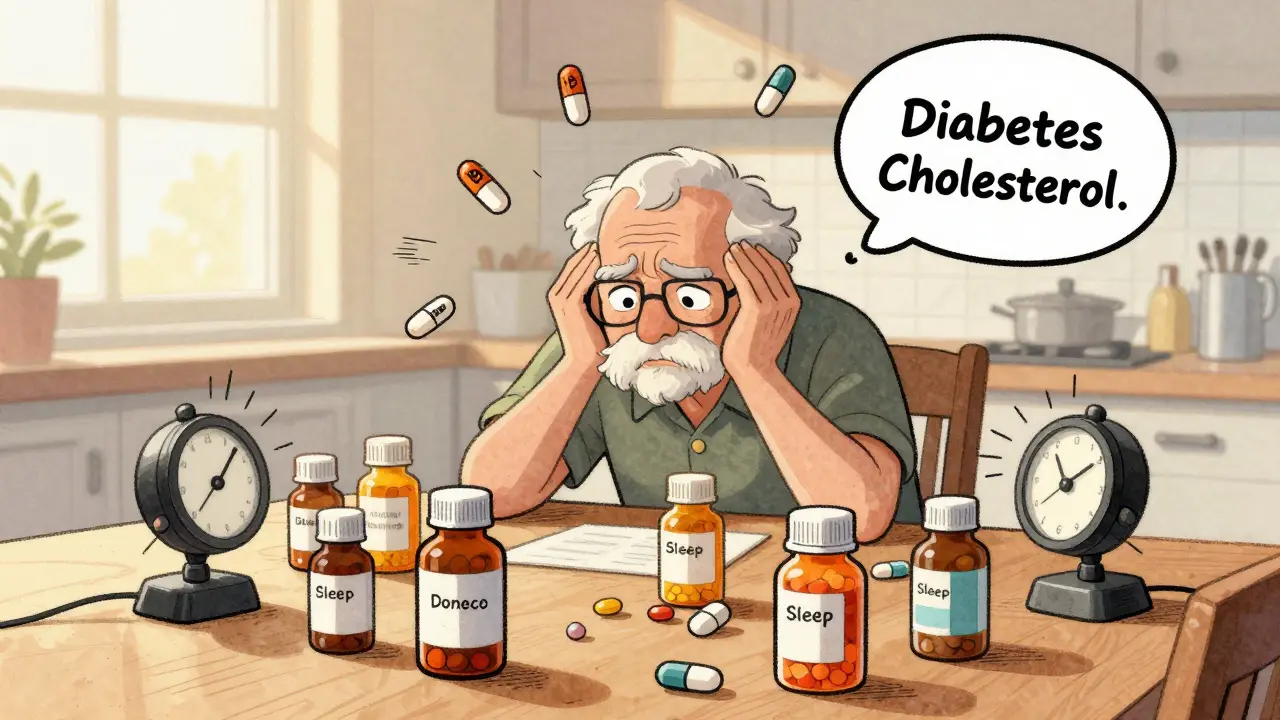
Imagine taking 12 pills a day-morning, noon, evening, bedtime, and maybe even mid-afternoon. Now imagine forgetting one. Or mixing them up. Or running out because your prescriptions don’t sync up. This isn’t rare. In the U.S., nearly half of adults over 65 take five or more medications daily. And for many, that means juggling a dozen doses across the day. It’s exhausting. It’s confusing. And it’s why so many people stop taking their meds-even when they know they need them.
Why Fewer Doses Mean Better Adherence
The math is simple: the more times you have to remember to take a pill, the more likely you are to miss one. Studies show that people taking four or fewer doses a day are twice as likely to stick with their regimen than those taking seven or more. That’s not just a preference-it’s a health necessity. Missed doses can mean uncontrolled blood pressure, worsening diabetes, or even hospitalization.
One big reason? Our brains aren’t wired for complexity. We forget alarms. We skip doses when we’re in a rush. We get confused when pills look similar. Simplifying the schedule doesn’t just make life easier-it directly improves outcomes. A 2020 NIH study found that 41% of medication regimens in older adults could be safely simplified with fewer daily doses. And when that happened, adherence jumped by 20-30%.
Four Proven Ways to Cut Down Daily Doses
There’s no one-size-fits-all fix, but four strategies work consistently across different conditions-and they’re backed by real data.
1. Fixed-Dose Combinations (FDCs)
This is when two or more drugs are combined into a single pill. Think of it like a multivitamin for your prescriptions. For example, instead of taking separate pills for high blood pressure and cholesterol, you might get one pill that does both. About one-third of all simplification efforts use FDCs. They’re especially common in HIV and heart disease treatment.
Why it works: Fewer pills = fewer chances to forget. Studies show adherence improves by 18-25% when patients switch to FDCs. But there’s a catch: not every drug can be combined. Doses have to match. Some medications interact if mixed. That’s why this needs a pharmacist or doctor to review your list first.
2. Once-Daily Dosing
Many medications come in extended-release versions designed to last 24 hours. If you’re taking a drug three times a day, ask: Is there a once-daily version? This isn’t just about convenience-it’s about timing. Taking a blood pressure pill at night instead of morning can improve control. Some antidepressants and diabetes meds can also be switched safely.
Real-world example: In HIV care, switching from twice-daily to once-daily antiretrovirals dropped missed doses from 12% to 4% monthly. But not all drugs can be converted. Some have short half-lives-they leave your system too fast. That’s why you never switch on your own. Always talk to your provider.
3. Medication Synchronization
This one’s simple but powerful: get all your prescriptions due on the same day each month. Instead of visiting the pharmacy three times a month, you go once. No more running out of one med while others are full. It cuts down on gaps in treatment and reduces stress.
Pharmacies that offer this service report a 60% drop in missed refills. Many Medicare Advantage plans now cover it. But it requires coordination. You’ll need to work with your pharmacy and doctor to align refill dates. It’s not automatic-ask for it.
4. Multi-Dose Compliance Packaging
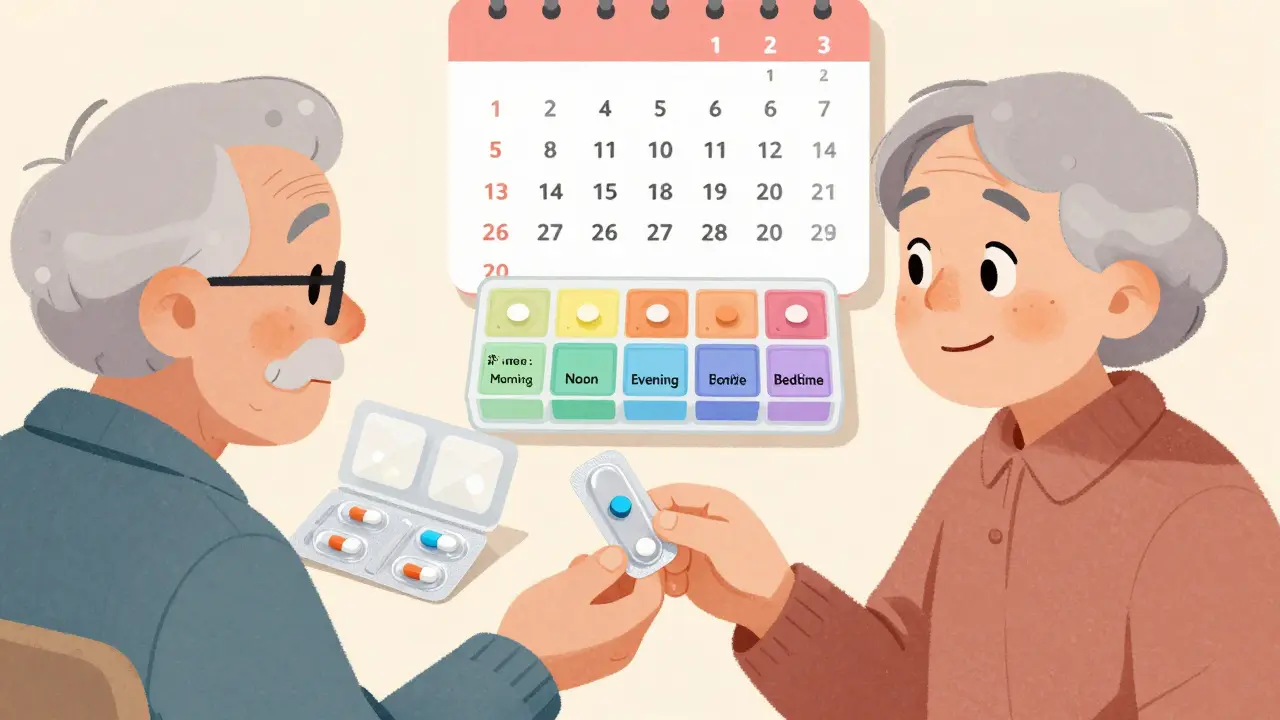
Think of this as a pill organizer, but professional-grade. Your meds are pre-packed into daily or weekly blister packs, divided by morning, noon, evening, and bedtime. No more sorting 12 bottles. Just grab the right compartment.
Studies show a 22% improvement in adherence compared to traditional vials. Caregivers say it’s a game-changer for people with dementia or memory issues. One woman on AgingCare.com said, “My mother went from mixing up her pills to taking them without help.”
Downside? It costs more-15-20% higher than regular packaging. Not all insurers cover it. But for many, the peace of mind is worth it.
The Universal Medication Schedule: A Simple Framework
Here’s a trick used in hospitals and now spreading to clinics: use just four times a day-morning, noon, evening, bedtime. That’s it. No 2 p.m., no 8:30 p.m., no “take with food.”
Why? Because most people already live by these four blocks. It’s easier to remember. And research shows it cuts dosing errors by 35%. If your doctor says “take twice daily,” ask: “Can that be morning and bedtime?” If they say “three times,” can it be morning, noon, and bedtime?
This isn’t about cutting corners. It’s about matching your medicine to your life.
What Doesn’t Work-and Why
Not every medication can be simplified. Some drugs need to be taken at specific intervals to stay effective. For example:
- Insulin for diabetes often needs multiple daily injections-it can’t be condensed.
- Some antibiotics must be taken every 8 hours to kill bacteria fully.
- Diuretics (water pills) are often taken in the morning to avoid nighttime bathroom trips.
Also, don’t assume that fewer pills means better results. One study found that while adherence improved with simplification, blood sugar levels didn’t change in diabetic patients. Why? Because patients started taking their pills-but didn’t adjust their diet or activity. Simplification helps, but it’s not magic.
How to Start the Process
You don’t need to figure this out alone. Here’s a clear, five-step plan:
- Make a complete list of every medication you take-prescription, over-the-counter, vitamins, supplements. Include dose and time.
- Bring it to your pharmacist or doctor. Ask: “Can any of these be combined or switched to once-daily?”
- Ask about insurance. Some FDCs or packaging aren’t covered. Ask: “Is there a generic or alternative that’s covered?”
- Try one change at a time. Don’t overhaul everything at once. Start with the most confusing or frequent dose.
- Use a tracker. For a week, write down when you take each pill. Did you miss any? Why? That feedback helps your provider adjust.
Studies show that when patients, pharmacists, and doctors all work together, 50% of simplification plans get implemented. When it’s just the pharmacist trying alone? Only 12% succeed.
Barriers You Might Face
It’s not always smooth sailing. Here are the real roadblocks:
- Insurance denials: 45% of Medicare Advantage patients get denied coverage for newer once-daily formulations. If this happens, ask for a prior authorization or appeal.
- Patient misunderstanding: 68% of pharmacists say patients mix up pills they think are “the same.” Never assume two pills are interchangeable.
- Cost: Compliance packaging can cost $20-$50 extra per month. Some states have programs to cover it for low-income seniors.
- Doctor resistance: Only 35% of primary care practices routinely review regimens for simplification. Be persistent. Bring data. Say: “I want to take my meds correctly. Can we make this easier?”
What’s Next? AI and Smart Tech
The future is coming fast. New tools are emerging:
- AI apps that scan your pill list and suggest possible combinations.
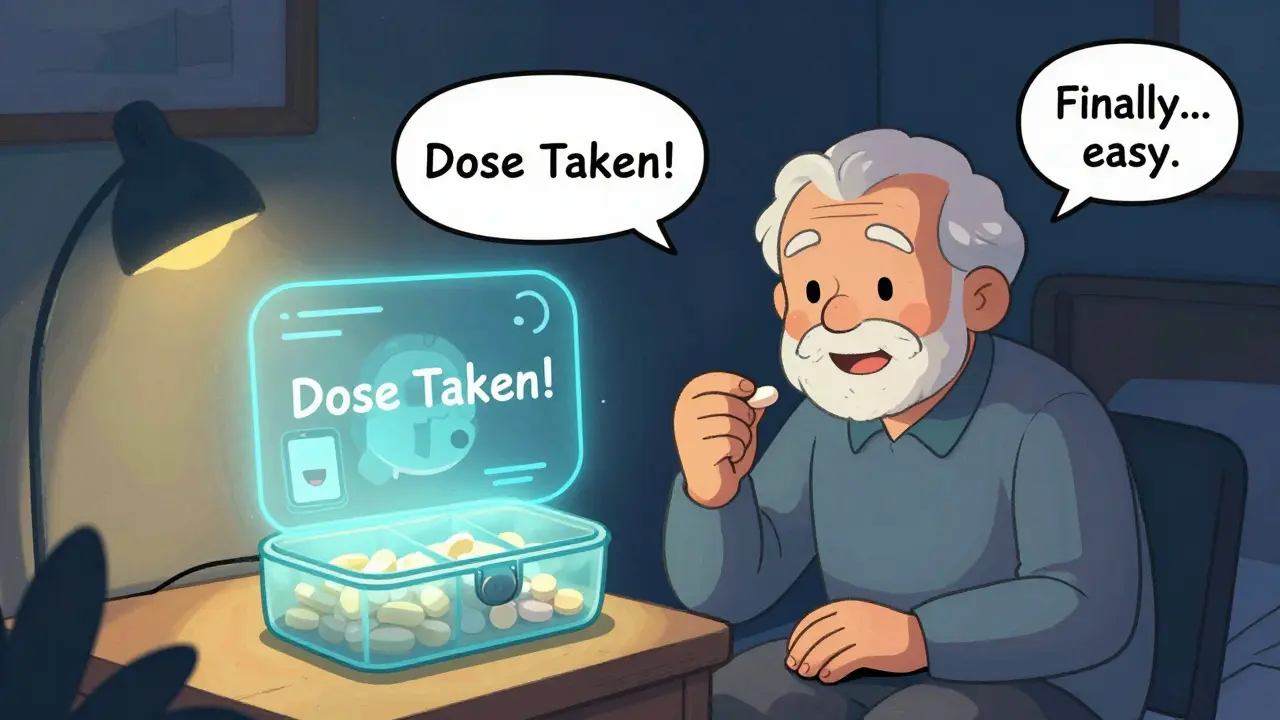
- Smart pill boxes that beep when it’s time-and send alerts to your caregiver if you miss a dose.
- Pharmacies using algorithms to predict which patients would benefit most from synchronization.
Some Medicare Advantage plans are already piloting these. In 2022, the FDA approved 12 new fixed-dose combinations-up 25% from 2020. Industry analysts predict the market for these services will grow 30% a year through 2027.
But tech won’t fix everything. The biggest hurdle remains: communication. If your doctor doesn’t know your routine, they can’t help you simplify it. Tell them when you’re busy. When you travel. When you forget. That’s the real key.
Final Thought: It’s Not About Fewer Pills. It’s About Fewer Worries.
Simplifying your medication schedule isn’t just about cutting down on pills. It’s about reducing stress, confusion, and fear. It’s about waking up without dreading your medicine cabinet. It’s about feeling in control again.
Start small. Talk to your pharmacist. Ask one question: “Is there a way to make this easier?” You’d be surprised how often the answer is yes.
Can I just combine my pills myself if they look similar?
No. Never combine pills on your own, even if they look the same. Different medications can interact dangerously when mixed. One pill might be a blood thinner, another a blood pressure drug-combining them could cause a dangerous drop in blood pressure or bleeding. Always consult your pharmacist or doctor before changing how you take any medication.
Will simplifying my meds lower my treatment effectiveness?
Not if done correctly. Studies show that when simplification is guided by a pharmacist or clinician, therapeutic outcomes stay the same-or even improve-because you’re taking your meds consistently. The problem isn’t the number of doses; it’s missed doses. If you take your once-daily pill every day, it works better than taking three pills inconsistently.
Does Medicare cover medication synchronization or pill organizers?
Original Medicare (Parts A and B) doesn’t cover pill organizers or synchronization. But many Medicare Advantage plans (Part C) do, especially for patients with chronic conditions. Check your plan’s formulary or call member services. Some states also offer free or low-cost packaging programs for seniors on limited incomes.
What if my doctor says no to simplification?
Ask why. If they say it’s unsafe, request evidence-like a study or guideline. If they say it’s not covered, ask if there’s an alternative drug that is. You can also ask for a referral to a medication therapy management (MTM) pharmacist, who specializes in this. Many hospitals and clinics offer free MTM services for Medicare patients.
How long does it take to see results after simplifying my regimen?
You’ll notice the difference in your daily routine right away-fewer trips to the pharmacy, less stress about forgetting. Clinical improvements, like lower blood pressure or better blood sugar, can take weeks to months, depending on your condition. But adherence improves within days. Track your doses for one week before and after the change. You’ll likely see a big drop in missed doses.
Next Steps: What to Do Today
Here’s your action list:
- Write down every medication you take, including doses and times.
- Call your pharmacy and ask: “Do you offer medication synchronization?”
- Ask your doctor: “Are there any of my medications that can be switched to once-daily or combined into one pill?”
- Request a free medication review from your pharmacist-many offer this at no cost.
- Set a reminder on your phone to check your pill count in two weeks. Did you miss any? Why?
You don’t need to fix everything at once. One fewer dose a day can change your life. Start there.
All Comments
Mina Murray January 7, 2026
Let me guess-someone’s gonna say ‘just take a pill organizer’ like that’s magic. Newsflash: I’ve seen people with dementia put their insulin in the morning compartment and their blood pressure med in the evening. One guy mixed his warfarin with his calcium. He ended up in the ER. This isn’t about convenience. It’s about liability. And if your pharmacist is pushing this without a clinical review, they’re not helping-they’re gambling with your life.
Christine Joy Chicano January 7, 2026
There’s something quietly revolutionary about reducing a 12-pill daily ritual to four blocks: morning, noon, evening, bedtime. It’s not just medical-it’s psychological. We don’t live by clocks; we live by routines. Breakfast, lunch, dinner, and the quiet moment before sleep. When your meds slot into those anchors, they stop being chores and start being part of your rhythm. I’ve watched my aunt go from frantic pill-sorting to calm, confident compliance. The difference isn’t in the drugs-it’s in the structure.
Adam Gainski January 9, 2026
I work as a geriatric pharmacist and I can confirm-simplification works. Not because it’s trendy, but because humans are biological systems that crave predictability. I’ve seen patients with 15+ meds cut down to 5 with FDCs and once-daily switches. Adherence went from 42% to 78% in under 3 months. But here’s the catch: it takes time. You need a pharmacist to map the interactions, a doctor to approve, and the patient to feel heard. It’s a team sport. If your provider dismisses you, ask for an MTM consult. It’s covered under Medicare Part D.
Poppy Newman January 11, 2026
OMG YES. My mum’s on 9 meds and I used to find her crying in the kitchen because she couldn’t tell which blue pill was which. We got her on a weekly blister pack and now she takes them like a pro. 🙌 No more ‘did I take it?’ panic. It cost extra but worth every penny. Pharmacy said it’s like giving her back her independence. 💙
Vince Nairn January 11, 2026
So let me get this straight-you want me to believe that if I just shove all my pills into one pillbox and call it ‘morning, noon, evening, bedtime’ I won’t die? Cool. Cool cool cool. I’m sure the FDA’s got a memo on this. Meanwhile my cardiologist says ‘nope’ because my meds have half-lives shorter than my attention span. But sure, let’s pretend simplification is the answer and not just a feel-good myth for people who think ‘take it with food’ is a conspiracy
Kamlesh Chauhan January 11, 2026
my grandma died because they gave her a combo pill and she had a stroke. i saw it happen. the pharmacist said it was safe. they all say that. now i dont trust anyone. you think this is about convenience? its about profit. drug companies make more money when you take one pill instead of three. they dont care if you live or die. they just want you to take it. and now theyre pushing this tech stuff so they can track you. i dont trust it. i dont trust anyone
steve rumsford January 13, 2026
bro i used to take 11 pills a day and i swear i forgot half of them. then i got my pharmacy to sync everything to the 15th of the month. now i just go once. no more panic. no more ‘oh shit did i take the blue one?’ i still mess up sometimes but its way better. also the pill organizer thing? life changer. i got one with a lock. my cat cant steal my blood pressure meds anymore. 🐱💊
Andrew N January 13, 2026
Studies show 20-30% improvement in adherence. That’s statistically significant. But what about clinical outcomes? Blood pressure? HbA1c? Mortality? You cite adherence but not efficacy. And you ignore the fact that many patients on simplified regimens still have poor control because they don’t adjust lifestyle. This post is dangerously oversimplified. Also, FDCs often have fixed ratios-what if you need to titrate? You can’t. That’s not simplification. That’s pharmaceutical lock-in.