
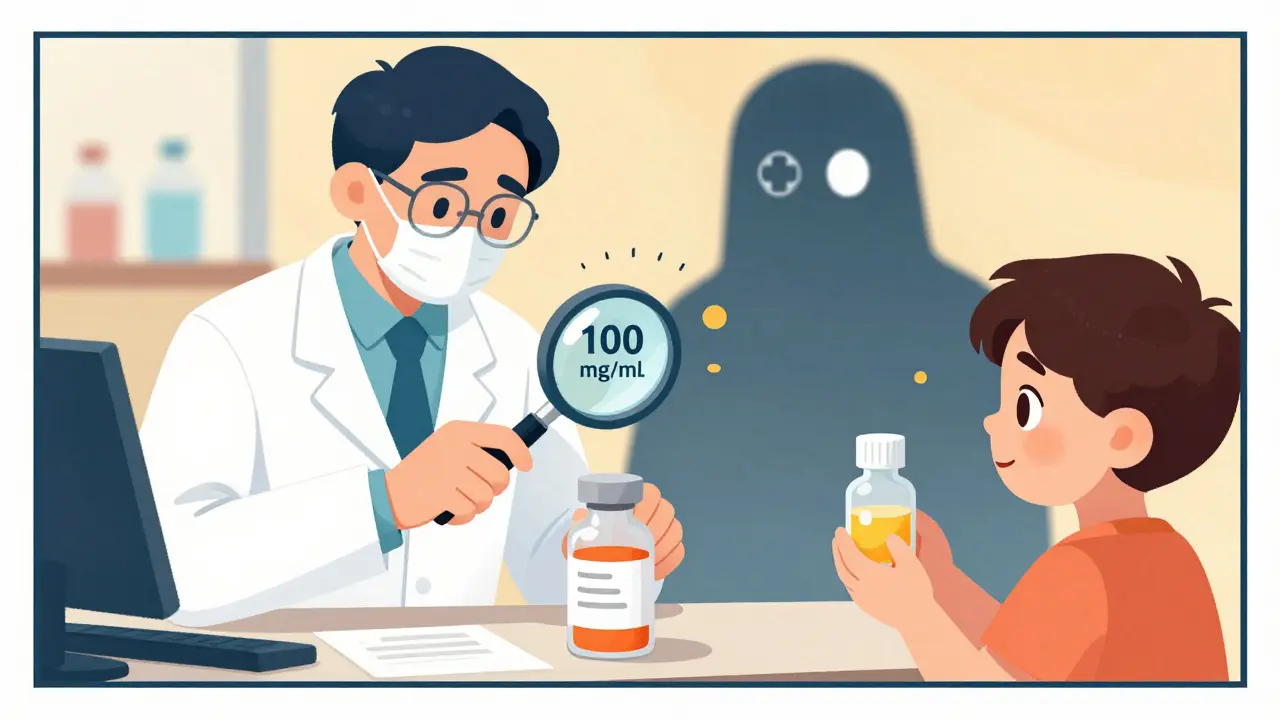
When a child can't swallow a pill, or an adult is allergic to a dye in a standard drug, compounding pharmacies step in. They make custom medications - from flavored liquids for kids to hormone creams for adults. But behind every personalized dose is a high-risk process. One wrong number, one mislabeled bottle, one contaminated batch, and the result can be hospitalization - or worse. The 2012 NECC outbreak killed 64 people because of fungal contamination in steroid injections. That wasn't an accident. It was a failure of systems. Today, thousands of pharmacies still prepare custom meds daily. And if you're relying on one, you need to know how errors happen - and how to stop them.
Why Compounding Is Riskier Than Regular Pills
Mass-produced drugs go through years of testing. The FDA requires clinical trials with thousands of patients before approval. Compounded meds? No such thing. They're made one batch at a time, often from raw powders, and never tested for safety before they reach you. That means the pharmacy’s own procedures are your only protection. A 2021 study found that 3% to 15% of compounded preparations had strength errors - too strong, too weak, or unevenly mixed. In one case, a compounded tramadol solution was labeled as '100 mg per container' instead of '100 mg per mL.' A patient took five times the intended dose. She ended up in the ICU with serotonin syndrome. This isn't rare. The FDA logged 27 fentanyl overdose incidents between 2018 and 2022 because of confusing labels.
The Three Biggest Sources of Errors
- Calculation mistakes - Pediatric doses are often 1/10th of adult doses. A pharmacist misplaces a decimal, and a child gets a lethal amount.
- Ingredient mix-ups - Active ingredients look alike. Fentanyl powder and morphine powder are both white crystals. Without proper verification, one can replace the other.
- Labeling errors - '50 mg/mL' vs. '50 mg per vial' - tiny difference, deadly outcome. A 2023 survey found 67% of pharmacists cite labeling inconsistencies as their top safety concern.
How to Stop Errors Before They Happen
Preventing mistakes isn't about working harder. It's about building systems that make errors nearly impossible. Here's what works:
1. Dual-Check System - Always
One pharmacist calculates the dose. A second one checks it - independently. No shortcuts. The American Society of Health-System Pharmacists says this cuts calculation errors by more than 70%. It’s not optional. It’s the baseline. If a pharmacy skips this, walk away.
2. Ingredient Verification with Science, Not Just Sight
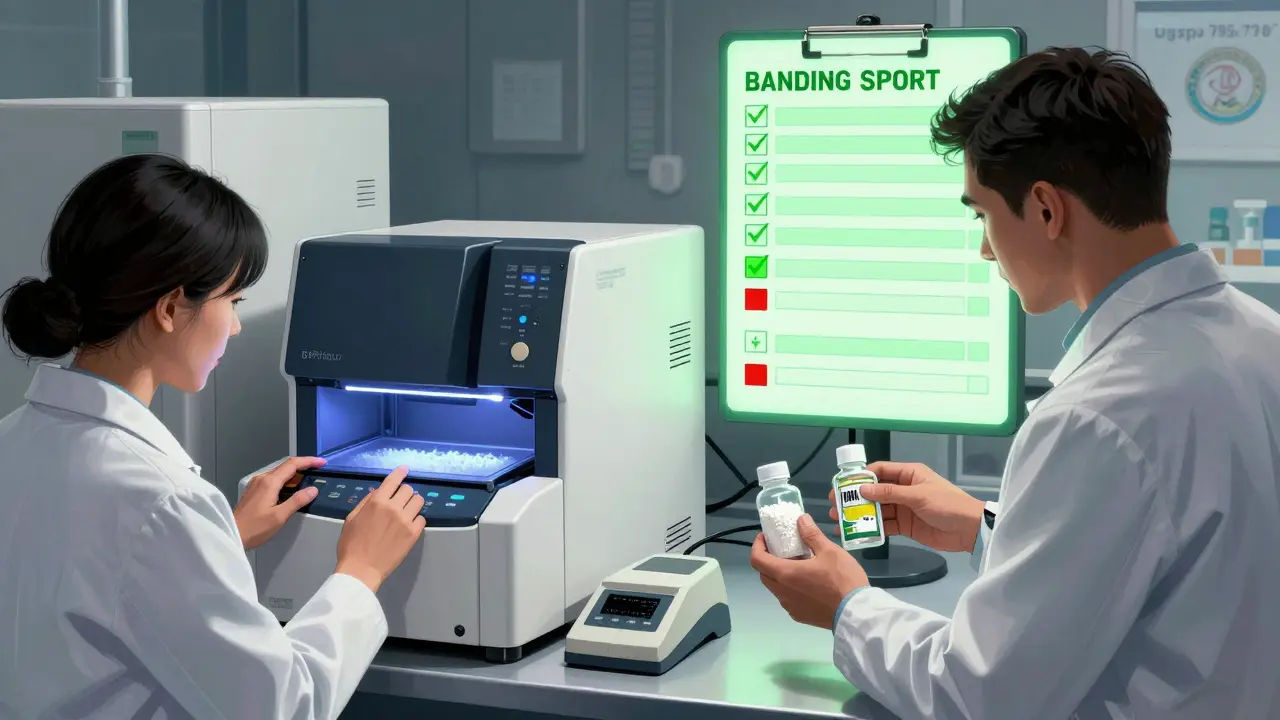
Never trust how something looks. Use tools. High-performance liquid chromatography (HPLC) and Fourier-transform infrared spectroscopy (FTIR) can confirm a powder is what it says it is. Accredited pharmacies do this for every batch. Non-accredited ones? Often not. Ask your pharmacy: "Do you test every ingredient with HPLC or FTIR?" If they say "no," they’re gambling with your safety.
3. Follow USP Standards - <795>, <797>, and <800>
These aren't suggestions. They're the gold standard. USP <795> covers non-sterile compounding (like creams or capsules). <797> covers sterile (injections, IVs). <800> covers hazardous drugs (chemotherapy, hormones). Each sets strict rules for air quality, protective gear, and cleaning. A 2022 study found that pharmacies following these standards reduced errors by at least 60%. If a pharmacy can't tell you which USP chapters they follow, they’re not compliant.
4. Barcode Scanning for Every Ingredient
A 2021 case study at the University of Tennessee showed that using barcode scanners for every vial, powder, and solvent cut ingredient errors by 92% in six months. The system checks: Is this the right drug? Is this the right lot? Is this the right strength? If the pharmacy still uses handwritten logs or manual entry, they’re using a 1990s method in a 2026 world.
5. Standardized Labeling - No More Guesswork
The FDA’s 2023 draft guidance requires all compounded meds to label concentration as "mg/mL" - not "per vial," not "per container." This is critical. One patient took 10 mL thinking it was 10 mg. The label said "10 mg per vial" - but the vial held 100 mL. That’s 100 times the dose. Standardized labels prevent this. Ask: "Is the concentration clearly marked as mg/mL?"
What Accreditation Really Means
Not all compounding pharmacies are equal. The Pharmacy Compounding Accreditation Board (PCAB) sets the highest standards. To get accredited, a pharmacy must:
- Pass a rigorous 12- to 18-month review
- Prove 95% accuracy in dose verification tests
- Use dual checks, HPLC/FTIR, barcode scanning, and environmental monitoring
- Train staff for 40+ hours initially, plus 8-12 hours yearly
As of 2023, only 18% of U.S. compounding pharmacies are PCAB-accredited. But here’s the kicker: accredited facilities have error rates under 2%. Non-accredited? Up to 25%. That’s not a small difference. It’s life or death.
What You Can Do as a Patient
You don’t have to be an expert to protect yourself. Ask these three questions before you pick up your prescription:
- "Are you PCAB-accredited?" - If they hesitate or don’t know what you mean, find another pharmacy.
- "Do you use dual verification for every dose?" - They should say yes - and be able to explain how.
- "Is the concentration labeled as mg/mL?" - If it says "per container" or "per vial," don’t take it. Ask them to relabel it.
Also, check the beyond-use date (BUD). Non-sterile compounds last 30 to 180 days. Sterile ones? 3 hours to 45 days. If the BUD is longer than USP guidelines allow - or if it’s missing - don’t use it. Expired compounded meds can lose potency or grow bacteria.
Technology Is Changing the Game
Compounding software like Compounding.io and PharmScript now do more than record prescriptions. They auto-calculate doses, flag concentration mismatches, and require digital signatures for each step. A 2022 study in the Journal of the American Pharmacists Association found these tools cut human error by 40%. Even better: AI systems like CompoundingGuard AI reduced calculation errors by 87% in pilot tests. Pharmacies using these tools aren’t just modern - they’re safer.
When Compounding Is Essential - And When It’s Not
Compounding saves lives. A child with a thyroid disorder who can’t swallow pills? A compounded liquid with precise microdosing can stabilize their levels in weeks. A cancer patient needing a dye-free chemotherapy? A compounding pharmacy makes it possible. But if you’re getting a compounded version of a common drug just because it’s "custom," ask why. Is it because the commercial version is unavailable? Or because the pharmacy is cutting corners? The FDA reports that 35% of compounded meds are made to fill drug shortages - but without proper checks, those are the riskiest batches.
Final Reality Check
Compounding isn’t evil. It’s necessary. But it’s not regulated like factory-made drugs. That means the burden of safety falls on the pharmacy - and on you. You can’t assume your pharmacy is safe just because it’s licensed. You need proof: accreditation, dual checks, proper labeling, and science-backed verification. If they can’t show you that, you’re not getting a custom medication. You’re getting a gamble.
What is the biggest cause of compounding errors?
The biggest cause is human error in calculations and ingredient identification. A single misplaced decimal in a pediatric dose or misreading a powder label can lead to overdose or underdose. Studies show that without a dual-check system and ingredient verification tools like HPLC or FTIR, error rates jump to 15% or higher. The 2012 NECC outbreak and 27 fentanyl overdoses between 2018-2022 were directly tied to these types of mistakes.
How do I know if my compounding pharmacy is safe?
Ask if they’re PCAB-accredited - only 18% of U.S. compounding pharmacies are. If they aren’t, ask if they use dual verification for every dose, test every ingredient with HPLC or FTIR, scan barcodes for all components, and label concentrations as "mg/mL." If they can’t answer yes to all of these, they’re not meeting minimum safety standards. Also, check their beyond-use date - if it’s longer than USP <795> or <797> allows, don’t use the medication.
Are compounded medications FDA-approved?
No. Unlike mass-produced drugs, compounded medications are not reviewed or approved by the FDA before use. They’re made under USP guidelines and state pharmacy board rules. Only 503B outsourcing facilities - a small subset of compounding pharmacies - are subject to FDA inspections and Current Good Manufacturing Practices (CGMP). Most compounding pharmacies operate under 503A, which has far less oversight. That’s why accreditation and internal safety systems are your only real protection.
What’s the difference between USP <795> and <797>?
USP <795> covers non-sterile compounding - things like creams, capsules, and oral liquids. It requires a clean room with ISO Class 8 air quality and proper cleaning procedures. USP <797> covers sterile compounding - injections, IVs, and eye drops. It demands a much stricter environment: ISO Class 5 air quality, gowning protocols, air flow controls, and mandatory media fill testing twice a year for every technician. Violating <797> standards can lead to deadly contamination, like the 2012 fungal meningitis outbreak.
Can I trust a pharmacy that says they "follow all guidelines"?
Not unless they can prove it. Saying they "follow guidelines" is meaningless. Every pharmacy says that. What matters is whether they use barcode scanning, dual verification, ingredient testing, and standardized labeling. Ask for their PCAB status. Ask how often they test ingredients. Ask how they label concentrations. If they can’t give you specific answers, assume they’re cutting corners. Safety isn’t about promises - it’s about proof.