
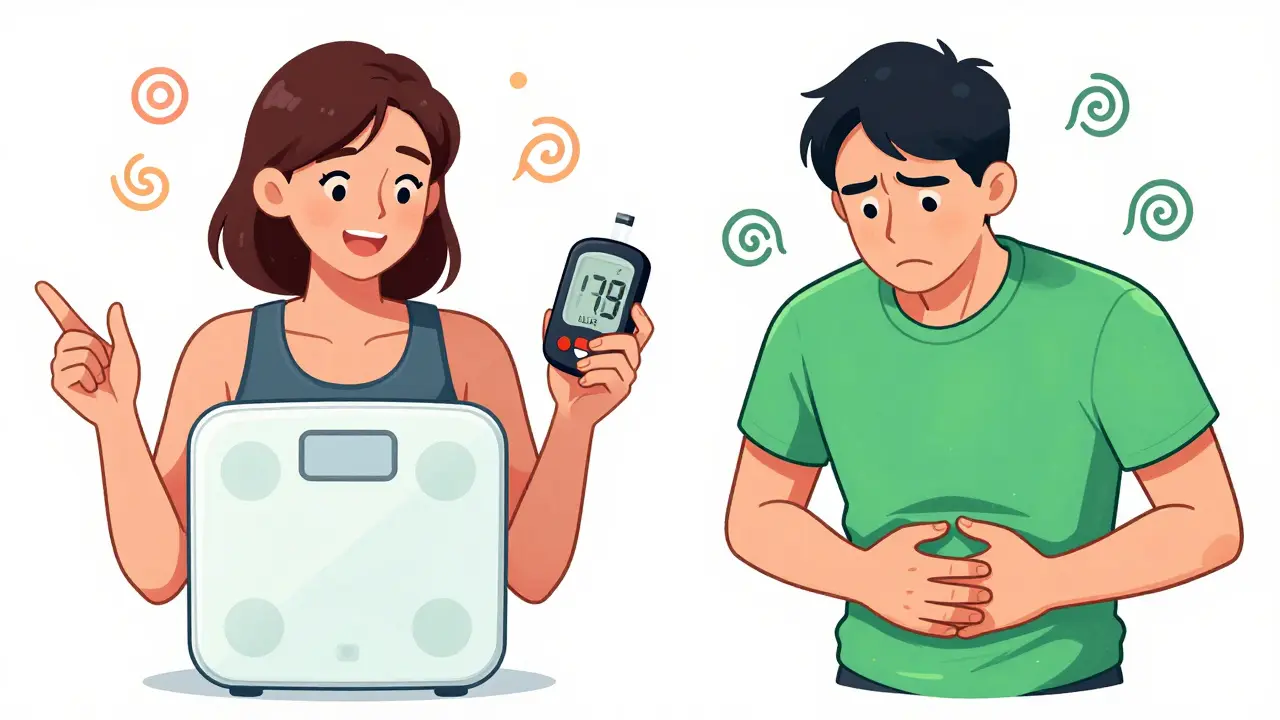
GLP-1 Management & Dose Titration Guide
Meal Planner Checker
Check if your planned meal meets the guidelines to minimize nausea.
Titration Readiness Tool
Determine if you should increase your dose based on the "Symptom-Guided" approach.
Key Takeaways for Managing GLP-1 Side Effects
- Prioritize Protein: Focus on small, high-protein meals to maintain muscle while reducing nausea.
- Slow Down Titration: Don't rush the dose increase; wait until your symptoms vanish before moving up.
- Hydrate Carefully: Drink fluids between meals rather than during them to avoid feeling overly full.
- Watch Portions: Stick to 300-400 calorie meals; larger portions are a primary trigger for vomiting.
Why Your Stomach Reacts to GLP-1s
It helps to understand why this happens. These drugs don't just affect your insulin; they act on your brain and your gut. By slowing gastric emptying, the medication keeps food in your stomach longer. If you eat a heavy, fatty meal, that food sits there, which can lead to intense bloating or a feeling of "fullness" that triggers nausea.
Different medications have different profiles. Short-acting agents, such as Exenatide, tend to cause more immediate nausea and vomiting. Meanwhile, long-acting versions like Semaglutide (used in Wegovy and Ozempic) are more likely to cause diarrhea in some users. The silver lining is that for most people, the peak of nausea happens around week four and drops significantly by week eight. Your body eventually adapts, but the way you handle the first few months determines whether you stick with the treatment or quit.
Meal Planning Strategies That Actually Work
If you try to eat "normal" sized meals while on a GLP-1, you're asking for trouble. Data shows that over 80% of people who quit these meds in the first two months were eating meals larger than 600 calories. When your stomach empties slowly, volume is your enemy.
The Low-Volume, High-Protein Approach
Instead of three big meals, shift to 5-6 tiny ones throughout the day. Aim for a balance of roughly 30g of protein and less than 40g of complex carbs per sitting. Keep your fats low-ideally under 15g per meal-because fat slows digestion even further.
The Fluid Rule
One of the biggest mistakes is drinking a huge glass of water during a meal. This fills your stomach to the brim and can trigger a reflux or nausea episode. Try limiting fluids to about 120-180ml during your meal and do the bulk of your hydrating in the gaps between eating. Also, ditch the carbonated drinks; the bubbles add gas to a stomach that's already struggling to move things along.
Timing Matters
Some users find that timing their medication and meals carefully changes everything. For instance, taking your weekly dose upon waking and waiting 30 to 60 minutes before eating your first meal can help. Others have found that eating a full meal two hours after their injection reduces the severity of the "day-after" nausea.
| Focus On (The "Green List") | Limit or Avoid (The "Red List") | Why? |
|---|---|---|
| Lean proteins (Chicken, Fish, Tofu) | Fried foods and heavy creams | Fats slow digestion further, increasing nausea. |
| Complex carbs (Quinoa, Berries, Oats) | Simple sugars and white bread | Simple carbs can cause rapid glucose spikes and crashes. |
| Small, frequent snacks (Greek yogurt) | Meals larger than 600 calories | High volume leads to gastric distress and vomiting. |
| Still water and herbal teas | Carbonated sodas and sparkling water | Gas buildup increases bloating and discomfort. |

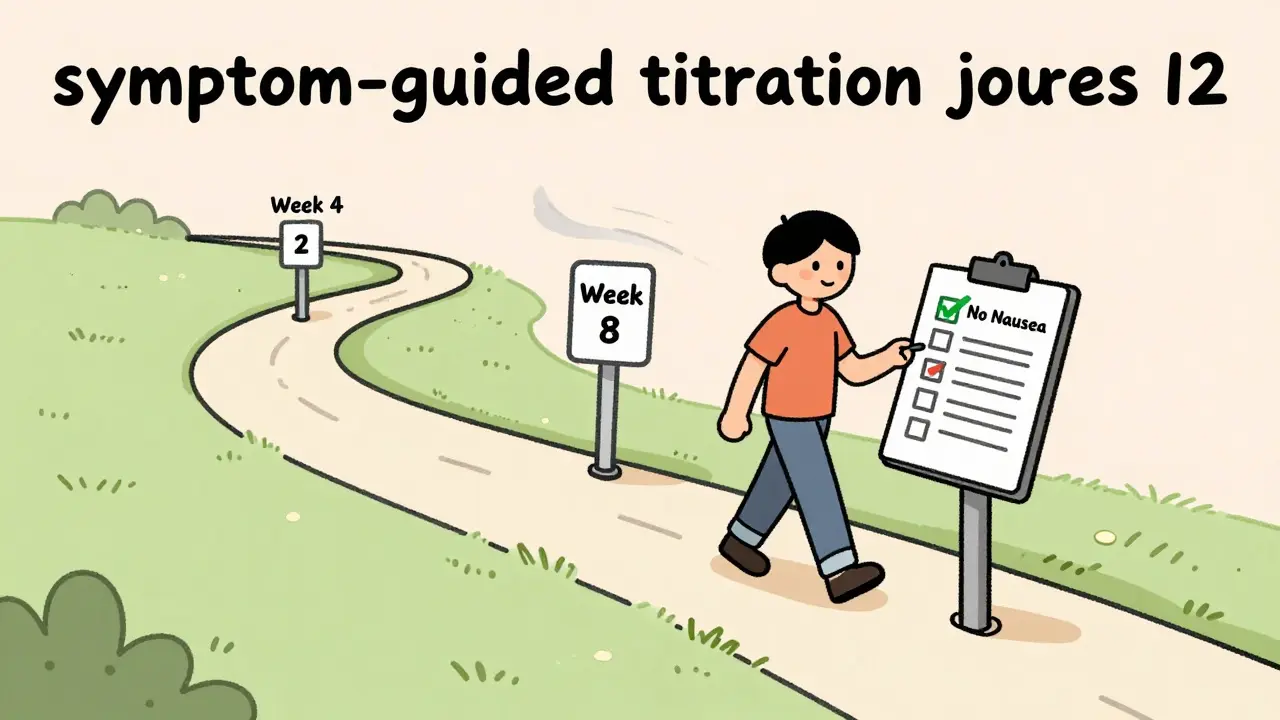
Mastering Dose Titration: The "Symptom-Guided" Approach
Most drug labels give you a fixed schedule-like increasing the dose every four weeks. However, many experts now argue that a fixed timeline is a mistake. If you are still feeling nauseous on week four, jumping to a higher dose is like throwing gasoline on a fire.
The Golden Rule of Titration
Don't increase your dose until your GI symptoms have completely resolved for at least seven consecutive days. If you're dealing with moderate nausea, it's perfectly okay to delay your next escalation by two to four weeks. If you're vomiting more than twice a week, you should hold the dose increase entirely until you can maintain hydration.
What to do when symptoms spike
If a new dose makes you miserable, you don't have to suffer through it. Some clinical protocols suggest temporary dose reduction-going back to the previous, lower dose for a few weeks-before trying to move up again. This "step-back" method has been shown to save a huge percentage of patients who would otherwise just give up on the medication.
For those who have a history of stomach issues, a slower titration period (stretching the process to 20-24 weeks instead of the standard 16) can reduce the chance of quitting the drug by up to 35%.
When to Worry: Serious vs. Common Side Effects
While nausea and diarrhea are common, there are a few red flags you can't ignore. About 0.5% to 1% of users may experience more serious issues like Gastroparesis (severe stomach paralysis), bowel obstructions, or pancreatitis.
How do you tell the difference? Common GLP-1 nausea is usually transient-it comes and goes and often improves as you adjust your diet. Serious issues are different. If you have severe, stabbing abdominal pain that radiates to your back, or if you cannot keep any liquids down for 24 hours, call your doctor immediately. These are not "normal' side effects and require medical intervention.
Practical Tips for Your First 30 Days
The first month is always the hardest. To get through it, try these direct strategies:
- The BRAT Strategy: If nausea hits hard after a dose, spend 48 hours on clear liquids, then move to the BRAT diet (Bananas, Rice, Applesauce, Toast) for a few days before trying protein again.
- Morning Dosing: Some studies suggest that taking your once-weekly injection in the morning may reduce nausea by nearly 30% compared to evening doses.
- Symptom Tracking: Keep a simple log of what you ate and how you felt. You'll quickly notice patterns-like how a certain type of oil or a large portion of pasta triggers a flare-up.
- Hydration Focus: If you're vomiting, focus on electrolytes. Sip small amounts of broth or electrolyte drinks every 15 minutes rather than gulping a whole bottle at once.
Can I take anti-nausea medication with GLP-1s?
Many doctors allow the use of over-the-counter or prescription anti-emetics during the titration phase. However, because GLP-1s slow down the gut, some oral medications may be absorbed more slowly. Always check with your healthcare provider to ensure the anti-nausea drug won't interfere with your other medications.
How long do the nausea and bloating usually last?
For most people, nausea peaks around the fourth week of treatment. By week eight, the intensity typically drops, and by the one-year mark, many users report almost no GI symptoms at all as their bodies adapt to the medication.
What is the best protein source to avoid nausea?
Lean, easily digestible proteins are best. Think grilled chicken breast, white fish, tofu, or egg whites. Avoid fatty cuts of meat or fried proteins, as the high fat content slows gastric emptying even further, which can make nausea worse.
Should I stop the medication if I'm vomiting?
If you are vomiting more than twice a week or cannot stay hydrated, you should contact your doctor immediately. In many cases, they will advise holding the dose for 7 to 10 days or reducing the dose to the previous level until your system stabilizes.
Does drinking coffee make GLP-1 side effects worse?
Coffee can be a trigger for some because it increases stomach acid and can irritate the lining of the gut, which is already stressed. If you notice increased nausea after your morning brew, try switching to a lower-acid roast or drinking it after you've had a small amount of protein.
Next Steps and Troubleshooting
If you've tried small meals and slow titration but are still struggling, it might be time to look at your specific drug. While Liraglutide (Saxenda) is sometimes better tolerated during the initial phase, Semaglutide often leads to better long-term results if you can get past the first two months.
For those who are truly unable to tolerate the medication, ask your doctor about "symptom-guided titration." Instead of following the box instructions, you only move up when you feel 100% recovered. This patient-centric approach can be the difference between a failed treatment and a successful weight loss journey.