
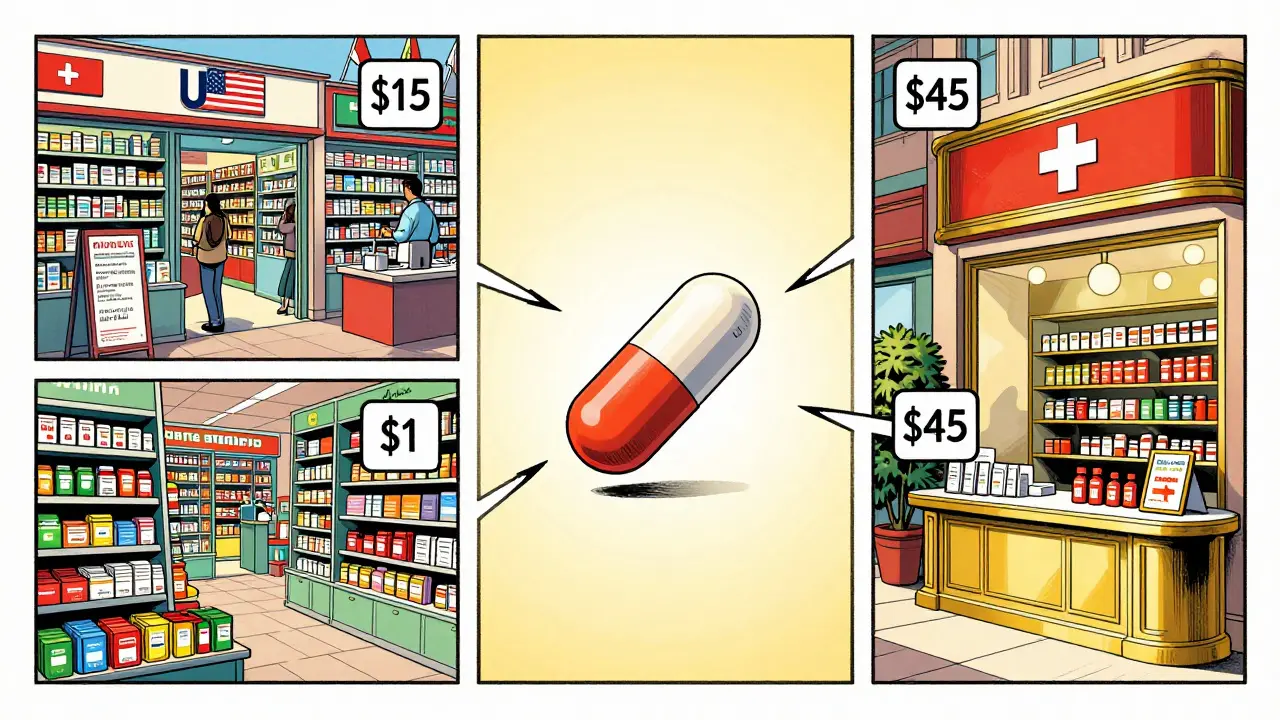
Imagine you take metformin for diabetes. In the U.S., your monthly prescription costs $15. In India, you could buy the exact same pill for $1. In Switzerland, it’s $45. Same active ingredient. Same manufacturer. Same packaging. But the price? Totally different. This isn’t a glitch. It’s the global reality of generic drugs.
Why Do Generic Drugs Cost So Much More in Some Countries?
Generic drugs are copies of brand-name medicines that become available after patents expire. They’re not cheaper because they’re lower quality-they’re cheaper because manufacturers don’t have to spend millions on research and marketing. But why does one generic pill cost 600% more in one country than another? The answer lies in how each country handles pricing, regulation, and competition. In the United States, generic drugs make up over 90% of all prescriptions filled. Sounds great, right? But the U.S. also pays the highest prices in the world for drugs overall-even for generics. Why? Because competition doesn’t always mean lower prices. In some cases, when only one or two companies make a generic, they can quietly raise prices without fear of losing customers. A 2023 study found that some older generics spiked in price by over 1,000% after a competitor left the market. In contrast, countries like the United Kingdom and Germany use strict price controls. The government negotiates prices directly with manufacturers. Once a generic enters the market, it’s automatically priced low, and doctors are strongly encouraged-or even required-to prescribe it. In the UK, 83% of prescriptions are for generics. In Switzerland, only 17% are. That’s not because Swiss patients don’t want savings. It’s because their system pays doctors more to prescribe brand-name drugs, and patients are rarely pushed to switch.Who Makes the World’s Generic Drugs-and Is It Safe?
Most of the world’s generic pills come from just two places: India and China. India alone produces about 20% of all generic drugs globally and supplies 40% of the generics used in the U.S. It has over 750 FDA-approved manufacturing sites. China’s number has exploded from just 12 in 2010 to 187 by 2023. But here’s the problem: quality control isn’t the same everywhere. A 2023 study from Ohio State University found that generics made in India were linked to 54% more severe side effects-including hospitalizations and deaths-compared to identical drugs made in the U.S. The issue isn’t the active ingredient. It’s the fillers, the coating, how well the pill dissolves. These small differences can change how your body absorbs the drug. For something like levothyroxine (used for thyroid disease), even a tiny variation can cause serious health problems. The FDA inspects foreign factories-but often gives companies advance notice. That means manufacturers can clean up, hide problems, and pass inspections they’d fail if visited unannounced. U.S. facilities are inspected without warning. Foreign ones aren’t. This gap in oversight has led to dozens of drug shortages in recent years, mostly tied to quality failures at single foreign plants.Why Some Countries Can’t Get Generic Drugs at All
It’s not just about price. In many low- and middle-income countries, generic drugs simply aren’t available. Why? Because the local health system can’t afford to stock them, or the regulatory process is so slow that generics take years to get approved-even after the patent expires. In Italy and Greece, only about 20% of prescriptions are for generics. In Portugal, it’s 39%. Compare that to the Netherlands, where 70% are generics. The difference? Policy. The Netherlands has mandatory generic substitution: pharmacists can swap a brand for a generic unless the doctor says no. In Italy, doctors have to write "do not substitute" on every prescription if they want to keep the brand. Most don’t bother. So patients get the brand-and pay more. Even within Europe, the system is broken. The European Medicines Agency approves a generic, but then each country has to approve it again. That adds 18 to 24 months to market entry. Meanwhile, the original brand keeps selling at high prices. That’s not competition. That’s a delay tactic.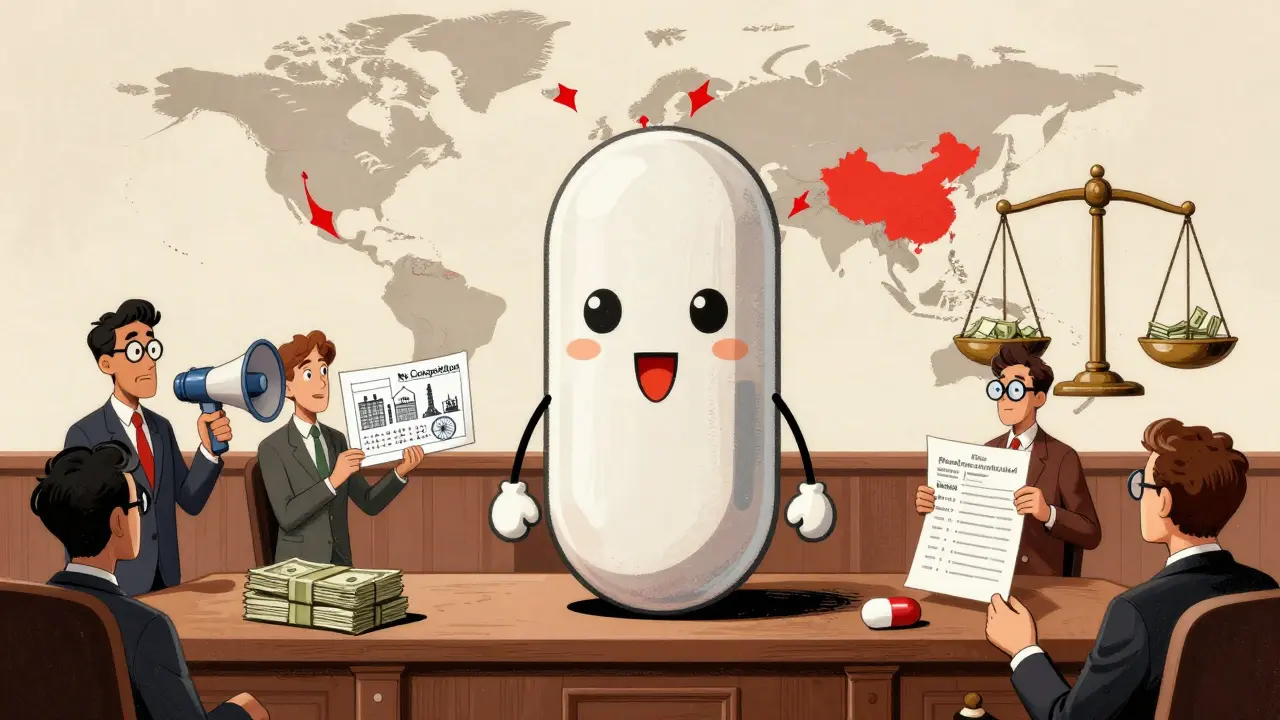
Parallel Trade: The Hidden Market for Cheap Generics
When prices vary wildly between countries, people find ways around it. This is called parallel trade. A U.S. patient buys a generic drug from a Canadian pharmacy because it’s 80% cheaper. A German patient orders pills from Poland because they cost half as much. It’s legal in the EU, but often blocked by drug companies who claim it threatens quality control. Reddit and Facebook groups are full of stories: "I bought my blood pressure meds from a Canadian site for $8 a month. My U.S. pharmacy wanted $75." But there’s a catch. Some of these online sellers are unregulated. They might ship expired drugs. Or worse-they might sell fake generics made in unapproved labs. A 2022 report found that 1 in 10 online generic pills sold to Americans were counterfeit. The WHO warns that parallel trade can disrupt supply chains. During the pandemic, India banned exports of 26 key generic ingredients. Suddenly, countries that relied on those imports-like the U.S., Germany, and Brazil-faced shortages of antibiotics, blood pressure meds, and antifungals. The system is interconnected. What happens in one country ripples across the globe.The Rise of Biosimilars and the Next Wave of Cost Savings
Generics are for small-molecule drugs-pills and injections made from chemical compounds. But now we’re seeing the rise of biosimilars: copies of complex biologic drugs like Humira, Enbrel, and insulin. These are harder to copy. They’re made from living cells, not chemicals. So they’re more expensive to develop. But they’re still cheaper. Biosimilars launch at about 50% less than the brand name. The global market for biosimilars is expected to hit $60 billion by 2028, up from $15 billion in 2023. The problem? U.S. insurers and doctors are slow to switch. Insurance plans often don’t cover biosimilars unless the brand is first denied. Doctors aren’t trained to prescribe them. Patients are scared of switching. In Europe, biosimilars are adopted faster. Germany and the UK have clear guidelines for switching. In the U.S., it’s still a battle.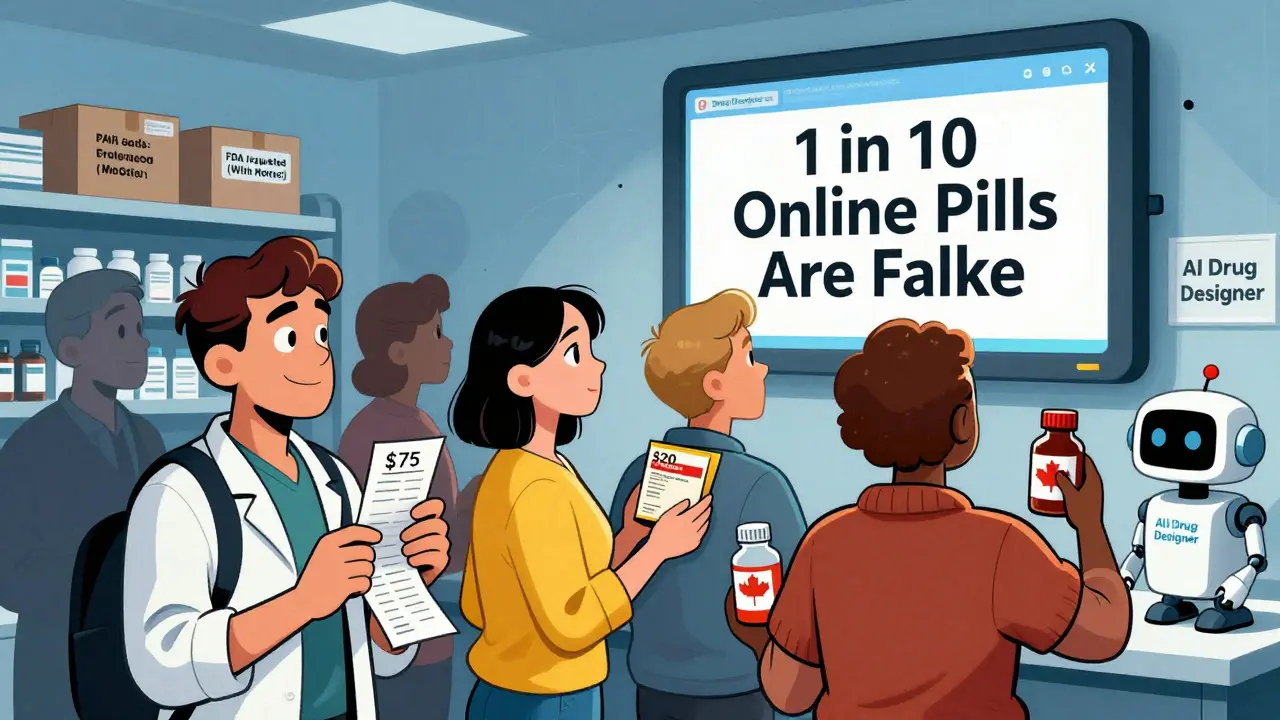
What’s Changing-and What’s Not
There are signs of progress. The U.S. Inflation Reduction Act of 2022 gives the FDA more money to inspect foreign factories and speeds up generic approvals by 30%. The WHO just updated its global benchmarking tool to push countries to improve quality checks. The European Union is pushing for a single approval process across all member states. But big barriers remain. Drug companies still use "evergreening"-filing minor patent extensions on small changes to a drug’s formula-to delay generics. Between 2015 and 2022, 1,247 new patents were filed on just 12 top-selling drugs to block competition. And while AI could cut generic development time from 5 years to 2, regulators aren’t ready. No country has approved an AI-designed generic yet. The rules still require decades-old testing methods.What This Means for You
If you’re taking a generic drug, know this: your pill might have been made in India, shipped through the Netherlands, and sold in a pharmacy in Ohio. You have the right to ask your pharmacist: "Where was this made?" If you notice new side effects after switching generics, report them. Your experience matters. If you’re traveling, don’t assume your U.S. generic will be the same abroad. A 2023 doctor forum reported patients getting sick after switching to a Canadian version of their generic because the inactive ingredients were different. Always bring your original prescription. And if you’re paying too much for generics in the U.S., check if you can legally order from a verified Canadian pharmacy. Many patients save hundreds a year. Just make sure the site is verified by PharmacyChecker or similar trusted programs. The global generic drug system is broken-but not beyond repair. It’s a mix of smart policies, strict oversight, and real competition that brings down prices. Right now, only a few countries have it right. The rest are still catching up.Why are generic drugs cheaper but not always the same?
Generic drugs contain the same active ingredient as brand-name drugs, but they can differ in fillers, coatings, and how quickly they dissolve in the body. These differences are usually harmless, but for some medications-like thyroid pills, blood thinners, or epilepsy drugs-even small changes can affect how well they work. That’s why some patients notice side effects when switching generics.
Which countries have the most generic drug use?
The United Kingdom leads with 83% of prescriptions filled with generics, followed by the United States (90%+), Germany (80%), and the Netherlands (70%). Countries with the lowest usage include Switzerland (17%), Italy (19%), and Greece (20%). These differences come from government policies, reimbursement rules, and cultural attitudes toward generics.
Are generics from India safe?
Many generics from India are safe and meet U.S. FDA standards-over 750 Indian factories are FDA-approved. But a 2023 study found Indian-made generics had 54% more severe side effects than those made in the U.S., especially for older drugs under high cost pressure. The issue isn’t the active ingredient-it’s inconsistent quality control. Always buy from reputable pharmacies and report any unusual side effects.
Can I buy cheaper generics from other countries?
Yes, many Americans save 60-80% by buying from verified Canadian or European pharmacies. But only use sites approved by PharmacyChecker or similar trusted programs. Unregulated online sellers often sell fake or expired drugs. Also, some generics sold abroad may have different inactive ingredients, which could cause reactions in sensitive patients.
Why do U.S. generic prices sometimes spike?
When only one or two companies make a generic, they can raise prices without competition. This often happens after a manufacturer exits the market due to low profit margins. Some generics have seen price jumps over 1,000% after a competitor left. The FDA is working to prevent this by encouraging more manufacturers to enter the market, but progress is slow.
All Comments
Sophia Daniels December 25, 2025
Okay but let’s be real-why are we still pretending this is a ‘healthcare issue’? It’s a corporate heist. U.S. pharmacies are basically tax collectors for Big Pharma. I buy my metformin from a Canadian site for $5 a month. My U.S. pharmacy tried to charge me $78. Same pill. Same factory. Just different zip code. 😤
Nikki Brown December 26, 2025
It’s morally indefensible that people in India are forced to rely on substandard generics because their own government won’t enforce quality control. Meanwhile, Americans are getting ripped off by middlemen who profit from this chaos. This isn’t capitalism-it’s exploitation dressed in white coats. 🙄
Peter sullen December 28, 2025
It is imperative to recognize that the structural inefficiencies within the U.S. pharmaceutical supply chain-particularly the lack of centralized price negotiation, coupled with fragmented regulatory oversight-are the primary drivers of price inflation. Furthermore, the absence of mandatory generic substitution protocols, as observed in the Netherlands, exacerbates market distortions. The FDA’s pre-announced inspections of foreign facilities represent a critical vulnerability in quality assurance, which necessitates immediate policy intervention.
Brittany Fuhs December 30, 2025
So let me get this straight… we’re supposed to be okay with pills made in India that might kill us, because they’re cheap? Meanwhile, people in Switzerland are paying $45 because they actually care about their health? I’m sorry, but if your medicine doesn’t come with a U.S. stamp, I don’t trust it. Period.
Fabio Raphael December 30, 2025
I’ve been on the same generic thyroid med for 8 years. Switched brands last year and started having heart palpitations. Took me months to figure out it was the filler. I didn’t know inactive ingredients could do that. Now I ask my pharmacist where it’s made every time. It’s wild how little we’re told.
Amy Lesleighter (Wales) December 30, 2025
it’s not about where it’s made. it’s about who’s watching. if the factory gets a heads up before the inspection, they clean up like it’s a party. but if you just show up unannounced? that’s when you see the truth. simple as that.
Becky Baker December 31, 2025
Canada’s not magic. They just don’t let pharma run wild. We could do the same if we weren’t so scared of ‘government control.’
Rajni Jain January 2, 2026
As an Indian, I’m proud our factories help the world. But yes, some corners are cut because of pressure. Not all. But enough. We need better standards, not just more exports. And please stop calling us ‘cheap’-we’re capable of quality. We just need fair prices, not exploitation.
Natasha Sandra January 2, 2026
OMG I just realized my blood pressure med from CVS was made in China 😱 I switched to the one from India and my headaches stopped… weird right? 🤔
Erwin Asilom January 2, 2026
Parallel trade is a symptom, not the solution. The real fix is transparent pricing, unannounced inspections, and mandatory substitution policies. Until then, patients are left playing Russian roulette with their health.
Sumler Luu January 3, 2026
My dad died because his generic anticoagulant didn’t dissolve right. He switched brands after a pharmacy change. No one warned him. I’m not mad-I’m just… done pretending this system works.