
Fexofenadine Juice Timing Calculator
Avoid This Common Allergy Medication Mistake
Many people take fexofenadine (Allegra) with fruit juice, not realizing it can reduce absorption by up to 77%. This calculator helps you determine if your timing is safe.
Important: Fexofenadine must be taken with water only. Wait at least 1-2 hours after juice before taking medication, or wait 4+ hours after taking fexofenadine before drinking juice.
When Do You Plan to Take Fexofenadine?
When Do You Plan to Drink Juice?
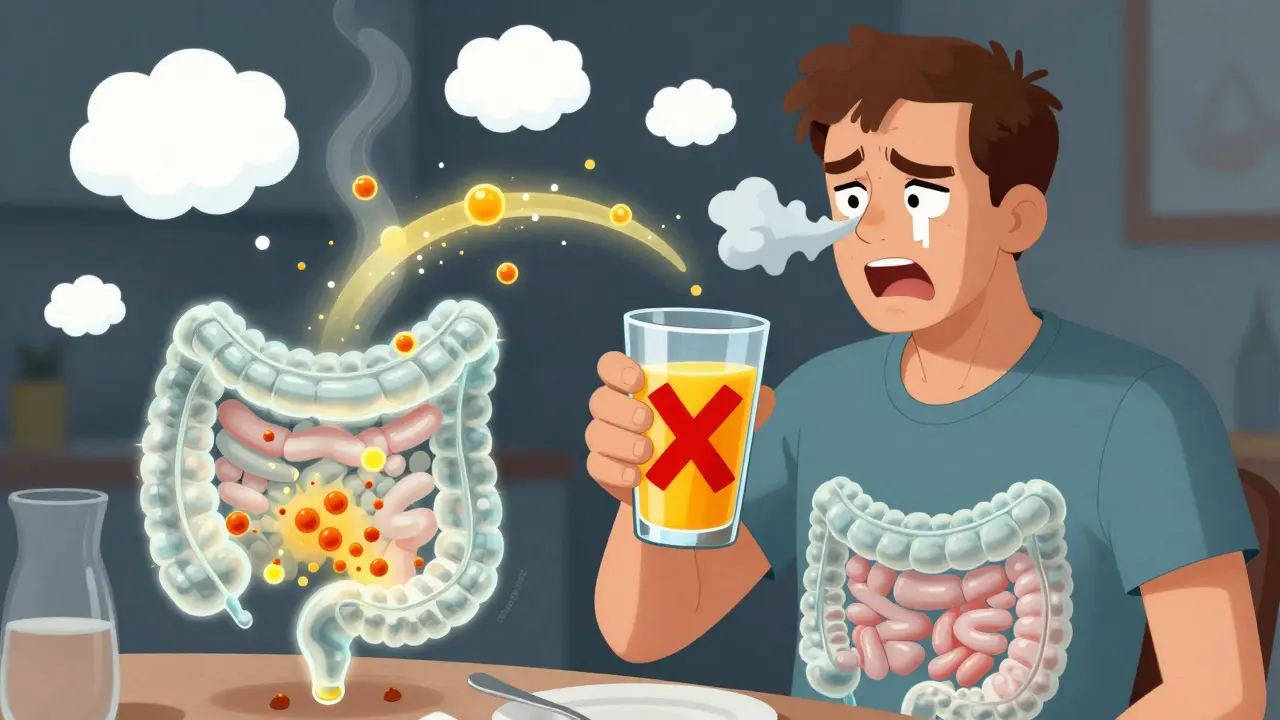
Take fexofenadine with orange juice? You might be making a mistake that’s quietly ruining your allergy relief. It’s not about stomach upset or nausea-it’s about your body barely absorbing the medicine at all. If you’ve been taking Allegra (or generic fexofenadine) with your morning juice and still sneezing, coughing, or itching, this could be why.
How Fexofenadine Is Supposed to Work
Fexofenadine is a second-generation antihistamine designed to block histamine without making you drowsy. Unlike older antihistamines like diphenhydramine, it doesn’t cross the blood-brain barrier easily, which is why you can drive, work, or care for kids without feeling wiped out. It’s been on the market since 1996 and became available over-the-counter in 2011. Millions of Americans use it daily for seasonal allergies, hives, and other allergic reactions.
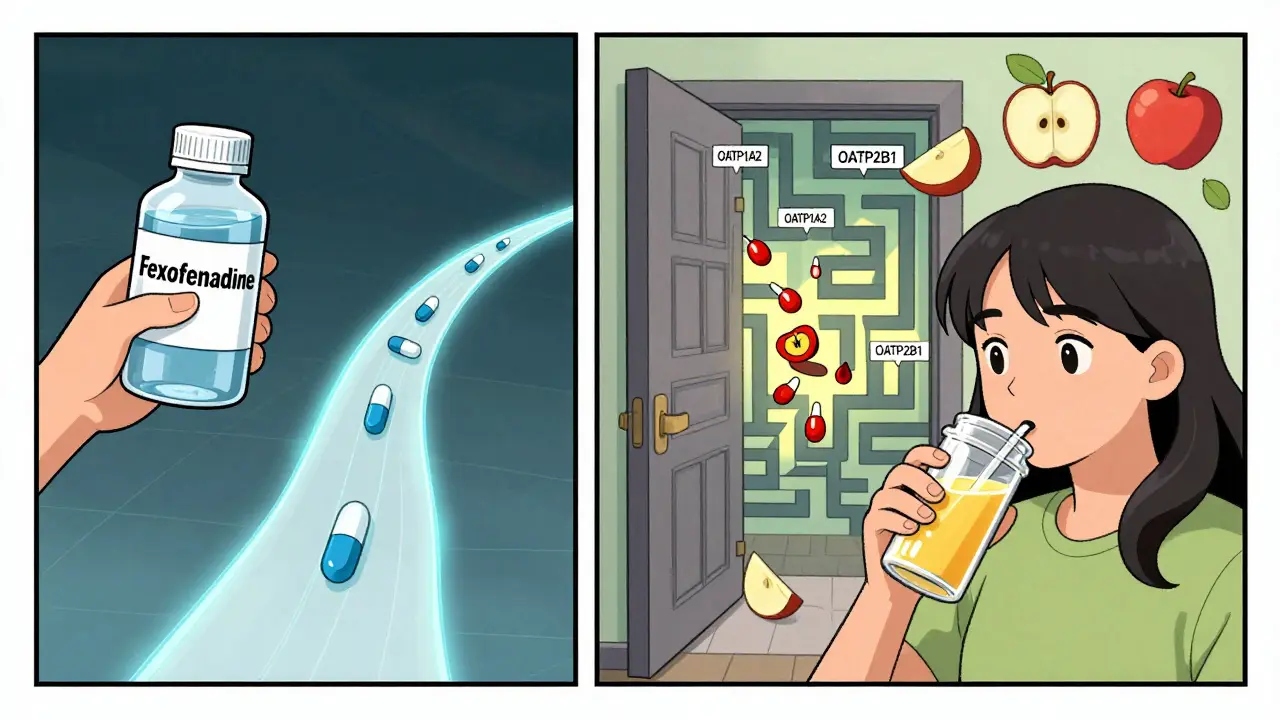
But here’s the catch: fexofenadine doesn’t just float into your bloodstream on its own. It needs help. Special transporters in your gut-called OATP proteins-act like tiny doors that pull the drug from your digestive tract into your blood. Without them, fexofenadine just passes through, unused.
The Juice That Blocks Your Medicine
Starting in the early 2000s, researchers noticed something strange. When people took fexofenadine with grapefruit juice, the drug didn’t work as well. That was surprising because grapefruit juice usually makes other drugs stronger by blocking liver enzymes. With fexofenadine, it did the opposite-it made the drug weaker.
Turns out, grapefruit, orange, and apple juice all contain natural compounds-like naringin and hesperidin-that block those same gut transporters (OATP1A2, OATP2B1) that fexofenadine needs. It’s like pouring a thick sludge over the doors your drug needs to get through. The result? Less drug in your blood, less symptom control.
One landmark study showed that drinking 1.2 liters (about half a gallon) of grapefruit juice cut fexofenadine absorption by 67%. Orange juice? 72% drop. Apple juice? Even worse-77%. Even a single 8-ounce glass reduced absorption by 23% to 45%, depending on the study. That’s not a minor hiccup. That’s enough to make your allergy symptoms come back strong.
Why This Doesn’t Happen With Other Allergy Pills
Not all antihistamines are affected. Loratadine (Claritin) and cetirizine (Zyrtec) don’t rely on those same gut transporters. That’s why Zyrtec’s ads have been saying since 2015: “Unlike some allergy medicines, Zyrtec doesn’t interact with fruit juice.” It’s not just marketing-it’s science. If you’re consistently struggling with fexofenadine and you drink juice regularly, switching to one of those might be the simplest fix.
And no, tomato juice isn’t the problem. Even though tomatoes are botanically fruits, they don’t contain enough of those specific compounds to interfere. Same with pineapple, mango, or blueberry juice. Only grapefruit, orange, and apple juice have been proven to cause this effect in humans.
What the Experts Say
The FDA has required warning labels on fexofenadine packaging since 2008: “Do not take with fruit juice.” The agency calls this one of the most significant food-drug interactions ever documented for a common OTC medication. Dr. David G. Bailey, who helped discover this interaction, said the drop in drug levels is “among the largest documented for any food-drug combination.”
But here’s where things get messy. The studies used huge amounts of juice-1.2 liters. Most people don’t drink that much. So does a small glass really matter? A 2021 meta-analysis says yes. Even 8 ounces reduced absorption by 35-45%. That’s enough to push some people below the threshold needed for full symptom control, especially if they’re sensitive to allergies or have high pollen counts.
Surveys show 63% of fexofenadine users don’t even know about this interaction. And 41% take it with juice within an hour of dosing. That’s a lot of people paying for medicine they’re not getting.
How to Fix It
It’s simple: take fexofenadine with water only. Not juice. Not tea. Not coffee. Just plain water.
If you love your morning OJ, wait at least 4 hours after taking your pill before drinking it. Or, if you prefer to drink juice first, wait 1-2 hours after your juice before taking the medication. The effect of juice on transporters lasts 2-4 hours, so timing matters.
Don’t assume whole fruit is safe either. A single grapefruit contains the same inhibitors as a glass of juice. Same with oranges. If you’re eating them near your medication time, you’re still at risk.
Also avoid green tea. It contains similar compounds and has been shown to reduce fexofenadine absorption too. And steer clear of antacids with magnesium or aluminum-they can also interfere, though not in the same way.
Real People, Real Stories
Online forums are full of people who figured this out the hard way.
One Reddit user, u/AllergySufferer2023, wrote: “Took Allegra for years. My allergies got worse last spring. I thought it was bad pollen. Then I remembered I’d started drinking OJ with it again. Switched back to water. Within 3 days, my symptoms were back to normal.”
A user on the Asthma and Allergy Foundation forum said: “I’ve been taking Allegra for 10 years. Never had a problem-until I started having juice with breakfast. Suddenly I was sneezing nonstop. I thought it was a new allergy. Turned out it was the orange juice.”
On Amazon, a 5-star review reads: “Works great as long as you don’t take it with any juice-learned that the hard way.”
These aren’t outliers. They’re common. And they’re avoidable.

What About Other Medications?
This interaction is specific to fexofenadine. Most other antihistamines are fine. But grapefruit juice can mess with dozens of other drugs-statins, blood pressure meds, some antidepressants-by blocking liver enzymes. So if you’re on other prescriptions, check with your pharmacist. But for fexofenadine? The rule is clear: juice blocks absorption. Water lets it in.
Is This Still a Problem in 2026?
Yes. And it’s getting more attention. Sanofi, the maker of Allegra, has invested in patient education tools, including a medication timing calculator on their website. The FDA’s 2023 draft guidance on drug interactions still uses fexofenadine as the textbook example of transporter-mediated food-drug interactions.
Researchers are even working on new versions of fexofenadine that bypass this issue. Sanofi has a patent for a modified-release tablet that delays drug release until after the juice effect wears off. But until those hit the market, the old rule still stands.
For now, if you’re taking fexofenadine and your allergies aren’t under control, ask yourself: Did I take it with juice? If yes, stop. Switch to water. Wait. See what happens. It might be the easiest fix you’ve ever made.
What to Do Next
- Stop taking fexofenadine with grapefruit, orange, or apple juice.
- Use only water to swallow your pill.
- Wait at least 4 hours after taking fexofenadine before drinking juice.
- Or, drink your juice at least 1-2 hours before taking the pill.
- Don’t assume whole fruits are safe-they contain the same inhibitors.
- If symptoms persist even after switching to water, talk to your doctor about switching to loratadine or cetirizine.
This isn’t about being perfect. It’s about giving your medicine a fair shot. Fexofenadine works. But only if your body can actually absorb it.
All Comments
Layla Anna January 2, 2026
I took Allegra with orange juice for years and thought I was just super allergic 😅 switched to water and boom - no more sneezing fits at work. Why didn’t anyone tell me this sooner??
LIZETH DE PACHECO January 3, 2026
This is such a game changer. I’ve been wondering why my allergies got worse last spring even though I didn’t change anything else. Turns out I started drinking apple smoothies with my pill. Who knew?? I’m switching to water now. Thanks for sharing!!
Lee M January 3, 2026
Let me get this straight - the FDA knew about this in 2008, millions of people are still doing it, and the drug companies don’t scream this from the rooftops? Of course not. They want you buying more pills because your body isn’t absorbing the first ones. This isn’t science, it’s corporate negligence wrapped in a ‘health advice’ bow.
Kristen Russell January 3, 2026
Water only. Just water. It’s that simple. No juice. No tea. No fancy morning rituals. Your body needs the medicine to work - not your habits.
Matthew Hekmatniaz January 4, 2026
Interesting how something so simple gets overlooked. I’ve been on fexofenadine for 7 years and never thought twice about my grapefruit juice. Now I’m wondering how many other meds I’m sabotaging without realizing it. Maybe we need a universal ‘don’t take with X’ label system - not just for juice but for coffee, dairy, even supplements. Small things, big consequences.
sharad vyas January 6, 2026
in india we drink a lot of orange juice. i tried allegra and it did not work. now i know why. i will drink water from now. thank you for this post. simple advice but very important.
Stephen Gikuma January 6, 2026
They don’t want you to know this because juice companies and big pharma are in bed together. The FDA’s warning? A joke. They’re letting people waste money on useless pills so they keep buying more. And now they’re pushing ‘modified-release’ tablets? That’s just a cash grab. Water is free. Don’t fall for it.
Bobby Collins January 8, 2026
Wait… green tea too?? So now even my matcha latte is sabotaging me?? I’m starting to think the government is hiding this so we stay sick and buy more stuff. Also, are you sure about tomatoes? I read somewhere that GMO tomatoes are engineered to block absorption…