
Diabetic neuropathy isn’t just a side effect of diabetes-it’s a persistent, often debilitating condition that affects nearly half of all people with the disease. And for 1 in 5 of them, it comes with sharp, burning, or electric-like pain, especially in the feet. The good news? You don’t have to live with it. The better news? There are real, evidence-backed ways to manage the pain and protect your feet before things get worse.
What’s Actually Happening in Your Nerves?
High blood sugar over years slowly damages the nerves, especially those farthest from your spine-like your feet and hands. This isn’t just numbness. When nerves misfire, they send pain signals even when there’s no injury. That’s painful diabetic neuropathy (PDN). It’s not curable, but it’s treatable. The goal isn’t to fix the nerve damage-no medication can do that-but to cut the pain by 30% to 50%. That’s enough to walk again, sleep through the night, and stop dreading every step.
FDA-Approved Medications That Actually Work
There are only four medications approved by the FDA specifically for diabetic neuropathy pain. That’s it. And each has a different profile.
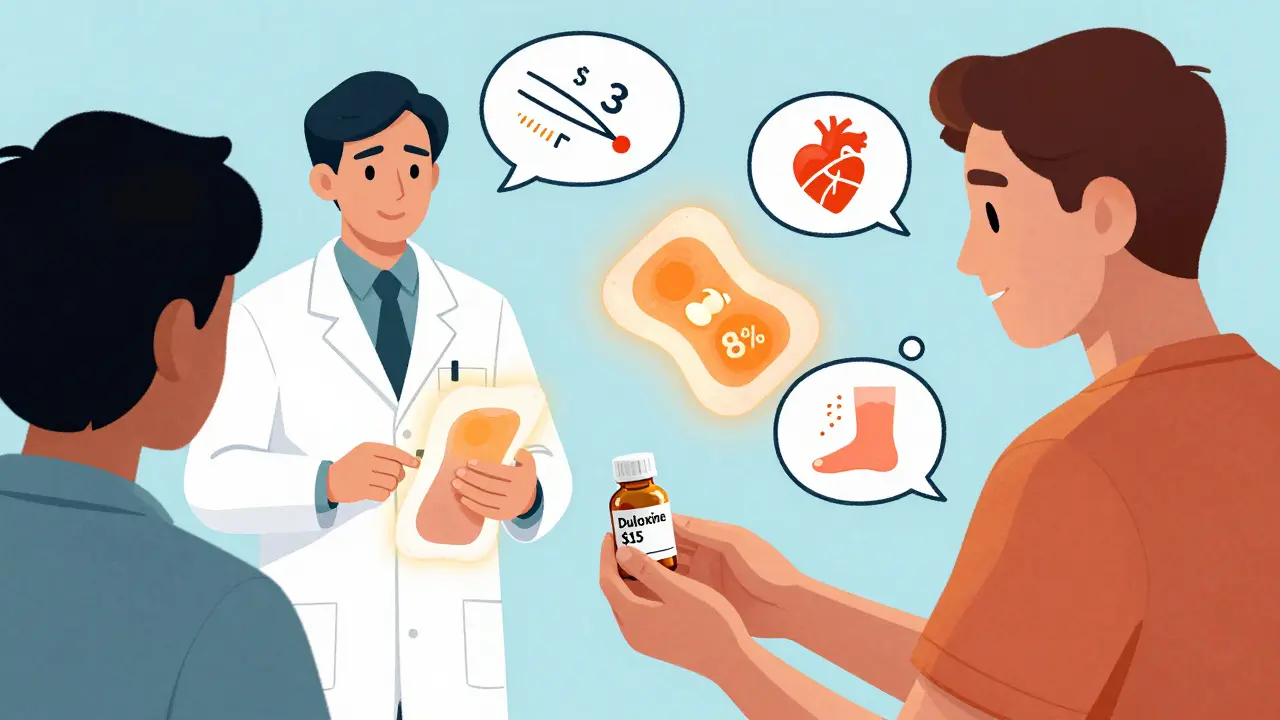
- Duloxetine (Cymbalta): A once-daily pill at 60 mg. It’s not just for pain-it helps with depression, which 1 in 3 people with PDN also struggle with. Side effects? Nausea at first, weight gain over time. But many users report feeling better emotionally, too. Generic versions cost as low as $15 for 90 pills.
- Pregabalin (Lyrica): Taken 2-3 times a day. Works fast-some feel relief in 48 hours. But it causes dizziness in 3 out of 10 people and makes you sleepy. It’s expensive, even as a generic-around $380 for 90 capsules. It’s also a controlled substance, so refills need special paperwork.
- Tapentadol extended-release (Nucynta ER): An opioid-like painkiller approved for this use. Reserved for severe cases because of addiction risk. Not a first choice.
- 8% capsaicin patch (Qutenza): Applied by a doctor to your feet once every 3 months. It works by burning out the pain-sensing nerves in the skin. Pain during application? Yes. But many say it cuts foot pain by 70%. It’s not cheap, but it’s long-lasting.
These aren’t magic pills. In clinical trials, only 30-50% of patients got meaningful pain relief. But for those who respond? It changes everything.
Off-Label Options Doctors Still Use
Many doctors start with cheaper, older drugs that aren’t FDA-approved for neuropathy-but still work.
- Gabapentin: The cheapest option-under $4 for 90 pills. Taken in divided doses throughout the day. Works well for many, but causes dizziness and brain fog. Doses range from 300 mg to 3,600 mg daily.
- Amitriptyline: A 60-year-old antidepressant. Often the first choice in guidelines because it’s effective and cheap. But it dries your mouth, makes you constipated, and can mess with your heart rhythm if you’re over 45. Requires an EKG in some cases.
- 5% lidocaine patches (Lidoderm): Stick one or two on your painful foot area. No systemic side effects. Great for localized pain. Costs around $200 per pack without insurance.
- Tramadol: A mild opioid. Used only if other options fail. The NHS calls it a third-line drug. Risk of dependence is real.
Doctors don’t just pick one and hope. They start low, go slow. Duloxetine at 30 mg, not 60. Gabapentin at 100 mg, not 300. They wait 4 to 8 weeks before deciding if it’s working. Most people need to try two or three before finding the right fit.
Why Some Medications Fail-and What to Do Next
Half the people who start these drugs quit because of side effects or no improvement. That’s normal. It doesn’t mean you’re broken. It means you need a different approach.
One patient in a 2022 study tried gabapentin, then pregabalin, then amitriptyline-all with no relief. Switched to duloxetine. Within 6 weeks, pain dropped 65%. She stopped dreading bedtime.
Another found relief only with the capsaicin patch. The application hurt like hell-burning for 30 minutes-but after that? “I could feel grass under my feet again,” he said on Reddit.
Key takeaway: Don’t give up after one try. Talk to your doctor about switching or combining. Some patients use a patch plus a low-dose pill. Others use gabapentin for night pain and duloxetine for mood and daytime discomfort.
Foot Care: Your First Line of Defense
Medications help with pain. But foot care prevents disasters.
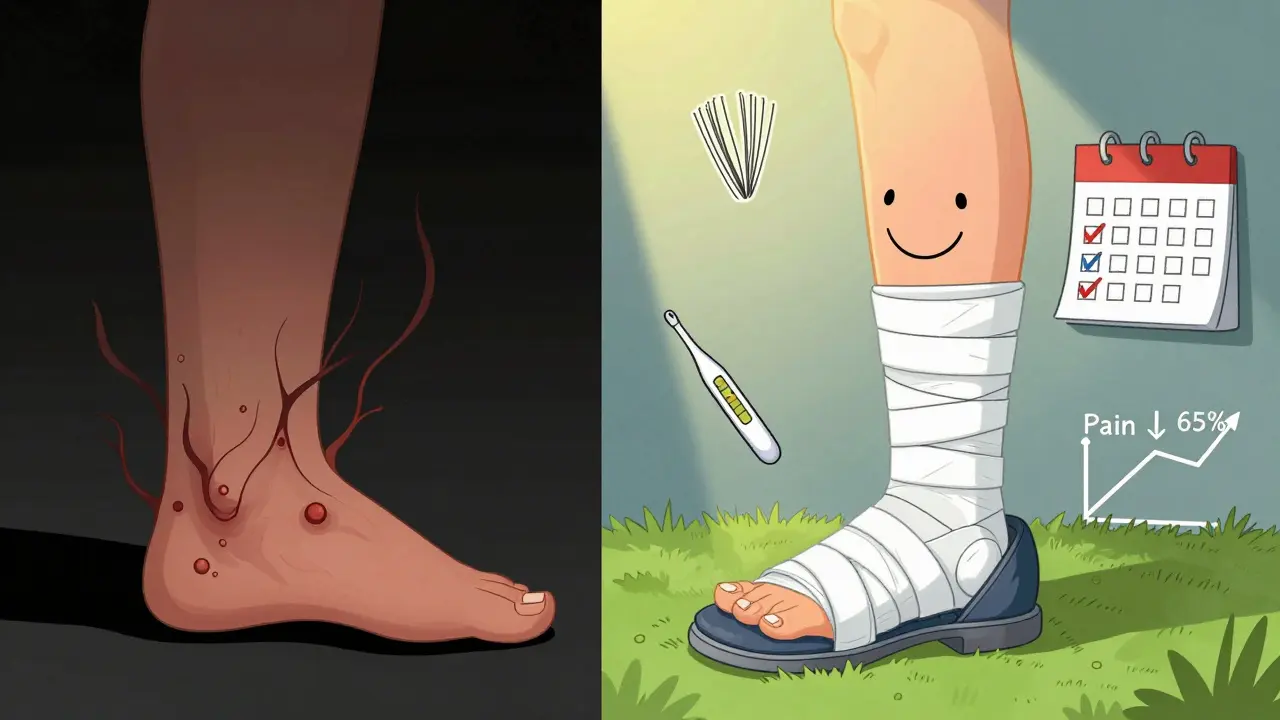
Diabetic neuropathy means you can’t feel a blister, a cut, or a splinter. That tiny wound can turn into an ulcer. And 15% of people with neuropathy develop foot ulcers within five years. Ulcers can lead to infection. Infections can lead to amputation.
Here’s what you actually need to do:
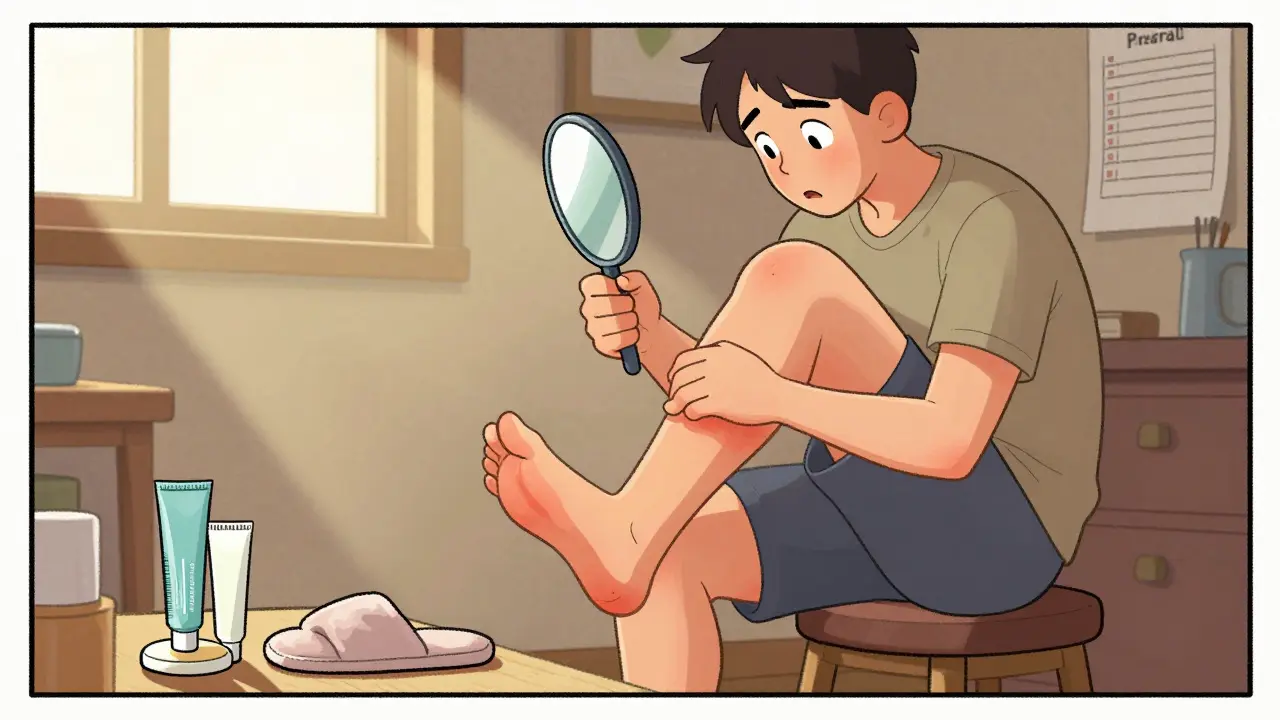
- Check your feet every day. Use a mirror or ask someone to help. Look for redness, swelling, cuts, blisters, or changes in skin color. Don’t skip this-even if your feet feel numb.
- Wash daily with warm (not hot) water. Test the temperature with your elbow. Dry thoroughly, especially between toes.
- Moisturize. Dry skin cracks. Cracks invite infection. Use lotion on tops and bottoms-never between toes.
- Wear proper shoes. No barefoot walking. Not even at home. Shoes should have room for your toes, no seams that rub, and cushioned soles. Custom orthotics can help if you have foot deformities.
- Get annual foot exams. Your doctor should test your sensation with a 10-gram monofilament. If you can’t feel it, your risk of ulcers jumps.
- Trim toenails straight across. Don’t cut into the corners. Ingrown nails are a major cause of infection.
Many certified diabetes educators use a simple checklist from the Foundation for Peripheral Neuropathy. It’s free. Ask your provider for a copy.
What Doesn’t Work-and Why
NSAIDs like ibuprofen? They don’t touch nerve pain. Worse-they raise your risk of kidney damage, which is already high in diabetics. One study found a 2.1-fold increase in acute kidney injury with even short-term use.
Supplements like alpha-lipoic acid? Some studies show slight benefit, but nothing strong enough to rely on. Don’t spend money on them thinking they’ll replace real treatment.
Opioids? The CDC warns against them for chronic pain. But some doctors still prescribe them for extreme cases-with strict rules: urine tests, pill counts, and no other sedatives. It’s a last resort.
What’s Coming Next
There’s hope on the horizon. The FDA accepted a new drug called mirogabalin in 2023. Early results show 42% pain reduction. It’s not available yet, but it could be in 2026.
Researchers are also testing whether certain genetic markers can predict who responds to duloxetine. One study found CYP2D6 gene variants explain 73% of why some people get relief and others don’t. Personalized medicine is coming.
And drugs like SGLT2 inhibitors-used for blood sugar-are showing signs of protecting nerves. Results from the DAPA-NEURO trial are expected in late 2024. If positive, this could change how we treat diabetes long-term.
Real Talk: Cost, Access, and Getting Help
Pregabalin costs $300 a month even with insurance. Duloxetine? $15. If your plan won’t cover the cheaper option, ask your doctor for a prior authorization appeal. Many Medicare Part D plans cover duloxetine, but 68% now require paperwork before approving it.
If cost is a barrier, ask about patient assistance programs. Pfizer has one for Lyrica. Generic duloxetine is widely available. Some pharmacies sell gabapentin for $4 a month.
Don’t wait until your foot is infected. Talk to your doctor now. Ask: “Which medication fits my health, my budget, and my lifestyle?” Then ask: “How do I check my feet every day-and what should I look for?”
Managing diabetic neuropathy isn’t about finding one perfect solution. It’s about combining smart medication choices with daily foot care. Do both, and you’re not just reducing pain-you’re protecting your future.
Can diabetic neuropathy pain be cured?
No, current treatments cannot reverse nerve damage caused by diabetes. The goal is to reduce pain by 30% to 50% and prevent complications like foot ulcers. Early intervention and consistent care offer the best chance to maintain quality of life.
What’s the best medication for diabetic foot pain?
There’s no single “best” medication-it depends on your health, side effect tolerance, and cost. Duloxetine is often preferred because it’s affordable, treats depression too, and has fewer side effects than pregabalin. For localized foot pain, the 8% capsaicin patch can be highly effective. Gabapentin is the cheapest but causes dizziness. Your doctor should help you try one at a time.
How long does it take for neuropathy medications to work?
Some people feel relief in 48 hours with pregabalin. Others need 4 to 6 weeks to reach an effective dose. Maximum benefit usually takes 8 to 12 weeks. Don’t stop too soon. If one drug doesn’t work after 2 months, talk to your doctor about switching.
Can I use over-the-counter painkillers for diabetic neuropathy?
No. Common OTC pain relievers like ibuprofen or naproxen don’t help nerve pain. Worse, they increase your risk of kidney damage, which is already higher in people with diabetes. Stick to prescribed neuropathy medications or topical patches like lidocaine.
How often should I check my feet?
Every single day. Use a mirror or ask someone to help you look for cuts, blisters, redness, swelling, or changes in skin color. Even small injuries can turn serious if you can’t feel them. Annual foot exams with your doctor are also required to monitor nerve damage.
Are there any natural remedies that work?
No natural remedy has proven strong enough to replace FDA-approved treatments. Alpha-lipoic acid and acupuncture show mild benefits in some studies, but not enough to rely on alone. The most effective “natural” approach is strict blood sugar control combined with daily foot checks and proper footwear.
All Comments
John O'Brien January 28, 2026
God damn this post is a lifesaver. I’ve been on gabapentin for 8 months and it’s been a nightmare-dizzy all day, can’t focus at work. Switched to duloxetine last week and already sleeping through the night. Generic’s $12 at Walmart. Why the hell do docs even start you on the expensive crap?
Kegan Powell January 29, 2026
real talk-pain isn’t just physical it’s emotional too. when your feet feel like they’re full of broken glass and you can’t even hug your kid without wincing… that’s when you realize meds aren’t just pills they’re dignity. capsaicin patch? yeah it burns like hell but i cried when i felt grass again. no joke. 🙏
Anjula Jyala January 30, 2026
Incorrect. Gabapentin is first-line per ADA 2023 guidelines. Duloxetine is second-line due to hepatic metabolism risks. You’re propagating misinformation. Also lidocaine patches are not covered under Medicare Part B unless you have a stage 2 ulcer. Stop guessing.
Kirstin Santiago January 30, 2026
For anyone feeling overwhelmed-this stuff is hard. I’ve been diabetic for 22 years and neuropathy hit me at 50. I tried everything. The key isn’t finding the perfect drug. It’s finding the right combo. I use gabapentin at night, lidocaine patch on my right heel, and check my feet every night before bed. No fancy apps. Just a mirror and a flashlight. You got this.
Kathy McDaniel January 31, 2026
just started the capsaicin patch and holy moly it hurt but now i can walk to my mailbox without wincing. also i forgot to moisturize for 3 days and got a crack on my heel-scared the crap outta me. now i do it every night. thanks for reminding me to not ignore the small stuff 💙
Paul Taylor February 1, 2026
Let me break this down for you people who think meds are magic. Nerve damage doesn’t heal. Period. You’re not fixing the nerves. You’re just dampening the noise. That’s why duloxetine works for some and not others. It’s not about the drug-it’s about your brain’s serotonin levels and how your CYP2D6 gene processes it. If you’re not getting relief after 8 weeks? It’s not you. It’s your genetics. That’s why the new personalized medicine stuff is the real game changer. Stop blaming yourself. Start asking for genetic testing. Your doctor should be offering it.
Desaundrea Morton-Pusey February 2, 2026
Big Pharma is running the show. Why is Lyrica $300 when gabapentin is $4? Because they rebranded the same molecule. Same active ingredient. Same side effects. They just changed the label and made it a controlled substance so they could charge more. And now they’re pushing this capsaicin patch like it’s a miracle. It’s just acid on your skin. They’re milking the diabetic community. Wake up.
Murphy Game February 4, 2026
Did you know the FDA approved duloxetine for this use because of a 2017 lobbying campaign by Eli Lilly? The clinical trial had a 12% placebo response rate. That’s not efficacy. That’s hope. And now they’re pushing gene testing like it’s a solution? It’s just another way to sell more tests. Don’t trust the system. Your foot care routine is the only thing that matters. Everything else is a distraction.
April Williams February 5, 2026
How dare you suggest people just ‘try’ gabapentin? You’re telling diabetics to risk kidney failure and heart arrhythmias with amitriptyline? That’s medical malpractice. I’ve seen three patients lose their feet because they listened to Reddit instead of their endo. Stop giving out advice like you’re a doctor. You’re not. You’re just scared.
Harry Henderson February 7, 2026
STOP WHINING. You think your pain is bad? I’ve been on all these meds. I lost my job. I lost my marriage. I still check my feet every day. I still walk 2 miles. I still laugh. Pain doesn’t get to win unless you let it. Get up. Move. Use the patch. Take the pill. Don’t wait for the perfect drug. Just start. Now. Your future self is begging you.
suhail ahmed February 7, 2026
Bro, I’m from Mumbai and we don’t have access to half this stuff. My doc gave me gabapentin and told me to soak my feet in neem water. It’s not fancy. But I check my feet daily. I wear slippers indoors. I don’t let my sugar spike. Sometimes the best medicine is discipline. And a little bit of desi wisdom. You don’t need a $300 patch to keep your toes.