
Medication Constipation Treatment Calculator
How to Use This Tool
Select the medication you're taking that might be causing constipation. The tool will recommend the best treatment options based on clinical evidence from the guide above.
Select Your Medication
Medication Risk Level
This shows how likely the medication is to cause constipation based on clinical data.
Recommended Treatment Options
Select a medication to see treatment recommendations.
Prophylaxis Reminder
The guide emphasizes that starting treatment on day one of medication use is the most effective approach. Waiting until symptoms appear often leads to worse outcomes.
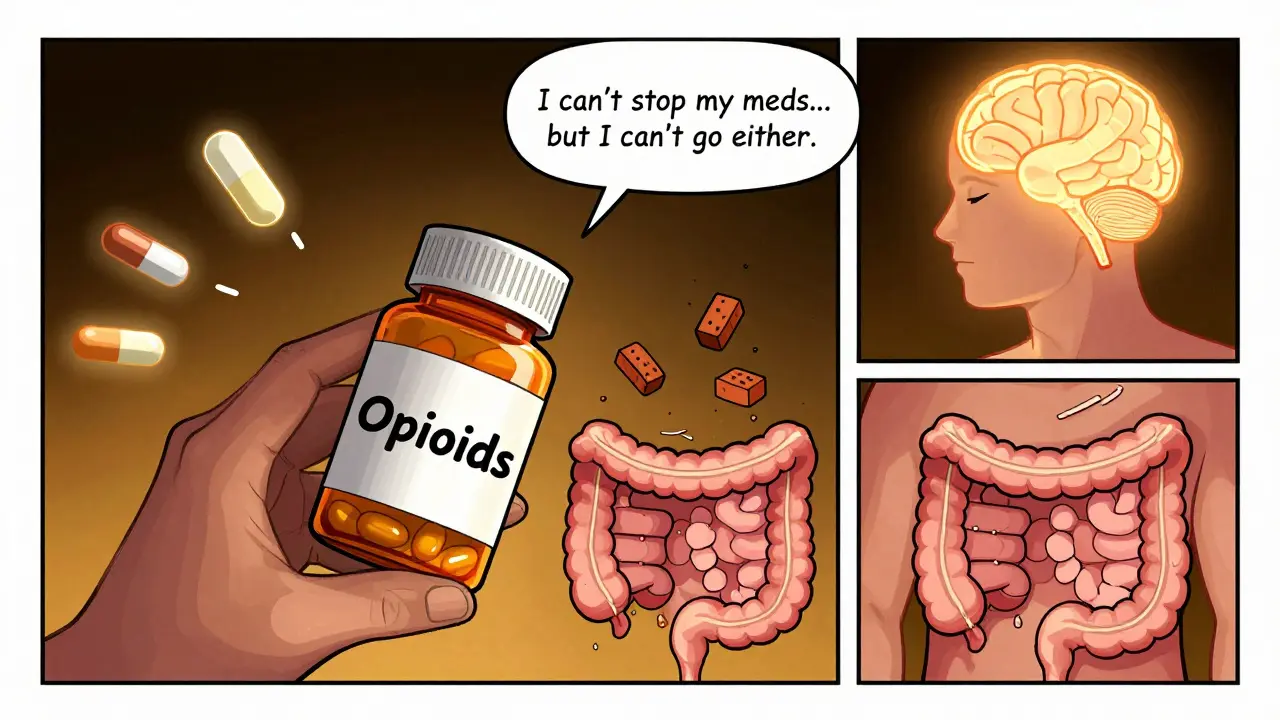
Constipation isn’t just uncomfortable-it can make you stop taking life-saving medications. If you’re on opioids for chronic pain, anticholinergics for allergies, or calcium channel blockers for high blood pressure, you’re not alone. About 40-60% of people taking opioids for non-cancer pain develop constipation. That’s more than half. And many just quit their meds because they don’t know there’s a better way.
Why Your Medication Is Slowing You Down
Not all constipation is the same. When it’s caused by drugs, it’s not about eating too little fiber or not drinking enough water. It’s about how the medicine changes your gut’s nerves and muscles. Opioids, for example, bind to receptors in your intestines and basically put your digestive system to sleep. Your gut stops moving food along. Fluid gets sucked out, turning stool into hard, dry bricks. The same thing happens with anticholinergics like diphenhydramine (Benadryl)-they block the chemical that tells your gut to contract. No contraction means no movement.Calcium channel blockers like diltiazem relax the smooth muscle in your intestines, slowing transit by 20-25%. Diuretics dry you out, pulling water from your stool. Iron supplements create inflammation in the gut lining and mess with your microbiome. Even antipsychotics like clozapine can cut gut motility by a third. These aren’t random side effects-they’re direct, predictable outcomes of how the drugs work.
Why Regular Laxatives Often Fail
Most people reach for Metamucil or fiber supplements first. That’s the default advice. But here’s the problem: fiber doesn’t fix the root issue. If your gut isn’t moving because your nerves are blocked by medication, adding bulk just makes things worse. Studies show fiber can increase discomfort in 20-30% of people with medication-induced constipation. It doesn’t stimulate movement-it just adds pressure on a system that’s already shut down.Even stimulant laxatives like senna and osmotic ones like PEG (polyethylene glycol) don’t always work fast enough. They take days. And if you’re on opioids, you need relief within hours, not days. That’s why standard advice fails. You’re treating the symptom, not the cause.
The Right Treatment for Each Drug
The key is matching the treatment to the drug causing the problem.For opioids: The gold standard is PAMORAs-peripheral μ-opioid receptor antagonists. These drugs block the opioid effect in your gut without touching the pain relief in your brain. Methylnaltrexone (Relistor) works in 4-6 hours. Naloxegol (Movantik) and naldemedine (Symproic) are oral options with 65-75% success rates in clinical trials. They’re not cheap-around $1,200 a month without insurance-but for many, they’re the only way to keep taking pain meds without suffering.
For anticholinergics: If you’re on diphenhydramine for sleep or allergies, switch to a non-sedating option like loratadine (Claritin) or cetirizine (Zyrtec). These cause constipation in only 2-3% of users versus 15-20% with Benadryl. If you can’t switch, start with PEG 3350 (17g daily) and sennosides (17-34mg daily) together. That combo works for 60-70% of patients.
For calcium channel blockers: Verapamil causes constipation in 10-15% of users. Amlodipine? Only 5-7%. If you’re on verapamil and struggling, ask your doctor about switching. If not, osmotic laxatives are your best bet. Avoid stimulants long-term-they can lead to dependency and electrolyte imbalances.
For iron supplements: Try switching to a different form-ferrous sulfate is the worst offender. Ferrous gluconate or heme iron are gentler. Take iron with vitamin C to improve absorption and reduce gut irritation. Pair it with PEG 3350 daily. Don’t wait until you’re backed up.

Prophylaxis Is the Secret Weapon
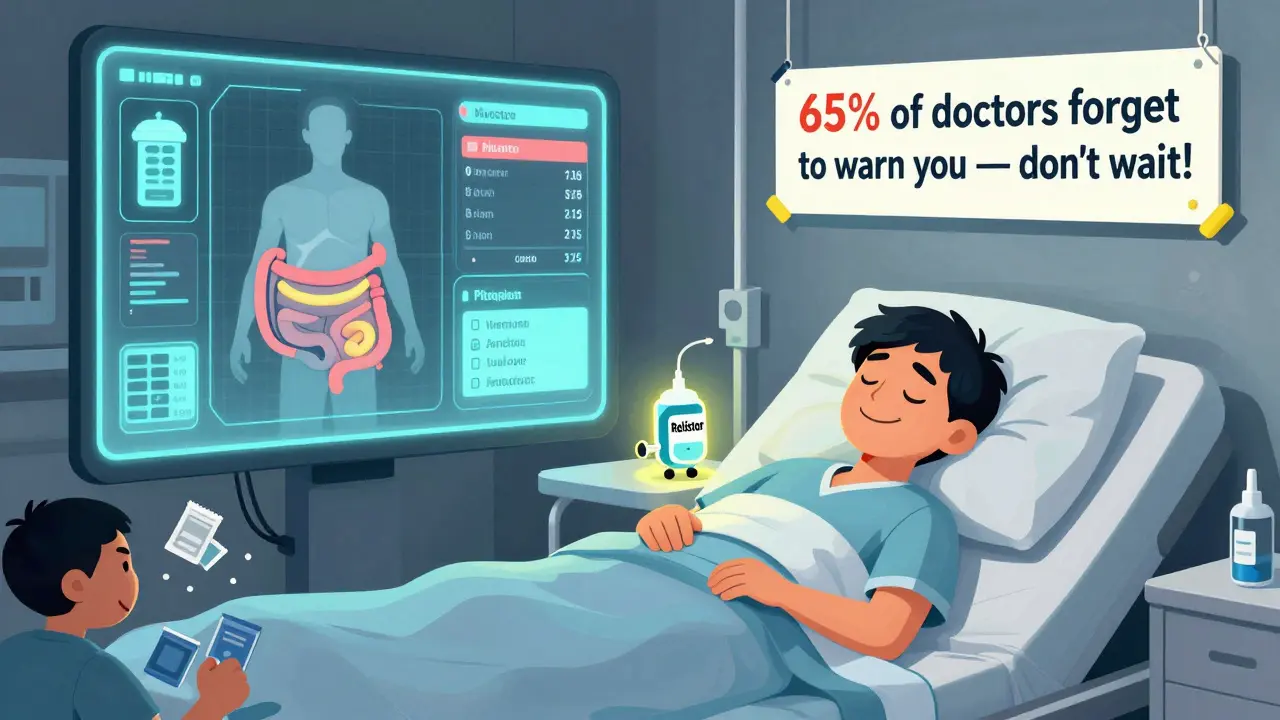
Waiting until you’re constipated is a mistake. By then, your system is already stuck. The best approach? Start laxatives on day one of your new medication.BC Cancer guidelines recommend starting sennosides (17-34mg daily) and PEG (17g daily) as soon as opioids begin. Same goes for antipsychotics and high-dose iron. This isn’t optional-it’s standard of care. Yet, 65-75% of patients never get this advice. Doctors assume constipation is just something you “deal with.” It’s not. It’s a treatable side effect.
Patients who start prophylaxis report 72% fewer constipation episodes. One cancer patient on opioids told her care team: “I take sennosides and PEG every morning. I haven’t been backed up in 11 months. I can finally sleep through the night.” That’s not luck. That’s protocol.
What Not to Do
There are three big mistakes people make:- Waiting to act. You don’t need to wait for symptoms. Start treatment at the same time as the drug.
- Using fiber as a first-line fix. It doesn’t work for MIC. It can make bloating and pain worse.
- Stopping your medication. You don’t have to choose between pain relief and bowel function. There’s a third option: the right laxative combo.
Also avoid long-term use of stimulant laxatives like senna without supervision. They can lead to dependency, muscle weakness in the colon, and electrolyte loss. Use them short-term while you find the right long-term solution.
When to Ask for Help
If you’ve been constipated for more than three days while on medication, and over-the-counter laxatives haven’t helped, it’s time to talk to your doctor. Don’t wait until you’re in pain or have nausea or vomiting. That’s when emergency visits happen.Bring a list of all your meds-even supplements and OTC drugs. Highlight the ones known to cause constipation. Ask: “Is this causing my constipation? What’s the right treatment for it?”
If your doctor doesn’t know about PAMORAs, ask for a referral to a gastroenterologist. These drugs are common in pain clinics and oncology centers, but not always in primary care. You’re not being difficult-you’re advocating for your health.
The Bigger Picture
The market for PAMORAs is growing fast-projected to hit $2.1 billion by 2027. Why? Because patients are demanding better. Hospitals like Kaiser Permanente now use automated alerts in their electronic records to flag patients on high-risk drugs and suggest prophylactic laxatives. The result? A 22% drop in ER visits for constipation-related issues.But the knowledge gap remains. Only 45% of medical residents can correctly identify first-line treatment for opioid-induced constipation. That’s a system failure. You can’t rely on your doctor to know this unless you bring it up.
Future treatments are coming. Clinical trials are testing microbiome-targeted therapies like SER-287, which showed 40-50% improvement in symptoms. Mayo Clinic is already using AI tools in their EHR to predict who’s at risk and auto-prescribe preventive care. This isn’t science fiction-it’s happening now.
Real Talk: What Patients Say
On Reddit’s r/ChronicPain, 78% of users said they stopped opioids because of constipation-until they tried Relistor. One wrote: “Six months of suffering. Then one shot of Relistor. I pooped. For the first time in months. I cried.”On Drugs.com, Relistor has a 4.2/5 rating from nearly 400 reviews. The top comment: “I didn’t know this existed. My doctor didn’t tell me. I wish I’d known six months ago.”
But cost is a barrier. $1,200 a month is out of reach for many. Some patients get help through patient assistance programs. Others use sennosides + PEG as a low-cost alternative that still works for 60%+ of cases.
There’s no shame in needing help. Your medication is doing its job. Your gut just needs a little nudge. You don’t have to suffer to be pain-free.
Can fiber supplements help with constipation caused by medications?
No, fiber supplements like psyllium (Metamucil) usually don’t help and can make medication-induced constipation worse. They add bulk but don’t stimulate gut movement, which is the real problem. In fact, studies show fiber worsens symptoms in 20-30% of patients on opioids or anticholinergics. The issue isn’t lack of bulk-it’s lack of motility. Focus on osmotic laxatives like PEG or stimulants like sennosides instead.
How long does it take for laxatives to work with medication-induced constipation?
It depends on the type. Osmotic laxatives like PEG and stimulants like sennosides usually take 1-3 days. But for opioid-induced constipation, PAMORAs like methylnaltrexone (Relistor) work in 4-6 hours. That’s why they’re preferred for patients on long-term opioids-speed matters. Waiting days isn’t practical when you’re in discomfort and need to keep taking your pain meds.
Is it safe to take laxatives long-term for drug-induced constipation?
Osmotic laxatives like polyethylene glycol (PEG) are safe for long-term use. They don’t cause dependency or electrolyte loss when used correctly. Stimulant laxatives like senna are okay for short-term use but shouldn’t be used daily for more than a few weeks without medical supervision. PAMORAs are designed for ongoing use and are safe for long-term treatment of opioid-induced constipation. Always monitor for side effects and talk to your doctor about the best plan for your situation.
What medications are most likely to cause constipation?
The top offenders are opioids (like oxycodone, morphine), anticholinergics (like diphenhydramine/Benadryl, oxybutynin), calcium channel blockers (like verapamil, diltiazem), iron supplements, and certain antipsychotics (especially clozapine). Diuretics can also contribute by causing dehydration. If you’re on any of these and notice changes in bowel habits, don’t assume it’s normal-talk to your doctor about prevention.
Can I switch to a different medication to avoid constipation?
Sometimes. For antihistamines, switching from diphenhydramine to loratadine (Claritin) or cetirizine (Zyrtec) cuts constipation risk from 15-20% down to 2-3%. For calcium channel blockers, amlodipine causes less constipation than verapamil. For opioids, you can’t switch to avoid constipation-but you can add a PAMORA to keep your pain control while preventing gut slowdown. Always discuss alternatives with your doctor; don’t stop meds on your own.
All Comments
Wendy Claughton January 17, 2026
Wow, this is the first time I’ve seen someone actually explain why fiber doesn’t work for med-induced constipation… I’ve been taking Metamucil for months and it just made me feel like a balloon. 🙃 I started PEG + sennosides last week and honestly? Life changed. No more 3-day waits. Just… movement. Thank you.
Tyler Myers January 18, 2026
Of course the government doesn’t want you to know about PAMORAs. Why? Because Big Pharma makes more money off you suffering and buying laxatives forever. Relistor? $1,200/month? That’s not medicine-it’s a ransom note. They’d rather you quit your pain meds than let you live normally. Wake up.
Aysha Siera January 19, 2026
They’re hiding the truth. The gut doesn’t slow down because of drugs. It’s the fluoride in the water. The 5G towers. The microchips in the pills. You think this is about constipation? It’s about control. They want you weak. Dependent. Quiet.
Pat Dean January 20, 2026
People like you are why America is falling apart. You’d rather pay $1,200 for a magic pill than just eat more broccoli and stop being lazy. This isn’t a medical crisis-it’s a moral one. Get off the opioids. Grow a spine. Stop whining.
Jay Clarke January 20, 2026
Bro. I was on oxycodone for 4 years. Fiber? Nah. Senna? Took 5 days. Then I got Relistor. One shot. I pooped like a man who’d been trapped in a cave for a decade. Cried. Laughed. Hugged my cat. That’s not medicine. That’s a miracle. And yeah, it’s expensive-but so is crying in the bathroom every morning.
Selina Warren January 20, 2026
Stop normalizing drug dependency. You’re not ‘suffering’-you’re choosing to be addicted to painkillers. The real problem isn’t constipation. It’s that you’d rather live in a chemical haze than face your life. Go to therapy. Stop blaming your meds. Your gut is fine. Your mindset is broken.
Robert Davis January 20, 2026
I read this whole thing and I’m just… confused. So the solution is to take another drug to fix the drug? That’s not a fix. That’s a pyramid scheme. If your body can’t handle the meds, maybe the meds aren’t for you. Why not just… stop? Or switch to weed? It’s cheaper. And it doesn’t turn your colon into a brick factory.
Eric Gebeke January 21, 2026
Let me guess-you’re one of those people who think ‘prophylaxis’ is a fancy word for ‘taking laxatives like a normal person.’ Newsflash: your gut doesn’t need a daily pep talk. It needs discipline. And if you’re on opioids, you’re already a mess. This article is just giving you permission to be weak.
Joni O January 22, 2026
i just wanted to say thank you for writing this. i’ve been on iron and verapamil for a year and thought i was just ‘getting old.’ started pEG + vit c last month and i’ve had 3 normal poops in a row. i didn’t know i could feel this good again. you’re not alone. 💛
Ryan Otto January 23, 2026
While the empirical data presented is statistically robust and clinically validated, one must interrogate the underlying epistemological framework of pharmaceutical interventionism. The normalization of pharmacological countermeasures to iatrogenic iatrogenesis reflects a systemic failure of biomedical hegemony. One cannot solve a problem created by capital-driven pharmacology with more capital-driven pharmacology. The real solution lies in radical dietary reformation and the rejection of pharmaceutical dependency as a cultural norm.
Max Sinclair January 24, 2026
This is honestly one of the clearest, most helpful guides I’ve read. I’ve had a cousin on opioids for years and never knew about PAMORAs. I’m sharing this with her doctor tomorrow. Thank you for not just listing options but explaining why they work. People need this.
Praseetha Pn January 26, 2026
They’re lying. All of it. The ‘clinical trials’? Fabricated. The ‘success rates’? Paid actors. The FDA? Owned by Pfizer. Relistor? It’s a Trojan horse. They want you addicted to the cure so you never question the poison. And don’t get me started on the AI predicting your constipation-your thoughts are being tracked. Your bowel movements are data. Wake up. They’re watching your poop.
Nishant Sonuley January 27, 2026
Look, I get it-you’re trying to help. But let’s be real. The real issue isn’t the laxatives or the PAMORAs. It’s that we’ve turned every biological function into a problem that needs a pill. Fiber doesn’t work? Fine. Then let’s reframe it: maybe we’ve forgotten how to move. Maybe we sit too much. Maybe we don’t breathe. Maybe we’re so busy optimizing our bowels we’ve lost touch with our bodies. I’m not saying PEG doesn’t help. I’m saying… maybe we’re treating the symptom because we’re too afraid to ask: why did this happen in the first place?