
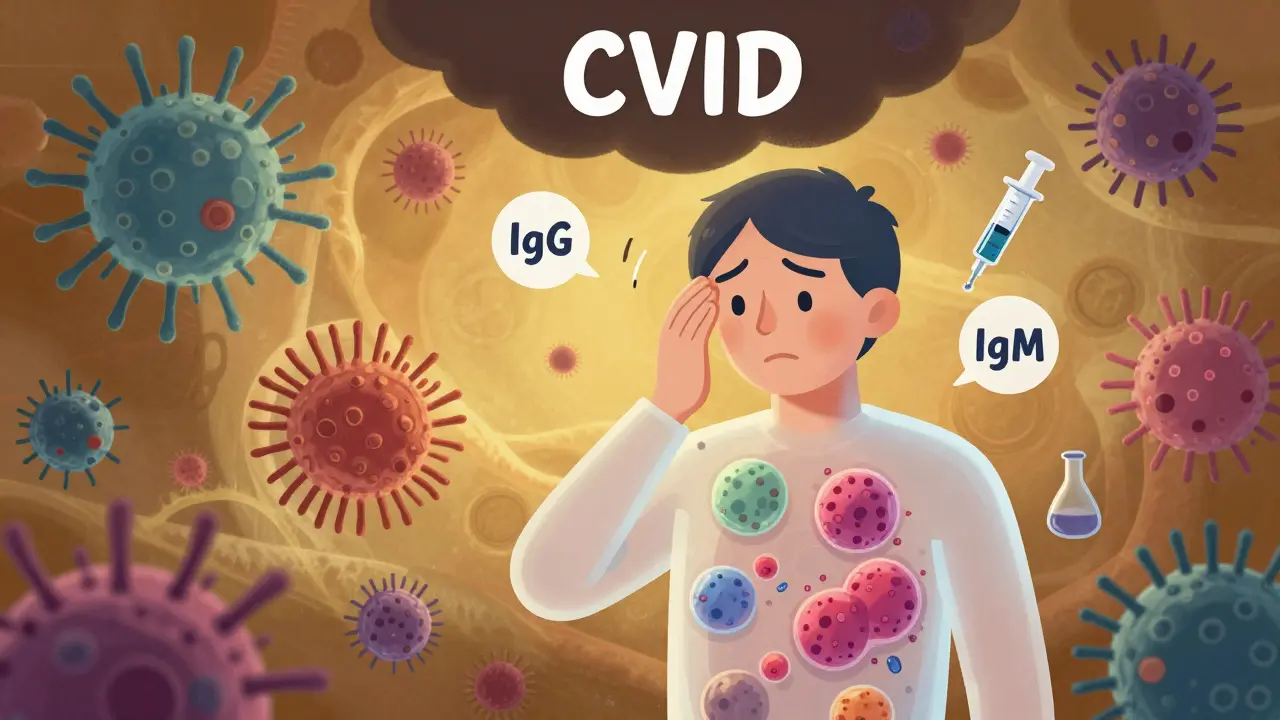
When you get sick, your body fights back using antibodies-special proteins that recognize and neutralize germs like bacteria and viruses. But for people with Common Variable Immunodeficiency (CVID), this defense system doesn’t work the way it should. Their bodies don’t make enough antibodies, leaving them vulnerable to repeated, serious infections that most people never see coming.
CVID isn’t rare. It affects about 1 in every 25,000 to 50,000 people. Most don’t show symptoms until their 20s or 30s, which is why it often goes undiagnosed for years. The average person with CVID sees three or more doctors before finally getting the right diagnosis-and it takes nearly a decade on average from when symptoms first appear. That delay isn’t just frustrating; it’s dangerous. Without treatment, frequent lung infections can lead to permanent damage, autoimmune diseases, or even cancer.
What Exactly Is CVID?
CVID is a primary immunodeficiency, meaning it’s caused by a flaw in the immune system from birth-even if symptoms don’t show up until later. It’s not contagious, and it’s not caused by something you did. The problem lies in B cells, the immune cells responsible for making antibodies. In CVID, these cells are present in normal numbers, but they don’t mature properly. As a result, they fail to produce enough of the key antibodies: IgG, IgA, and sometimes IgM.
Normal IgG levels range from 700 to 1,600 mg/dL. People with CVID often have levels below 500 mg/dL-sometimes as low as 100 mg/dL. IgA, which protects the lining of the lungs and gut, is often undetectable. IgM, another important antibody, is also low in about half of all cases. These aren’t just numbers on a lab report. They mean your body can’t respond to vaccines the way it should. If you’ve ever gotten a pneumonia shot and still got sick, or if your sinus infections keep coming back no matter how many antibiotics you take, this could be why.
How Do You Know If You Have CVID?
There’s no single gene test that confirms CVID. Diagnosis is based on a combination of clinical history and lab results. The European Society for Immunodeficiencies (ESID) sets clear criteria: low IgG, low IgA, poor response to vaccines (like tetanus or pneumococcal), and no other known cause for the low antibodies.
Most people with CVID start noticing patterns:
- Four or more ear infections in a year
- Two or more sinus infections in a year
- Two or more cases of pneumonia within a year
- Chronic diarrhea or weight loss despite eating well
- Need for repeated antibiotics to clear infections
- Family history of immune problems
It’s easy to mistake these for allergies, asthma, or just bad luck. But if you’re getting sick more than twice a year with infections that don’t respond to standard treatment, it’s time to ask about immune testing. A simple blood test can check your immunoglobulin levels. If they’re low, the next step is a vaccine challenge test-giving you a standard vaccine and checking if your body can make antibodies in response. If it can’t, CVID is likely.
What Happens If It’s Not Treated?
Left untreated, CVID doesn’t just mean more colds. It opens the door to serious complications. About 30% to 50% of people develop chronic lung disease from repeated pneumonia. One in four develops an autoimmune disorder-where the immune system attacks the body itself. Common examples include immune thrombocytopenia (low platelets), autoimmune hemolytic anemia (destruction of red blood cells), or rheumatoid arthritis. Up to 10% develop granulomas-clumps of inflamed tissue that can form in the lungs, liver, or skin.
Perhaps the most alarming risk: cancer. People with CVID have a 20 to 50 times higher risk of lymphoma than the general population. This isn’t theoretical. Studies show that by age 50, about 65% of untreated CVID patients have developed chronic lung damage, compared to just 15% of healthy people the same age. The longer you go without treatment, the more damage accumulates.

The Gold Standard Treatment: Immunoglobulin Replacement
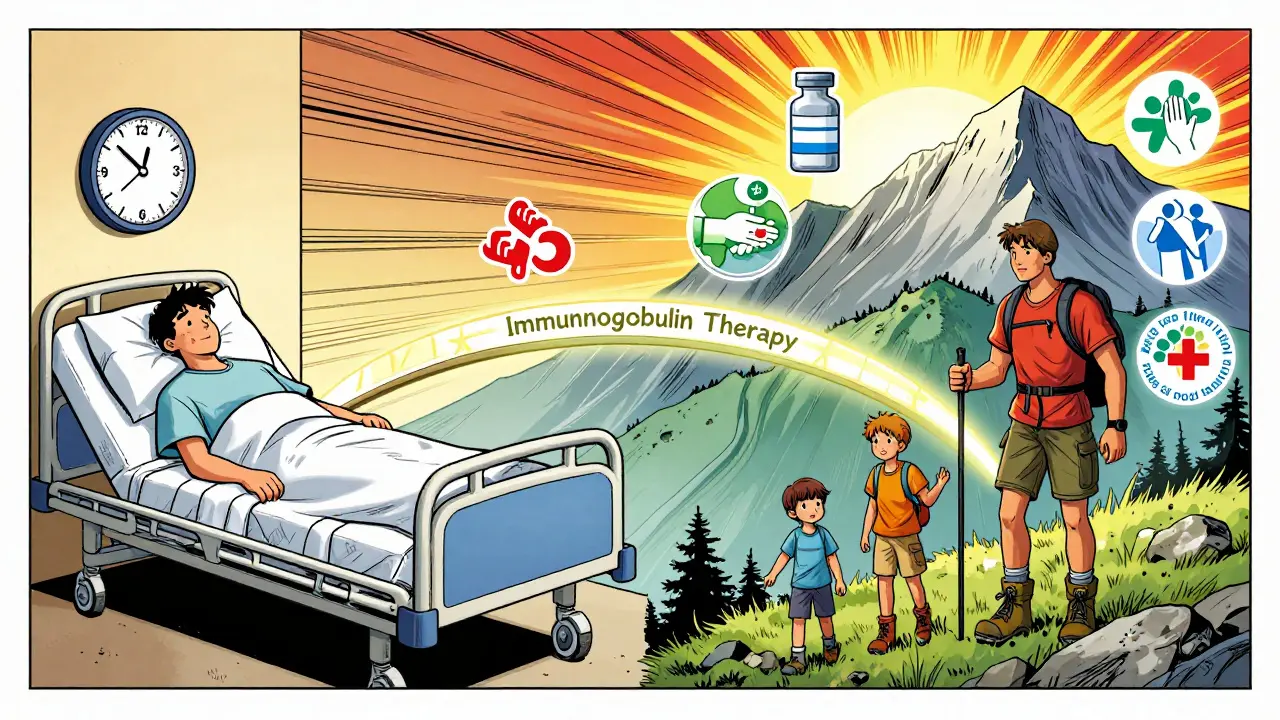
There’s no cure for CVID-but there is a treatment that changes everything: immunoglobulin replacement therapy. It’s simple in concept: you get your missing antibodies from donated human plasma. These antibodies are purified, tested, and given to you regularly to keep your defenses up.
There are two main ways to get it:
- Intravenous (IVIG): Infused into a vein every 3 to 4 weeks. Takes 2 to 4 hours, usually done at a clinic.
- Subcutaneous (SCIG): Injected under the skin, usually weekly. Can be done at home after training.
Both are effective. But SCIG is becoming more popular because it’s gentler. Most people report fewer side effects-no chills, headaches, or nausea. It also gives more stable antibody levels, which means fewer breakthrough infections. The typical dose is 400 to 600 mg per kg of body weight every 3 to 4 weeks for IVIG, or 100 to 150 mg per kg weekly for SCIG.
Patients who stick with treatment see dramatic improvements. A 2023 survey found that 85% of people on SCIG went from an average of 10 infections per year down to just over 2. Energy levels improve, hospital visits drop, and quality of life shoots up. Many say they feel like they’ve gotten their life back.
Side Effects and Challenges
It’s not perfect. About 32% of IVIG users report infusion reactions-headaches, chills, nausea, or fever. These usually go away if the infusion rate is slowed. SCIG has its own issues: 25% to 40% of users get redness, swelling, or itching at the injection site. The fix? Rotate your sites, use smaller doses more often, and let the fluid warm to room temperature before injecting.
Cost is another hurdle. In the U.S., IVIG runs $65,000 to $95,000 per year. SCIG is slightly more expensive at $70,000 to $100,000. Insurance usually covers it, but prior authorizations, step therapy, and network restrictions can delay care. In low-income countries, only about 35% of diagnosed patients get treatment at all.
There’s also a global plasma shortage. Plasma-the source of these therapies-is in short supply. Demand is rising, but donors aren’t keeping up. Experts warn this could push prices up 15% to 20% annually over the next few years.
What’s Next? New Treatments on the Horizon
Research is moving fast. Scientists now believe CVID isn’t one disease-it’s many. Some cases are linked to mutations in genes like TACI, BAFF-R, or CD19. But only 15% to 20% of patients have a known genetic cause. That means most cases still lack a clear explanation.
One promising drug in Phase III trials is atacicept. It blocks two proteins (BAFF and APRIL) that overstimulate B cells in some CVID patients. Early results show a 37% reduction in severe infections compared to standard therapy alone. If approved, it could be the first targeted treatment for CVID-not just replacing antibodies, but fixing the underlying problem.
Another shift is in diagnosis. The European Society for Immunodeficiencies updated its criteria in early 2023, adding 23 new clinical and lab markers to better separate CVID from similar conditions. This means faster, more accurate diagnoses in the future.
Long-term, experts predict that within five years, genomic testing will identify specific subtypes of CVID. That could lead to personalized treatments-some patients might need biologics, others might benefit from stem cell therapy, and some may still rely on immunoglobulin replacement. But for now, replacement therapy remains the backbone of care.
Living With CVID: Practical Tips
Managing CVID isn’t just about medicine. It’s about lifestyle:
- Stay up to date on vaccines (flu, pneumonia, COVID-19)-but avoid live vaccines like MMR or shingles.
- Avoid raw or undercooked foods to reduce risk of foodborne infections like Giardia.
- Wash hands frequently and avoid crowded places during flu season.
- Find a specialist-ideally an immunologist with experience in primary immunodeficiencies.
- Join a support group-the Immune Deficiency Foundation has over 200 local chapters and a 2,500-person annual conference.
- Track your symptoms-keep a log of infections, fatigue, and side effects to share with your doctor.
Life expectancy has improved dramatically. In the 1970s, people with CVID rarely lived past 33. Today, with consistent treatment, median survival is 59-and rising. That’s not just a number. It’s time. Time to travel. Time to work. Time to be there for your kids, your partner, your aging parents.
Can CVID be inherited?
Yes, in some cases. While most CVID cases aren’t passed directly from parent to child, about 10% to 15% have a family history of immune disorders. Mutations in genes like TACI or BAFF-R can run in families. If a close relative has CVID or another primary immunodeficiency, it’s worth getting tested-even if you feel fine.
Is CVID the same as HIV or AIDS?
No. HIV attacks and destroys immune cells, while CVID is a genetic problem where immune cells are present but can’t make antibodies. HIV is caused by a virus and can be transmitted. CVID is not contagious and is present from birth. They’re completely different conditions, even though both weaken the immune system.
Can you outgrow CVID?
No. CVID is a lifelong condition. Unlike some childhood immunodeficiencies that improve with age, CVID doesn’t resolve on its own. Treatment is needed indefinitely. Stopping immunoglobulin therapy-even for a short time-can lead to serious infections and long-term damage.
Do all CVID patients need immunoglobulin therapy?
Almost all do. A small number of patients have very mild symptoms and may be monitored without immediate treatment. But if you’ve had recurrent infections, low antibody levels, and poor vaccine response, therapy is strongly recommended. Studies show that even patients who feel fine still benefit from regular infusions to prevent silent organ damage.
Can diet or supplements fix CVID?
No. While good nutrition supports overall health, no supplement, vitamin, or diet can raise antibody levels in CVID. Immunoglobulin replacement is the only proven treatment. Some people take probiotics or vitamin D to help with general wellness, but these don’t replace therapy. Be cautious of products claiming to "boost immunity"-they’re not backed by science for CVID.