
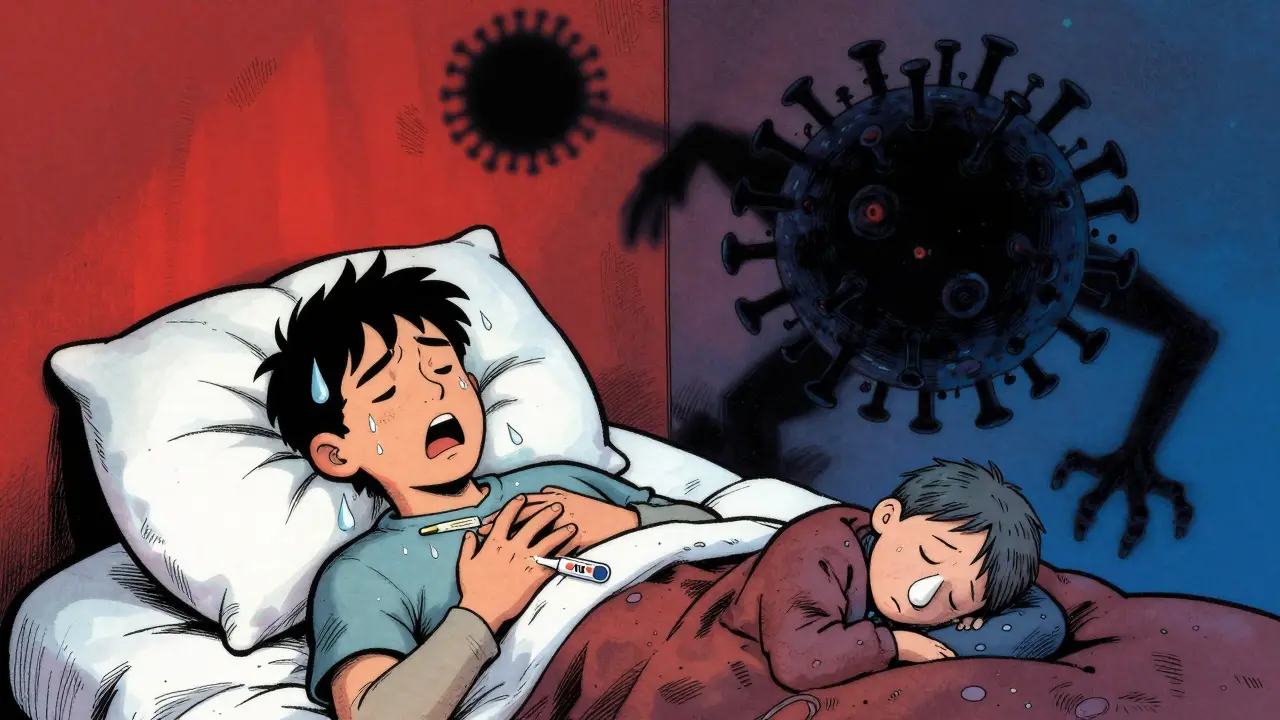
Every year, millions of people in the U.S. get sick with a cold or the flu. They feel tired, have a sore throat, and maybe a fever. But here’s the thing: common cold and influenza aren’t the same illness - and mixing them up can cost you time, money, and even your health.
People often think, "It’s just a cold," and wait it out. But if it’s the flu, waiting too long could mean missing the window for antiviral treatment - and risking pneumonia, hospitalization, or worse. Knowing the difference isn’t just about comfort. It’s about making smart choices when you’re sick.
How Symptoms Start: Fast vs Slow
If you wake up feeling fine one day and awful the next, it’s probably the flu. Flu symptoms hit hard and fast. Fever? Common - often over 100°F, sometimes hitting 104°F. Muscle aches? Severe. Headache? Almost always. Fatigue? So bad you can’t get out of bed, and it lasts for weeks. This isn’t just being tired. This is your body fighting a powerful virus.
A cold? It creeps in. You notice a scratchy throat on Monday. By Tuesday, your nose is running. By Wednesday, you’re stuffed up. Fever? Rare in adults - only 15-20% of people with a cold get one, and it’s usually mild. No body aches. No crushing exhaustion. Just a stuffy nose, sneezing, and maybe a cough that sticks around.
One clear sign it’s flu, not a cold: extreme fatigue. Six out of ten flu patients report being too weak to do daily tasks. That doesn’t happen with colds. Chest tightness or discomfort? That’s another flu red flag. It shows up in 70% of flu cases but only 20% of colds.
What Happens When Things Go Wrong
Most colds go away on their own in a week. Sometimes they linger for two. The worst they usually do is cause a sinus infection or an ear infection - especially in kids. Even then, it’s not common. Only about 5% of colds lead to sinusitis. Kids have it a bit more - around 10%.
Flu? It’s a different story. The flu doesn’t just make you feel bad. It can break your body down. About 15-30% of people hospitalized with the flu develop pneumonia. That’s not rare. That’s expected in severe cases. The CDC estimates flu causes between 12,000 and 52,000 deaths every year in the U.S. - mostly in adults over 65. Pregnant women are three times more likely to be hospitalized. People with weakened immune systems? They’re at the highest risk.
And here’s something most people don’t realize: flu can cause vomiting and diarrhea. In the 2022-2023 season, nearly half of flu patients reported gastrointestinal symptoms. That’s not just a stomach bug. It’s the flu showing up in unexpected ways.
Antivirals: What They Do - and What They Don’t
There are four FDA-approved antiviral drugs for the flu: oseltamivir (Tamiflu), zanamivir (Relenza), peramivir (Rapivab), and baloxavir (Xofluza). None of them work for the common cold. That’s important. Taking antivirals for a cold is useless - and a waste of money.
These drugs work by stopping the flu virus from multiplying. If you take them within 48 hours of symptoms starting, they can shorten your illness by about a day. For high-risk people - older adults, pregnant women, those with asthma or heart disease - they can cut hospitalization risk by up to 34%.
Here’s how they stack up:
| Drug | Form | Dosing | Time to Effect | Cost (Generic/Brand) |
|---|---|---|---|---|
| Oseltamivir (Tamiflu) | Capsule, liquid | Twice daily for 5 days | 17-39 hours faster recovery | $15-$30 / $105-$160 |
| Zanamivir (Relenza) | Inhaler | Twice daily for 5 days | 1.5-day reduction | $120-$180 |
| Peramivir (Rapivab) | IV injection | Single dose | Same as oral | $1,000+ |
| Baloxavir (Xofluza) | Tablet | Single dose | 99% viral load drop in 24 hours | $150-$200 |
Most people get oseltamivir - it’s the cheapest and easiest to take. But baloxavir is faster. One pill, and it knocks out the virus in a day. The catch? It costs more. And if you’re not in a high-risk group, it might not be worth the price.
Side effects? Nausea happens in about 10% of people on oseltamivir. Baloxavir can cause headaches or diarrhea. But these are mild. The real risk isn’t the drug - it’s waiting too long to take it. After 48 hours, antivirals lose most of their power.
What About Colds? What Actually Helps
There’s no antiviral for the common cold. Rhinoviruses - the main culprits - have over 160 different strains. That’s why vaccines don’t exist. You can’t make a shot for every version.
So what helps? Symptom relief. Decongestants like pseudoephedrine can reduce nasal stuffiness by 30-40%. Acetaminophen or ibuprofen can bring down fever and aches. Nasal saline sprays? Free and effective.
Zinc lozenges? Some studies show they might shorten a cold by 1.6 days - if you start them within 24 hours of symptoms and take at least 75mg of elemental zinc daily. But many people hate the metallic taste. One user on WebMD said it was so bad they quit after two days. And the CDC warns: long-term zinc use might cause copper deficiency. So use it wisely.
And skip the antibiotics. They don’t work on viruses. Yet 30% of outpatient antibiotic prescriptions in the U.S. are for colds and flu - a major driver of antibiotic resistance.
How to Tell What You Have - For Real
Doctors can’t always tell just by symptoms. Even experienced clinicians get it wrong about 30-40% of the time. That’s why rapid molecular tests exist. They check for flu (and sometimes RSV or COVID) in 15 minutes. Sensitivity? 95%. Cost? $25-$50. If you’re high-risk or symptoms are severe, ask for one.
Here’s a quick checklist:
- Flu: Sudden fever, body aches, extreme tiredness, cough, chest discomfort
- Cold: Gradual onset, runny nose, sneezing, sore throat, no fever (or low-grade)
- COVID-19: Loss of taste/smell (rare in flu), sore throat, cough, fatigue
- Allergies: Sneezing, itchy eyes, no fever, symptoms last weeks
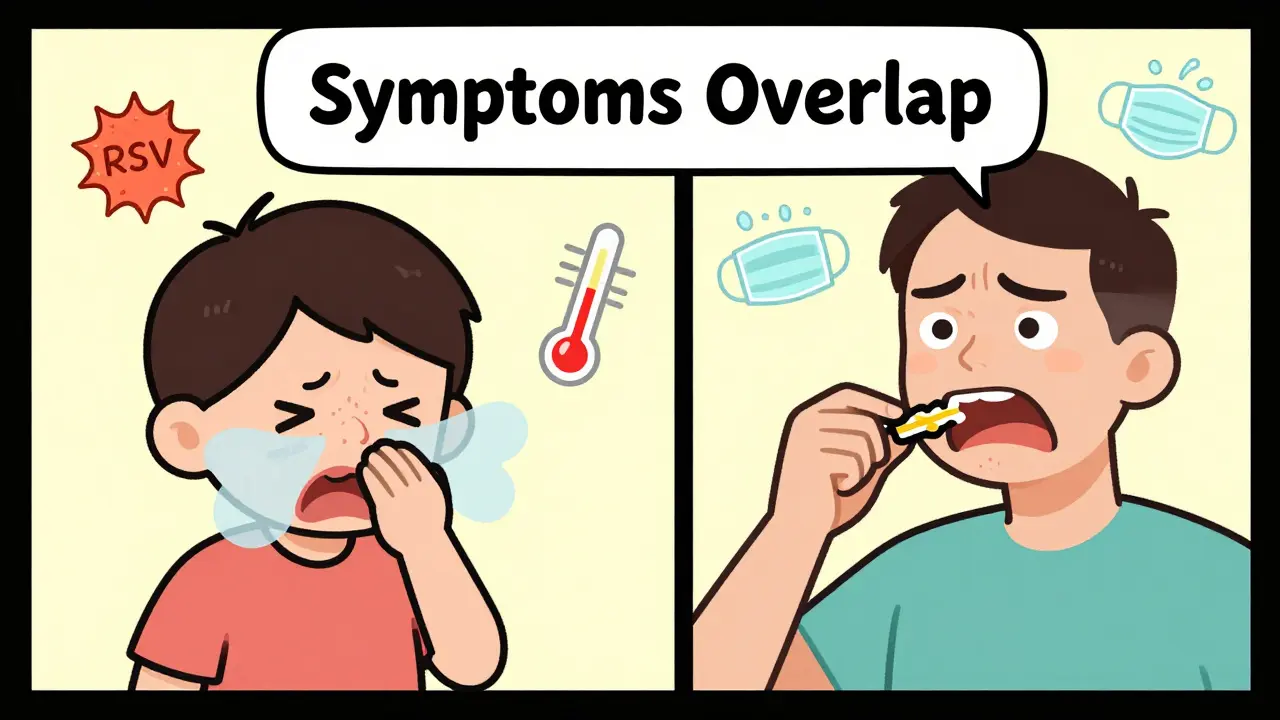
And don’t forget: RSV (respiratory syncytial virus) is common in kids and older adults. It causes wheezing and breathing trouble. If a child under 2 has a cough and trouble breathing, get them checked - it could be RSV, not a cold.
When to Worry - Emergency Signs
Most colds and flu get better on their own. But some symptoms mean you need help now:
- Difficulty breathing or shortness of breath
- Chest pain or pressure
- High fever that won’t go down
- Confusion or dizziness
- Severe dehydration (dry mouth, no urination)
These aren’t "wait and see" signs. Call your doctor or go to urgent care. If you’re over 65, pregnant, or have a chronic illness, don’t wait for symptoms to get worse. Early treatment saves lives.
What’s Changing in 2026
The flu vaccine for 2025-2026 includes four strains: two A strains and two B strains. That’s better than past years. But vaccine effectiveness still varies - sometimes as low as 40%. That’s why antivirals still matter.
Researchers are working on a "universal" flu vaccine that targets parts of the virus that don’t change. Early trials in primates show 70% protection across strains. If it works in humans, it could change everything.
Meanwhile, mRNA flu vaccines - like the ones Moderna is testing - could be ready by 2027. They’re faster to make and more adaptable than traditional shots.
But here’s the bottom line: we still need antivirals. Even with better vaccines, 40-60% of people will still get the flu. And for those at risk, antivirals are the safety net.
Can you get the flu and a cold at the same time?
Yes. While rare, it’s possible to have both viruses at once. Your immune system gets overwhelmed, and symptoms become worse than either illness alone. If you’re feeling unusually sick - especially with high fever and trouble breathing - get tested.
Do antivirals work if you’ve had symptoms for more than 48 hours?
They’re much less effective. The CDC says antivirals are most powerful within 48 hours. After that, they may still help high-risk patients by reducing complications - but they won’t shorten your illness much. Don’t skip treatment just because you’re past 48 hours - talk to your doctor.
Is the flu worse than COVID-19?
It depends. Early in the pandemic, COVID-19 was deadlier. Now, seasonal flu causes about 30,000 hospitalizations and 20,000 deaths annually in the U.S., while COVID-19 causes about 10,000-15,000 deaths. But flu hits older adults harder, while COVID-19 affects younger people more often. Both can be serious. Prevention - vaccines, antivirals, and hygiene - matters for both.
Why don’t we have a vaccine for the common cold?
There are over 160 different rhinovirus strains, and they mutate quickly. Making a vaccine that covers them all is nearly impossible. Plus, colds are usually mild, so the cost-benefit doesn’t justify the effort. Research continues, but for now, prevention (handwashing, avoiding sick people) is the best defense.
Can you prevent the flu without a vaccine?
Yes - but not as well. Handwashing, avoiding crowded places during flu season, wearing a mask if you’re sick, and staying home when ill can reduce spread. But the vaccine still cuts your risk by 40-60%. Antivirals can help if you’re exposed and haven’t been vaccinated. Prevention is layered - vaccines, hygiene, and antivirals together work best.
What to Do Next
If you feel sick this season, don’t guess. If you’re over 65, pregnant, have asthma, diabetes, or heart disease - and you have flu-like symptoms - call your doctor within 24 hours. Ask about testing and antivirals. Don’t wait for a fever to spike. Don’t assume it’s just a cold.
For everyone else: rest, hydrate, use OTC meds if needed, and avoid spreading it. Wash your hands. Cover your cough. Stay home until you’re fever-free for 24 hours.
Flu and colds aren’t the same. Understanding the difference isn’t just smart - it’s lifesaving.