
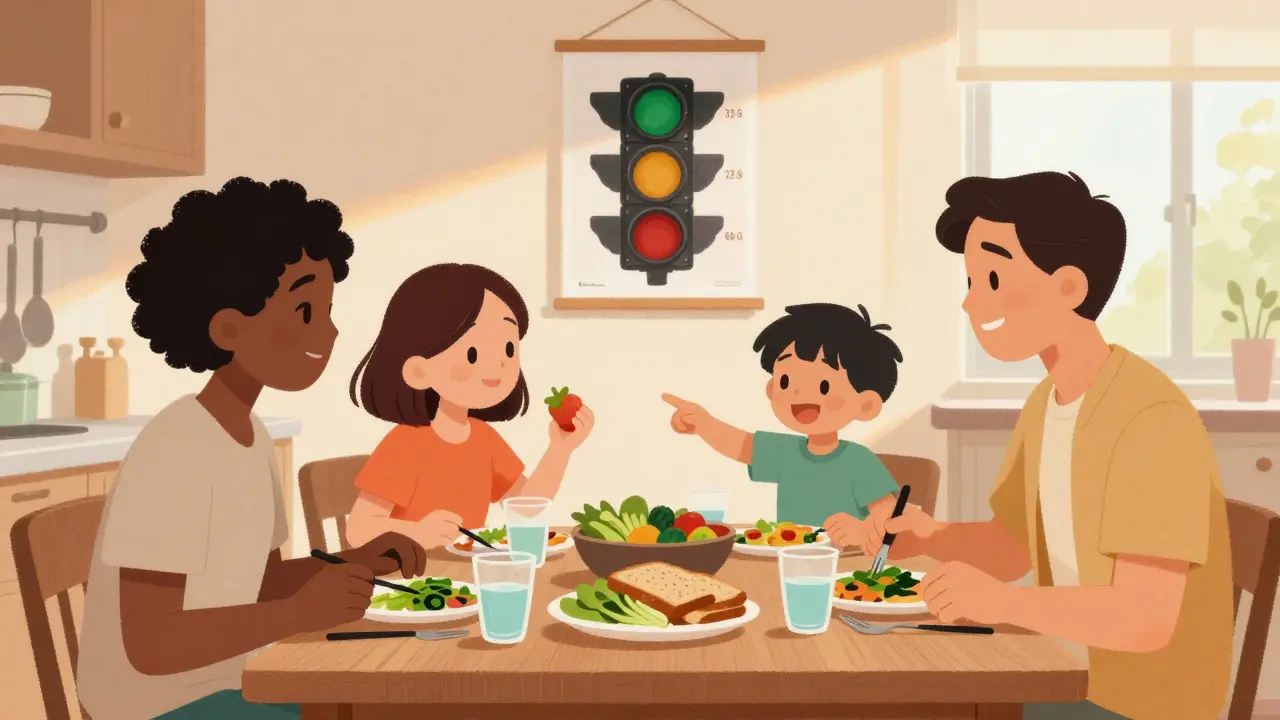
When a child starts gaining weight faster than their peers, it’s not just about looks or discipline. It’s a signal that something deeper is happening - in their home, their routine, and their environment. Childhood obesity isn’t caused by one bad meal or a lazy weekend. It’s the result of habits that build up over time, shaped by what’s available, what’s modeled, and what feels normal. And the good news? The most effective way to turn it around isn’t by putting the child on a diet. It’s by changing the whole family’s lifestyle - together.
What Childhood Obesity Really Means
Childhood obesity isn’t just being a little heavier than average. It’s defined by the CDC as having a body mass index (BMI) at or above the 95th percentile for kids of the same age and sex. That’s not a guess. It’s based on decades of growth data from millions of children. Since the 1970s, the rate of childhood obesity in the U.S. has tripled. Today, nearly 1 in 5 kids - about 14.7 million - are affected. This isn’t just a future health problem. It’s a present one. Kids with obesity are already facing higher risks of high blood pressure, type 2 diabetes, sleep apnea, and even depression.
And here’s what most parents don’t realize: if you wait until your child is severely overweight, small changes won’t be enough. The longer it goes on, the harder it is to reverse. Experts agree: early action makes all the difference. That’s why the American Academy of Pediatrics now recommends starting interventions as young as age 4 or 5, when patterns are still forming and the body is more responsive to change.
Why Family-Based Treatment Is the Gold Standard
For years, the go-to solution was to focus only on the child - tell them to eat less, move more, and cut out junk food. But studies show that doesn’t work well. Kids don’t live in isolation. Their food choices, activity levels, and even their attitudes toward movement are shaped by what happens at home. If parents are eating fast food every night, or if screen time replaces outdoor play, the child is learning those habits by default.
That’s why family-based behavioral treatment (FBT) is now the most recommended approach. Developed over 40 years by researchers like Dr. Leonard Epstein, FBT doesn’t just teach kids about nutrition. It changes how the whole family eats, moves, and interacts. The evidence is clear: FBT leads to significantly better outcomes than any child-only program. One major 2023 trial published in JAMA Network Open found that children in FBT programs lost 12.3% more of their excess weight than those in usual care. Parents in those same programs lost weight too - 5.7% on average. Even siblings who weren’t directly targeted improved by 7.2%.
This isn’t magic. It’s science. FBT works because it treats the environment, not just the symptom.
The Core Components of Family-Based Treatment
A typical FBT program lasts 6 to 24 months and includes 16 to 32 sessions. These aren’t just lectures. They’re structured, hands-on coaching sessions led by trained behavioral health specialists. Here’s what they focus on:
- The Stoplight Diet: This simple system uses colors to guide food choices: green foods (fruits, veggies, whole grains) can be eaten freely, yellow foods (dairy, lean meats, whole-grain bread) should be eaten in moderation, and red foods (sugary drinks, fried foods, processed snacks) should be rare. Studies show this approach reduces percentage overweight by nearly 10% in just six months.
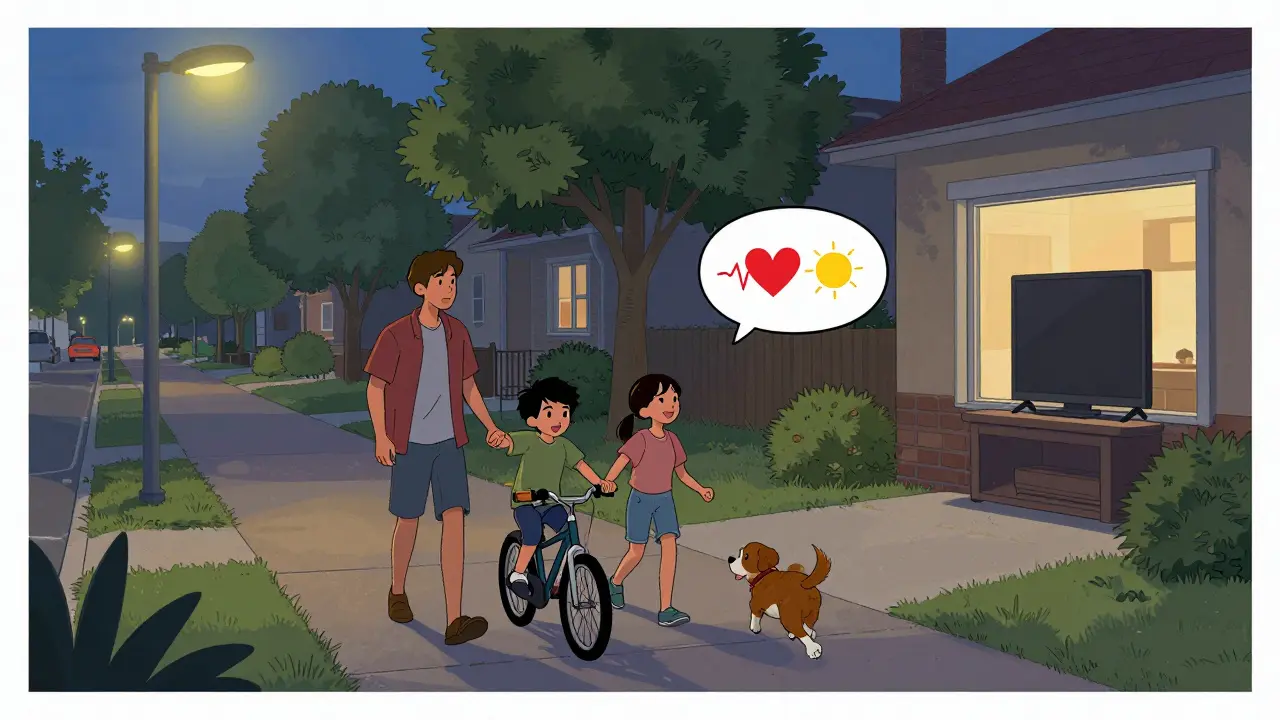
- Daily movement: Kids need at least 60 minutes of moderate to vigorous activity every day. That doesn’t mean soccer practice - it means running, dancing, biking, or playing tag. The goal is to get the heart rate up, not to compete.
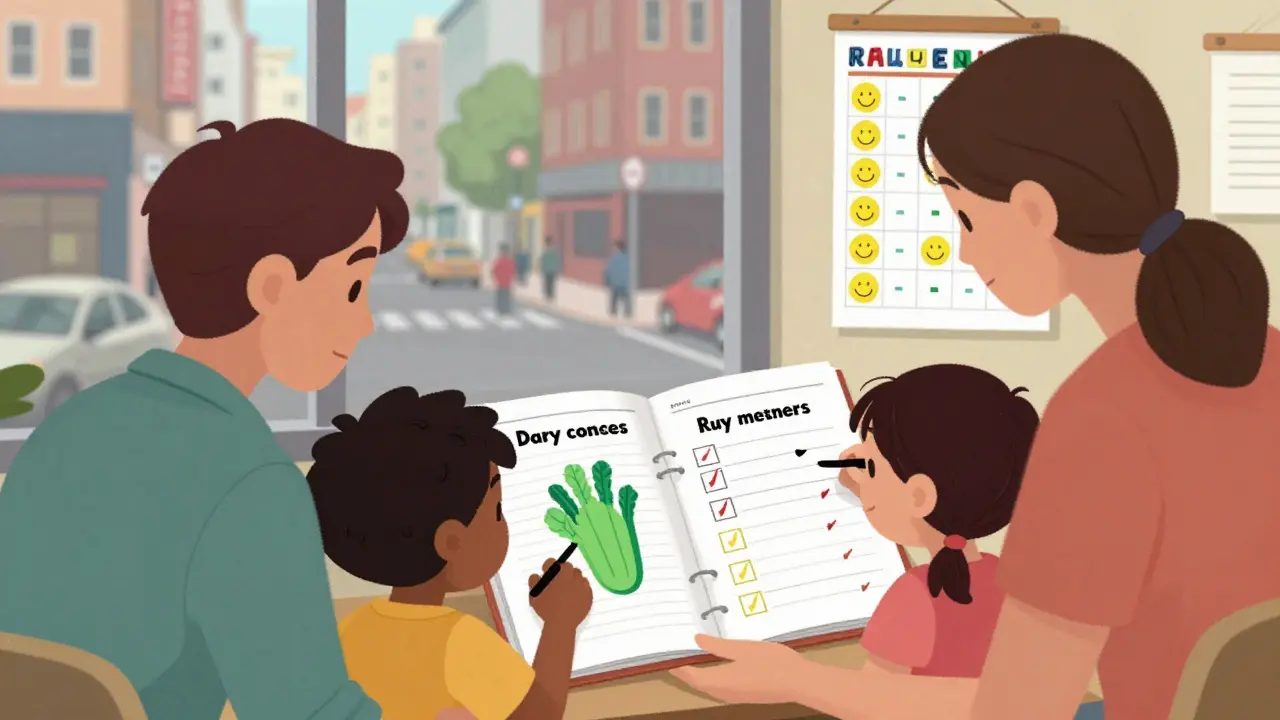
- Behavior tracking: Families keep simple logs of meals and activity. No calorie counting. Just noting what happened. This builds awareness without shame.
- Parenting skills: Parents learn how to set limits without yelling, use praise instead of punishment, and avoid using food as a reward or comfort. These are skills that reduce power struggles and build long-term habits.
- Social facilitation: Families plan how to handle parties, school events, and holidays without falling back on old habits. It’s about preparing, not avoiding.
One of the most powerful parts of FBT? It doesn’t require perfection. Families don’t need to eliminate sugar overnight. They just need to make consistent, small changes - like swapping soda for water, walking after dinner instead of watching TV, or eating meals together without screens.
What Makes FBT Different From Other Approaches
Compare FBT to what most families try:
- Child-only programs: These focus only on the child. They often fail because the home environment hasn’t changed. The child comes home to the same snacks, same TV habits, same lack of activity.
- Specialty clinics: These are expensive, hard to access, and often require long travel. Only 12% of kids with obesity ever see them.
- “Watchful waiting”: Some doctors say, “They’ll grow into it.” But research shows this is dangerous. Weight gain tends to accelerate with age. Waiting only makes treatment harder later.
FBT stands out because it’s the only approach proven to change the whole system. It’s also cost-effective. The 2023 JAMA trial found FBT costs about $3,200 per family over two years - far less than specialty care ($4,100) and well below the $50,000-per-quality-adjusted-life-year threshold that insurers consider worth it.
And it’s scalable. The same study showed that when FBT is delivered in pediatric clinics - not specialty centers - 87% of families completed at least 12 sessions. That’s a huge jump from the 55% completion rate in traditional settings.
Barriers and Real-World Challenges
FBT works - but not every family can access it. The biggest obstacles aren’t about motivation. They’re about resources.
- Scheduling: 38% of families in one study said fitting in sessions was impossible because of work, school, or transportation.
- Parental resistance: 29% of parents didn’t want to change their own habits - even if they knew it would help their child.
- Cultural and language gaps: Hispanic and Black children make up 54% of cases, but only 31% of FBT participants. Programs that don’t reflect cultural food traditions or offer bilingual support lose touch with the families who need them most.
- Insurance coverage: Medicare and Medicaid cover FBT under code G0447, but only about 5% of eligible kids get it. Most pediatricians don’t know how to refer, and most clinics don’t have trained staff on hand.
That’s why the future of FBT lies in integration. Instead of sending families to a separate clinic, the best results come when behavioral coaches work right inside pediatric offices. The 2023 JAMA trial proved this model works - with 78% of families completing 12 or more sessions in real-world clinics across six states.
What Families Can Do Right Now
You don’t need a formal program to start making progress. Here’s what works, based on real data:
- Make meals screen-free: Eating together without phones or TV is linked to a 12% lower risk of obesity.
- Ditch sugar-sweetened drinks: Cutting out soda, juice, and sports drinks leads to a 1.0 BMI unit drop in just 12 months.
- Limit screen time to under 2 hours a day: This alone can reduce BMI by 0.8 units.
- Be the model: If you want your child to move more, move with them. Walk after dinner. Play catch. Dance while cooking. Kids copy what they see.
- Use the Stoplight Diet: Start labeling foods at home. Green: fruits, veggies, beans. Yellow: eggs, yogurt, whole grains. Red: candy, chips, fried food. Keep it simple.
Small changes, repeated over time, create big results. You don’t need to overhaul everything at once. Just pick one thing to focus on for a month. Then add another.
When FBT Isn’t Enough
For some children - especially those with severe obesity (BMI ≥120% of the 95th percentile) - FBT alone doesn’t produce enough weight loss. In about 40% of these cases, weight loss is less than 5% even after 24 months of intensive behavioral therapy.
In those situations, the American Academy of Pediatrics recommends considering additional options:
- Medication: For teens over 12, GLP-1 receptor agonists like semaglutide have shown strong results in clinical trials.
- Metabolic surgery: For adolescents with BMI ≥120% of the 95th percentile and serious health complications, surgery can be life-changing.
These aren’t quick fixes. They’re medical tools used only after behavioral approaches have been tried - and only with full family support and ongoing counseling.
The Bottom Line
Childhood obesity isn’t a child’s fault. It’s a family, community, and system issue. The solution isn’t about blame. It’s about building healthier habits together. FBT isn’t just the best method - it’s the only one proven to create lasting change for both the child and the whole family.
Start early. Involve everyone. Focus on habits, not numbers. And remember: you don’t need to be perfect. You just need to show up - every day - with a little more movement, a little less sugar, and a lot more presence.
What is the Stoplight Diet and how does it help with childhood obesity?
The Stoplight Diet is a simple, color-coded system that helps families make better food choices without counting calories. Green foods - like fruits, vegetables, and whole grains - can be eaten anytime. Yellow foods - such as dairy, lean meats, and whole-grain bread - should be eaten in moderation. Red foods - like sugary drinks, fried foods, and processed snacks - should be rare. Studies show this approach leads to an average 9.38% reduction in percentage overweight in children within six months. It works because it’s easy to understand, doesn’t require strict rules, and helps kids learn to self-regulate their eating.
Can family-based treatment help siblings who aren’t overweight?
Yes. One of the most surprising findings from the 2023 JAMA trial was that siblings who weren’t the main focus of treatment still improved their weight outcomes by 7.2%. This happens because when the whole family changes their eating and activity habits - like eating meals together, reducing screen time, or walking after dinner - everyone benefits. The healthy environment created by FBT naturally supports all children in the home, even those not directly targeted.
Is family-based treatment covered by insurance?
Yes, under the Medicare and Medicaid G0447 code, which covers intensive behavioral therapy for obesity. However, only about 5% of eligible children currently receive it. The main reason? Most pediatric offices don’t have trained behavioral coaches on staff. The most effective programs are now being integrated directly into primary care clinics, where providers can refer families during regular checkups. If your child’s doctor doesn’t mention it, ask - many clinics are just starting to adopt this model.
How long does family-based treatment take to work?
Most programs last between 6 and 24 months, with 26 sessions being the standard goal. But progress isn’t linear. Families in the 2023 JAMA trial completed an average of 19.7 sessions over 24 months. The biggest changes usually show up after 6 to 12 months. The key is consistency, not speed. Weight loss is slower than people expect - but the results last. Unlike diets that fail after a few months, FBT builds lifelong habits.
What if my child is resistant to changing their habits?
Resistance is normal. The goal isn’t to force change - it’s to create an environment where healthy choices are easier. Start with small, non-threatening steps: swap soda for water at dinner, go for a walk after meals, or let your child help pick out vegetables at the store. Avoid power struggles. Instead, use positive reinforcement - praise effort, not results. And remember: kids are more likely to follow what they see. If you model healthy habits yourself, they’ll eventually follow - even if it takes time.
Can FBT work for families with multiple children?
Absolutely. In fact, FBT is especially powerful in families with multiple children. The 2023 JAMA trial showed that when one child was the focus of treatment, siblings not directly involved still improved their weight outcomes. That’s because the whole household shifts - meals become healthier, screen time drops, activity increases. You don’t need separate plans for each child. A single, consistent family routine benefits everyone.
Are there any risks or downsides to family-based treatment?
The biggest risk isn’t the treatment itself - it’s not getting it. FBT is low-risk and non-invasive. The challenge is access. Some families struggle with time, cost, or cultural barriers. Others feel overwhelmed by the idea of changing habits. But there’s no evidence that FBT causes harm. In fact, it reduces stress by removing the pressure to “fix” the child alone. The focus is on teamwork, not blame. The real danger is waiting too long - untreated obesity leads to serious health problems later in life.
What’s the difference between FBT and a diet for kids?
A diet tells a child what not to eat. FBT teaches the whole family how to live differently. Diets are short-term, restrictive, and often lead to weight regain. FBT is long-term, flexible, and builds skills. It doesn’t label foods as “good” or “bad.” Instead, it helps kids understand portion sizes, hunger cues, and how activity affects their body. It’s not about losing weight quickly - it’s about growing up with a healthy relationship with food and movement.